Citing middle-school level skills, UC faculty want to restore math, science testing for applicants

cawacko

Well-known member
The removal of the SAT/ACT tests was heavily tied to equity arguments. Now they're arguing that's caused a different kind of inequality.

Basically students are arriving severely underprepared, especially in STEM, then they struggle/drop out once enrolled and professors are teaching at a remedial level instead of college level.


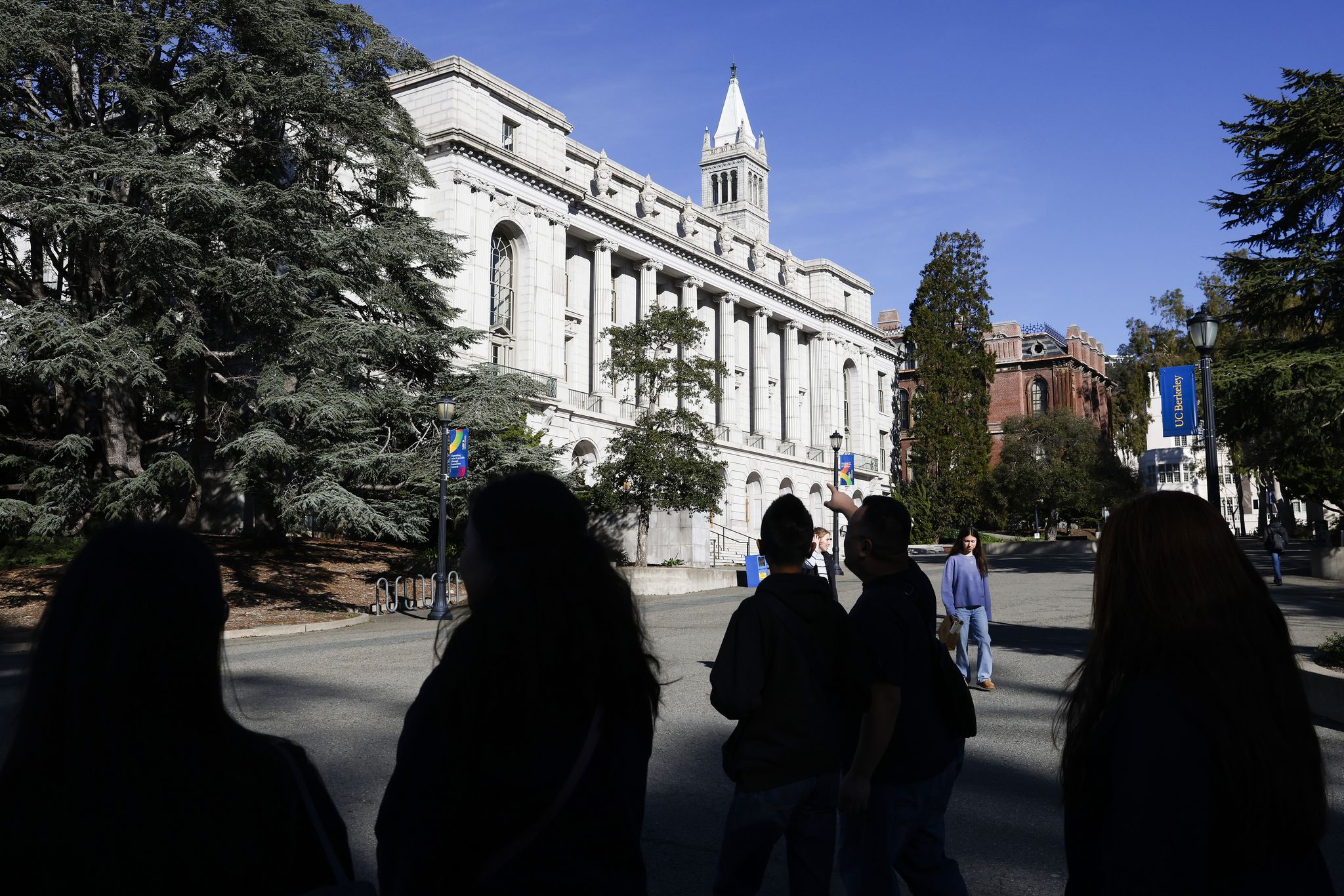
Citing middle-school level skills, UC faculty want to restore math, science testing for applicants

Hundreds of University of California faculty members signed an open letter this week calling for the return of standardized testing requirements for applicants to math and science majors by next year.

The UC system disbanded the decades-old standardized testing requirement in 2020, under a legal challenge from students who argued that the metric gave students who could afford test prep services and travel to exam sites an advantage. The system’s nine undergraduate campuses were among hundreds of colleges nationwide that made the test optional during the COVID-19 pandemic.

But more than five years later, a coalition led by UC Berkeley math professors argues the drop in students’ math levels is “severe.”

“We now observe preparation gaps so severe that instructors must reteach middle-school mathematics while simultaneously teaching the material students need for sciences, engineering, economics, and other quantitatively demanding fields,” read the letter, which was signed by more than 600 professors from faculty across STEM disciplines.

The letter cites a November report from UC San Diego’s Senate-Administration Workgroup on Admissions, which concluded that the number of students whose mathematical abilities were below the typical high school level had increased thirty-fold in the past five years.

Of those students, 70% were found to fall below middle-school math levels, according to the report — roughly one in 12 students entering the UC system.

“The SAT/ACT mathematics requirement is not an obstacle to equity; rather, it is a prerequisite for it,” professors wrote in the letter. “Failing to measure preparation gaps does not remove barriers; it moves them into the classroom, where they become harder to overcome.”
Advertisement

The UC system received a record number of applications the year the standardized testing requirement was dropped, admitting what was then its largest and most diverse class. But the faculty signatories argued that without the testing requirement, a disparity persists “between underprepared and well-prepared students.”

The faculty members who signed the letter frame standardized tests as an external check of students’ preparation for college-level coursework. They warn that “severe grade inflation and AI-assisted application essays” at the high school level make other application metrics less reliable, calling for score requirements to be reinstated as early as the 2027 application cycle.

Ahmet Palazoglu, the chair of the UC Academic Senate, said in a statement that faculty on the the UC system’s Board of Admissions and Relations with Schools would work to “address timely topics tied to students’ college readiness and UC’s admission process” in light of the signatories’ concerns.

“BOARS is in the process of proposing a roadmap of policy work and partnership building with other state and K-12 education leaders in the next academic year and beyond,” Palazoglu said.

UC spokesperson Rachel Zaentz pointed to the “national challenge” of early math preparation, which she said had been exacerbated by periods of remote instruction during the pandemic.

She added that the UC system would “continue to focus on strengthening instruction, collaboration and support” in partnership with both K-12 and higher education institutions.

 
Someone please tell me if I'm wrong.

While there is no perfect test, the SAT has been used for decades because it generally is a strong indicator of identifying potential success of students in college. Taking that away and relying more on grades, which depending on the strength of classes and grade inflation becomes a less reliable indicator.
 
When I went to High School in NYC in the 60's there were 3 tracts and diploma's , Regents- for people planning on college, Commercial- bookkeeping, steno and retail industry, and General for people who planned going into the work force - basic math, science English and shop
 
When I went to High School in NYC in the 60's there were 3 tracts and diploma's , Regents- for people planning on college, Commercial- bookkeeping, steno and retail industry, and General for people who planned going into the work force - basic math, science English and shop
That's really interesting.

I don't have any data for this, but if you told a lower percentage of people went to college back then I would believe it as there were still more blue collar type jobs available.

Then as technology advanced as well as globalization a college degree became more of a must. And I'm assuming more schools moved away from the different tracks you experienced?

Now we've reached a point where the costs have exploded to such a point that more don't view it as having a positive ROI.
 
When I went to High School in NYC in the 60's there were 3 tracts and diploma's , Regents- for people planning on college, Commercial- bookkeeping, steno and retail industry, and General for people who planned going into the work force - basic math, science English and shop
The schools still have the same basic options they just quit labeling them as not to offend anyone.
 
NYC still has Regents Diplomas


Students need 44 credits in these subject areas to earn a Regents diploma.​


1
8 credits in core English.

2
8 credits in social studies, including: ...

3
6 credits in math, including: ...

4
6 credits in science, including: ...

5
2 credits in World Languages.

6
4 credits in physical education, every year in specific ways.

 
Someone please tell me if I'm wrong.

While there is no perfect test, the SAT has been used for decades because it generally is a strong indicator of identifying potential success of students in college. Taking that away and relying more on grades, which depending on the strength of classes and grade inflation becomes a less reliable indicator.
U.C. needs to install more remedial preparatory classes to the curriculum as prerequisites

SAT has some of the same hurdles, the complaint that they favored those in a position to benefit from training classes is legitimate, plus, if one grew up in a shall we say less cultured environment they wouldn’t have been exposed to assimilate content the SAT is based upon.

Besides, the mind takes leaps throughout adolescence and young adulthood, we all know individuals who were seemingly dimwits in high school who went on to surprise and the reverse.
 
U.C. needs to install more remedial preparatory classes to the curriculum as prerequisites

SAT has some of the same hurdles, the complaint that they favored those in a position to benefit from training classes is legitimate, plus, if one grew up in a shall we say less cultured environment they wouldn’t have been exposed to assimilate content the SAT is based upon.

Besides, the mind takes leaps throughout adolescence and young adulthood, we all know individuals who were seemingly dimwits in high school who went on to surprise and the reverse.
You're giving me the reasons for why they chose to no longer use the SAT/ACT tests, which is fine but this is about the professors reaction to those results.

You have to take the US News & World Report rankings with a large grain of salt but if we use them, there are 5 or 6 UC's in the top 50 schools in the country. And your recommendation is they set up new remedial programs.

Well they already have those at community colleges. Plenty of kids start there and then transfer to UC's. The UC"s are struggling enough with money as it is, trying to fund raise for new remedial programs is going to be a tough sell.

The other variable, you aren't doing kids any favors by putting them in positions where they aren't prepared to succeed which is what these professors are saying.
 
NYC still has Regents Diplomas


Students need 44 credits in these subject areas to earn a Regents diploma.​


1
8 credits in core English.

2
8 credits in social studies, including: ...

3
6 credits in math, including: ...

4
6 credits in science, including: ...

5
2 credits in World Languages.

6
4 credits in physical education, every year in specific ways.

And you would go to summer school to take advanced courses , in jr high I spent one summer taking advanced algebra, 1 hour on the subway there and one hour back for a for a one hour class. Would get home by 12 and then go to the beach in the afternoon :)
 
NYC still has Regents Diplomas


Students need 44 credits in these subject areas to earn a Regents diploma.​


1
8 credits in core English.

2
8 credits in social studies, including: ...

3
6 credits in math, including: ...

4
6 credits in science, including: ...

5
2 credits in World Languages.

6
4 credits in physical education, every year in specific ways.

For now...
 
When I went to High School in NYC in the 60's there were 3 tracts and diploma's , Regents- for people planning on college, Commercial- bookkeeping, steno and retail industry, and General for people who planned going into the work force - basic math, science English and shop
In Detroit , Michigan, we had a few schools dedicated to apprentice-type jobs. There was a big need for talented mechanical types in the Big Three. They were training for good jobs and security.
Our high school classes were SAF, Slow, average and fast. Tests started you in fast classes, and grades kept you there.
 
In Detroit , Michigan, we had a few schools dedicated to apprentice-type jobs. There was a big need for talented mechanical types in the Big Three. They were training for good jobs and security.
Our high school classes were SAF, Slow, average and fast. Tests started you in fast classes, and grades kept you there.
OSHA and the EPA, along with injury attorneys, pretty much preclude any school outside of a specialized post-high school trade one from doing any sort of real hands on trade training today. It is simply too costly in compliance, insurance, and legal fees.
 
OSHA and the EPA, along with injury attorneys, pretty much preclude any school outside of a specialized post-high school trade one from doing any sort of real hands on trade training today. It is simply too costly in compliance, insurance, and legal fees.
Science and engineering hands on education is far more dangerous than trade school training, and yet is done all the time. You are just making stuff up.

Not to mention that there are a number of trade schools that are also high schools, or in high schools.
 
The removal of the SAT/ACT tests was heavily tied to equity arguments. Now they're arguing that's caused a different kind of inequality.

Basically students are arriving severely underprepared, especially in STEM, then they struggle/drop out once enrolled and professors are teaching at a remedial level instead of college level.


Citing middle-school level skills, UC faculty want to restore math, science testing for applicants

Hundreds of University of California faculty members signed an open letter this week calling for the return of standardized testing requirements for applicants to math and science majors by next year.

The UC system disbanded the decades-old standardized testing requirement in 2020, under a legal challenge from students who argued that the metric gave students who could afford test prep services and travel to exam sites an advantage. The system’s nine undergraduate campuses were among hundreds of colleges nationwide that made the test optional during the COVID-19 pandemic.

But more than five years later, a coalition led by UC Berkeley math professors argues the drop in students’ math levels is “severe.”

“We now observe preparation gaps so severe that instructors must reteach middle-school mathematics while simultaneously teaching the material students need for sciences, engineering, economics, and other quantitatively demanding fields,” read the letter, which was signed by more than 600 professors from faculty across STEM disciplines.

The letter cites a November report from UC San Diego’s Senate-Administration Workgroup on Admissions, which concluded that the number of students whose mathematical abilities were below the typical high school level had increased thirty-fold in the past five years.

Of those students, 70% were found to fall below middle-school math levels, according to the report — roughly one in 12 students entering the UC system.

“The SAT/ACT mathematics requirement is not an obstacle to equity; rather, it is a prerequisite for it,” professors wrote in the letter. “Failing to measure preparation gaps does not remove barriers; it moves them into the classroom, where they become harder to overcome.”
Advertisement

The UC system received a record number of applications the year the standardized testing requirement was dropped, admitting what was then its largest and most diverse class. But the faculty signatories argued that without the testing requirement, a disparity persists “between underprepared and well-prepared students.”

The faculty members who signed the letter frame standardized tests as an external check of students’ preparation for college-level coursework. They warn that “severe grade inflation and AI-assisted application essays” at the high school level make other application metrics less reliable, calling for score requirements to be reinstated as early as the 2027 application cycle.

Ahmet Palazoglu, the chair of the UC Academic Senate, said in a statement that faculty on the the UC system’s Board of Admissions and Relations with Schools would work to “address timely topics tied to students’ college readiness and UC’s admission process” in light of the signatories’ concerns.

“BOARS is in the process of proposing a roadmap of policy work and partnership building with other state and K-12 education leaders in the next academic year and beyond,” Palazoglu said.

UC spokesperson Rachel Zaentz pointed to the “national challenge” of early math preparation, which she said had been exacerbated by periods of remote instruction during the pandemic.

She added that the UC system would “continue to focus on strengthening instruction, collaboration and support” in partnership with both K-12 and higher education institutions.


Once they did away with entry tests and Uncle Sugar started backing student loans it all went sideways.
Administrations and campus populations exploded, tuition shortly doubled and kept going, and books went up, too.
Furthermore, a large percentage of the new students they were admitting washed out in their 1st year after getting student loans.
IMO, it was a Cloward/Piven tactic to degrade higher education and be a drain on the taxpayers.
Clinton did that.
 
Once they did away with entry tests and Uncle Sugar started backing student loans it all went sideways.
Administrations and campus populations exploded, tuition shortly doubled and kept going, and books went up, too.
Furthermore, a large percentage of the new students they were admitting washed out in their 1st year after getting student loans.
IMO, it was a Cloward/Piven tactic to degrade higher education and be a drain on the taxpayers.
Clinton did that.
The universities went bad with the Korean we cant decide what it was GI BILL.
 
Back
Top