It is starting to leak, 24 Billion for a cease fire.

So we are paying them to end the war.

It also includes a requirement for the United States and its allies to present reconstruction plans worth at least $300 billion for Iran.

 
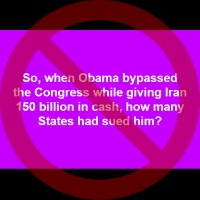
I never want to hear again about how OBAMA paid them.

@FastLane @Teflon Don @Stone
There wasn't any US taxpayer money used in that deal.

The deal, approved by six countries and the European Union, gave Iran access to its own frozen assets.


Nope.

Grok:

Cypress's claims are not accurate (they contain significant factual errors) and, while partially verifiable in a narrow sense, the overall statement is misleading.


Breakdown of the Claims​


  1. "Iran didn't even enrich any uranium to weapons-grade until after Trump tore up Obama's 2015 agreement..."
    • Inaccurate on timeline and facts:
      • Iran has never (publicly or per IAEA reports) produced weapons-grade uranium (~90%+ U-235) at scale. Under the JCPOA (2015–2018+), Iran was restricted to 3.67% enrichment and complied with that limit initially.
      • Post-US withdrawal (May 2018), Iran began stepwise breaches starting in 2019 (exceeding stockpile limits, then higher enrichment). It reached 60% enrichment (near-weapons-grade, with no credible civilian need beyond research) starting in April 2021 at Natanz, later at Fordow. This is a short technical step from 90%.
      • In February 2023, IAEA detected uranium particles enriched to 83.7% at Fordow (explained by Iran as an "unintended fluctuation," but concerning). No confirmed sustained production at true weapons-grade levels followed.
    • Pre-JCPOA, Iran enriched to ~20% (e.g., for medical isotopes) and faced allegations of past weapons-related work (pre-2003 per US intel), but not sustained weapons-grade production.
    • The escalation to high enrichment levels happened years after Trump's 2018 withdrawal, not immediately, and built on prior capabilities.
  2. "...and released Iran from its treaty obligations."
    • Inaccurate framing:
      • The JCPOA was a political commitment, not a formal treaty ratified by the US Senate. Trump withdrew the US from it unilaterally and reimposed sanctions.
      • Iran did not immediately abandon the deal. It remained compliant (per IAEA) for over a year after the US exit. It began measured breaches in 2019, citing US sanctions and failure of European parties to deliver economic relief. Iran framed its actions as reversible responses to the US violation.
      • Other parties (UK, France, Germany, etc.) tried to preserve the deal without the US. The US withdrawal undermined but did not legally "release" Iran from its commitments under the multilateral framework.

Why Verifiable but Misleading?​


  • Verifiable elements: Trump did withdraw in 2018; Iran did not produce near-weapons-grade material during the active JCPOA compliance period (2016–early 2019). IAEA reports confirm the post-2018/2019 timeline.
  • Misleading overall: It implies the JCPOA fully prevented any high enrichment forever and that Trump's action was the sole trigger for Iran's advances. In reality:
    • The deal had sunset clauses (some limits expired after 10–15 years).
    • Iran's program had deep roots predating the deal.
    • Breaches were incremental and tied to sanctions, sabotage incidents (e.g., Natanz), and assassinations, not solely the US exit.
    • As of recent years (pre-2025 strikes), Iran had a large 60% stockpile, shortening "breakout time" dramatically.

Bottom line: The claim oversimplifies a complex sequence and overstates causality. Reliable sources (IAEA, Arms Control Association, CFR, etc.) show Iran's nuclear advances accelerated after the US withdrawal and amid failed revival talks, but the narrative ignores Iran's agency, prior activities, and the deal's structure. Always cross-check with primary IAEA reports for precision.
 
Grok notes:

Fact-Check Assessment​


  • Unverified by Nature: The article itself flags the lack of independent verification or official confirmation from either side. This aligns with standard journalistic caution when handling leaked drafts from adversarial state media like Mehr News (which is close to the Iranian government and often used for signaling or controlled leaks).
  • Plausible in Broader Context: Elements echo real historical patterns in Iran-US/ nuclear talks (e.g., sanctions relief for nuclear limits, frozen assets, Hormuz tensions, proxy issues). Mentions of Trump, recent conflicts, and mediators (Pakistan/Qatar) fit ongoing geopolitical narratives around 2025–2026 tensions. However, specific details like exact $24B/$300B figures, exclusions for missiles/proxies, or timelines appear to be unconfirmed assertions from the Iranian side at the time of publication.
  • No Major Fabrications Found in Reporting: Iran International accurately attributes the claims to Mehr News and notes caveats. Cross-checks with other sources (via searches) show similar diplomatic rumors circulating, but no authoritative confirmation of this exact draft. Conflicting statements (e.g., US emphasis on performance-based/no upfront money vs. Iranian demands) are common in such negotiations and highlighted in the piece.
  • Potential for Bias/Spin: The outlet amplifies opposition-leaning context (e.g., hardliner backlash in Iran, expert quotes skeptical of the regime). This doesn't invalidate the core reporting on Mehr's publication but shapes emphasis.


Overall, the article is transparent about sourcing and does not present the draft as confirmed fact. The "story" is real in that Mehr published it; its accuracy as a reflection of actual negotiations remains unverified as of the article's date.


Reasons for Skepticism Toward Iran International as a Source​


Iran International (a London-based Persian-language news outlet targeting Iranians) is frequently viewed with caution, particularly by those seeking "neutral" sources, due to its ownership, funding history, and editorial stance:


  • Saudi Funding/Links: Multiple investigations (e.g., The Guardian 2018) reported substantial Saudi backing, including ~$250 million startup funding tied to figures close to Crown Prince Mohammed bin Salman (MBS). Ownership traces to Volant Media UK Ltd, linked to Saudi-British investors. Recent reports (e.g., Financial Times 2026) detail massive debt relief (~£650m/$870m) involving entities with Saudi ties, though the outlet denies direct government funding and claims editorial independence and private investors.
  • Anti-Regime Opposition Stance: It strongly opposes the Islamic Republic, amplifies dissident voices, and has been accused of pushing regime-change narratives. It promotes figures like Reza Pahlavi and aligns with Western/Saudi/Israeli geopolitical interests against Tehran. Iranian officials have labeled it a Saudi/Mossad propaganda tool.
  • Geopolitical Bias: Media Bias/Fact Check rates it Right-Center biased, with consistent negative framing of the Iranian government. It has faced Iranian accusations of inciting unrest (e.g., during protests) and threats, leading to relocations. No major "failed fact checks" noted in some evaluations, but its selective emphasis and sources warrant cross-verification.
  • Transparency Issues: Opaque funding (offshore entities, losses in hundreds of millions) raises questions about independence, even if it denies state control. It operates in a highly polarized information environment where all sides (Iranian state media, Gulf outlets, Western press) have agendas.

In short: Treat Iran International reports as useful for opposition perspectives, leaks from inside Iran, or signals from state media like Mehr—but always cross-check with primary sources, official statements, and other outlets (e.g., Reuters, AP, IAEA). In this case, the article's self-disclosed unverified status is a strength, but the outlet's incentives favor narratives damaging to the Tehran regime.
 
No.. he was right... now things will actually change.... the better people are optimistic... the rest of you can continue to cry... your negative reactions are premature...;)
“Now things will actually change?”

Going in, we were told the regime would change, Iran would surrender its nuclear capability, and Iran’s ability to attack its neighbors would end.

And we have now a deal to deal, so can you show us what has “changed?”
 
Back
Top