
You are using an out of date browser. It may not display this or other websites correctly.
You should upgrade or use an alternative browser.
You should upgrade or use an alternative browser.
Everyone understands that Socialism is not Communism, right?
- Thread starter Jarod
- Start date


T. A. Gardner
Serial Thread Killer
The difference between Socialism and Communism is that Socialism is like getting a paper cut several times a day every day, until you bleed to death in agonizing pain, while Communism is a one-time beheading.

QP!
Verified User
America’s post-WW2 golden age wasn't built on raw capitalism alone; it thrived because public-sector social programs ("Socialism") balanced the free market.The difference between Socialism and Communism is that Socialism is like getting a paper cut several times a day every day, until you bleed to death in agonizing pain, while Communism is a one-time beheading.
This combination built the modern middle class and fueled the greatest wealth cycle the nation has ever seen—a model still proven today by successful mixed economies like Canada and Norway.
The modern American shift toward crony capitalism turns its back on this balance, enriching the top 1% while gutting the middle and lower classes. As oligarchic systems like Russia show, spiking wealth at the very top comes at a devastating long-term cost to the rest of the nation.
T. A. Gardner
Serial Thread Killer
America’s post-WW2 golden age wasn't built on raw capitalism alone; it thrived because public-sector social programs ("Socialism") balanced the free market.
Wrong! It thrived because the rest of the world was totally fucked up from WW 2. Europe was in shambles. Asia was burned to the ground. China and Russia were Communist and cut off from the rest of the world economically. The US had a veritable monopoly on food and production that it was selling to everybody else.
This combination built the modern middle class and fueled the greatest wealth cycle the nation has ever seen—a model still proven today by successful mixed economies like Canada and Norway.
The other thing that made it work at that time, was a large middle class that actually worked for a living and understood both privation and responsibility. The social-welfare state hadn't taken hold.
The modern American shit towards Socialism is trashing the country. It is creating a large 'dependent class' of moochers and lazy that live off government largess while those that still work and produce are increasingly taxed to death.The modern American shift toward crony capitalism turns its back on this balance, enriching the top 1% while gutting the middle and lower classes. As oligarchic systems like Russia show, spiking wealth at the very top comes at a devastating long-term cost to the rest of the nation.
QP!
Verified User
Wrong! It thrived because the rest of the world was totally fucked up from WW 2. Europe was in shambles. Asia was burned to the ground. China and Russia were Communist and cut off from the rest of the world economically. The US had a veritable monopoly on food and production that it was selling to everybody else.
The other thing that made it work at that time, was a large middle class that actually worked for a living and understood both privation and responsibility. The social-welfare state hadn't taken hold.
The modern American shit towards Socialism is trashing the country. It is creating a large 'dependent class' of moochers and lazy that live off government largess while those that still work and produce are increasingly taxed to death.
While you are correct that Europe and Asia being in shambles gave the US a massive global monopoly on production you do not understand how a global monopoly only tells us how much money came into the country—it doesn't explain where that money went.
It was the massive social programs of that era, that ensured those monopoly profits did not stay entirely at the top.
Instead, policies like the G.I. Bill (which funded college and housing for millions), a 91% top tax rate that built the Interstate Highway System, and strong labor unions forced that wealth down to the workers. The hard-working middle class didn't just appear out of nowhere; it was actively built by a mixed economy that combined a global market monopoly with massive domestic social investments.
You ignore that it took a VERY ACTIVE STATE to redirect the mass profits coming in from being horded at the top and to instead force long term investments that then caused a spiraling growth cycle.
Last edited:
Fine answer.While you are correct that Europe and Asia being in shambles gave the US a massive global monopoly on production you do not understand how a global monopoly only tells us how much money came into the country—it doesn't explain where that money went.
It was the massive social programs of that era, that ensured those monopoly profits did not stay entirely at the top.
Instead, policies like the G.I. Bill (which funded college and housing for millions), a 91% top tax rate that built the Interstate Highway System, and strong labor unions forced that wealth down to the workers. The hard-working middle class didn't just appear out of nowhere; it was actively built by a mixed economy that combined a global market monopoly with massive domestic social investments.
You ignore that it took a VERY ACTIVE STATE to redirect the mass profits coming in from being horded at the top and to instead force long term investments that then caused a spirally growth cycle.
T. A. Gardner
Serial Thread Killer
While you are correct that Europe and Asia being in shambles gave the US a massive global monopoly on production you do not understand how a global monopoly only tells us how much money came into the country—it doesn't explain where that money went.
It was the massive social programs of that era, that ensured those monopoly profits did not stay entirely at the top.
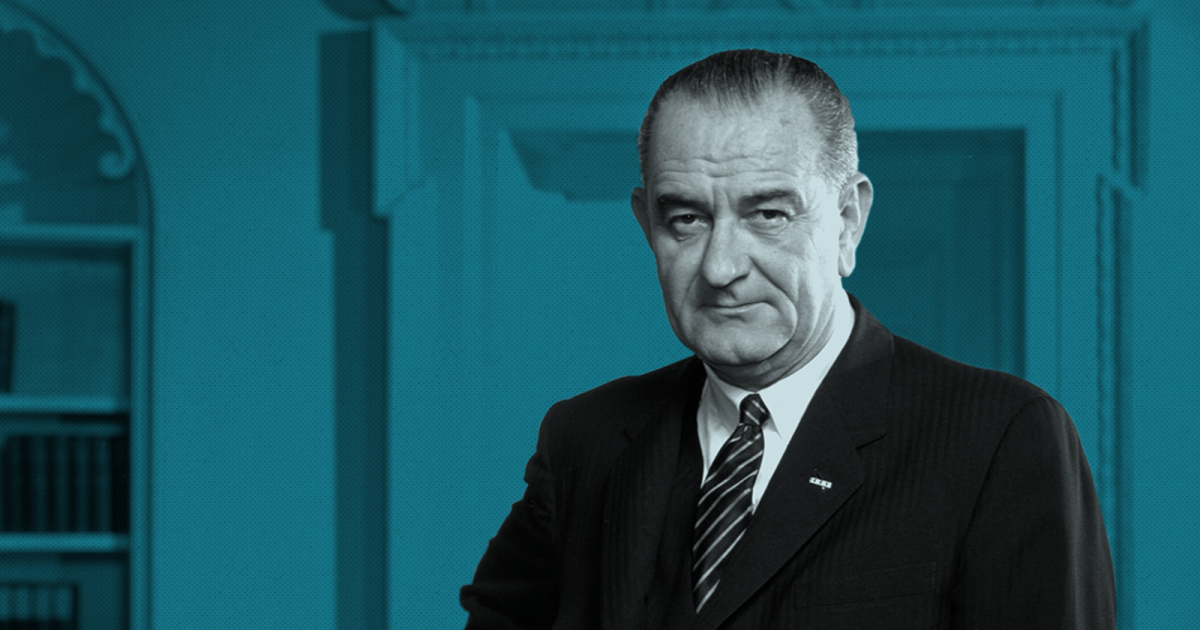
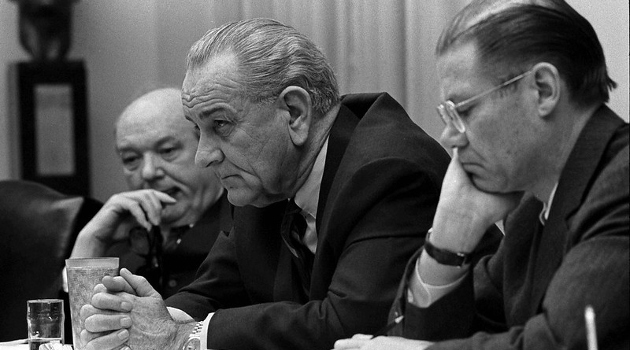
Not through the 1960's. It was with LBJ's Great Society that the breakdown begins. That's the real beginning of the welfare state in the US. Medicare / Medicaid, food stamps, it all created a class dependent on government. The Great Society created the true social-welfare state in America and was the beginning of our current decline.
The GI Bill was payment for services rendered. GI's got it was part of their payment for service. The interstate highway system was a defense act, not a civil project. Up to that point, most highway construction in the US was either private or state funded, like say, the Lincoln Highway (privately funded).Instead, policies like the G.I. Bill (which funded college and housing for millions), a 91% top tax rate that built the Interstate Highway System, and strong labor unions forced that wealth down to the workers. The hard-working middle class didn't just appear out of nowhere; it was actively built by a mixed economy that combined a global market monopoly with massive domestic social investments.
You ignore that it took a VERY ACTIVE STATE to redirect the mass profits coming in from being horded at the top and to instead force long term investments that then caused a spiraling growth cycle.
Unions are not government, and they have become increasingly irrelevant. Today, unions do little for workers that they cannot do for themselves.
It was the 60's with the start of wealth redistribution under the Great Society plan, that things went south in a hurry. That one major act was the beginning of the end.
QP!
Verified User
Rebranding why the government spent money doesn't change what the money did economically.Not through the 1960's. It was with LBJ's Great Society that the breakdown begins. That's the real beginning of the welfare state in the US. Medicare / Medicaid, food stamps, it all created a class dependent on government. The Great Society created the true social-welfare state in America and was the beginning of our current decline.
The GI Bill was payment for services rendered. GI's got it was part of their payment for service. The interstate highway system was a defense act, not a civil project. Up to that point, most highway construction in the US was either private or state funded, like say, the Lincoln Highway (privately funded).
Unions are not government, and they have become increasingly irrelevant. Today, unions do little for workers that they cannot do for themselves.
It was the 60's with the start of wealth redistribution under the Great Society plan, that things went south in a hurry. That one major act was the beginning of the end.
Call the G.I. Bill 'payment for services' or the Interstates 'defense' if you like, but they were still massive public investments that socialized the costs of education, housing, and shipping. Private enterprise couldn't build them, so the state did.
The data completely contradicts the idea that the 1960s Great Society ruined the economy. When LBJ launched those programs, the U.S. poverty rate was 19%. By 1973, it hit a historic low of 11.1%, and middle-class wealth hit its absolute peak.
Programs like Medicare didn't create a 'dependent class'—they saved millions of elderly Americans from medical bankruptcy. The actual decline of the middle class began in the 1980s when we shifted toward deregulation and cronyism, which stopped wages from growing alongside productivity.
T. A. Gardner
Serial Thread Killer
Rebranding why the government spent money doesn't change what the money did economically.
Call the G.I. Bill 'payment for services' or the Interstates 'defense' if you like, but they were still massive public investments that socialized the costs of education, housing, and shipping. Private enterprise couldn't build them, so the state did.
The GI bill was payment for services rendered. It gave a good ROI on the investment too. Individuals receiving it were ones that had proven they could be reliable, energetic, and disciplined. Their military service showed that.
Socializing education and housing only caused a major decline in the quality and availability of both. In the 60's you got public housing projects that turned into massive slums of crime and violence. Look up the Watts riots for example. Education run by government has proven, at best, a mixed bag of results, a disaster at worst. Today public education, particularly in the most heavily government subsidized and unionized locations is turning out illiterate students with little or no useful skills.
Yes, the Great Society created a dependent class and has been the cause of decline in the US.The data completely contradicts the idea that the 1960s Great Society ruined the economy. When LBJ launched those programs, the U.S. poverty rate was 19%. By 1973, it hit a historic low of 11.1%, and middle-class wealth hit its absolute peak.
Programs like Medicare didn't create a 'dependent class'—they saved millions of elderly Americans from medical bankruptcy. The actual decline of the middle class began in the 1980s when we shifted toward deregulation and cronyism, which stopped wages from growing alongside productivity.

The Forgotten Failures of the Great Society
Amity Shlaes has written a powerful book. It is the most interesting and substantive account of Lyndon Johnson and Richard Nixon’s “war on poverty” to date — and just in time. In Great Society: A New History, she notes that “just as the 1960s forgot the failures of the 1930s, we today forget the...
 manhattan.institute
The Not-So-Great-Society
.toc_container { background: rgba(243, 245, 248, 1); border: ; margin-bottom: 1em; padding: 20px; width: auto; } .toc_container li, .toc_container ul, .toc_container ul li { list-style: outside none none !important; margin-bottom: 0px; } .toc_container p { font-family: chronicle display a...
 www.heritage.org
The Failure of Lyndon Johnson’s Great Society – Dan Mitchell
Massive failure may be an understatement.
freedomandprosperity.org

The Not-So-Great Society
In 1964, President Lyndon Johnson announced plans for what he called "the Great Society," a sweeping set of programs that…
 reason.com
Countries in Europe tried the same sort of things in the 50's and 60's with the same disastrous results.
And, it wasn't just LBJ, Nixon piled on more hurt to what LBJ did.
QP!
Verified User
You are just engaging in spin. You ADMIT the GI Bill had mass benefits but try to EXCLUDE it from being socialist program as the people receiving it were 'disciplined'. Thus by your measure any socialist program that is given to good disciplined people ceases to be a socialist by your definition.The GI bill was payment for services rendered. It gave a good ROI on the investment too. Individuals receiving it were ones that had proven they could be reliable, energetic, and disciplined. Their military service showed that.
Socializing education and housing only caused a major decline in the quality and availability of both. In the 60's you got public housing projects that turned into massive slums of crime and violence. Look up the Watts riots for example. Education run by government has proven, at best, a mixed bag of results, a disaster at worst. Today public education, particularly in the most heavily government subsidized and unionized locations is turning out illiterate students with little or no useful skills.
Yes, the Great Society created a dependent class and has been the cause of decline in the US.
The Forgotten Failures of the Great Society
Amity Shlaes has written a powerful book. It is the most interesting and substantive account of Lyndon Johnson and Richard Nixon’s “war on poverty” to date — and just in time. In Great Society: A New History, she notes that “just as the 1960s forgot the failures of the 1930s, we today forget the...
The Not-So-Great-Society
.toc_container { background: rgba(243, 245, 248, 1); border: ; margin-bottom: 1em; padding: 20px; width: auto; } .toc_container li, .toc_container ul, .toc_container ul li { list-style: outside none none !important; margin-bottom: 0px; } .toc_container p { font-family: chronicle display a...
The Failure of Lyndon Johnson’s Great Society – Dan Mitchell
Massive failure may be an understatement.freedomandprosperity.org
The Not-So-Great Society
In 1964, President Lyndon Johnson announced plans for what he called "the Great Society," a sweeping set of programs that…
Countries in Europe tried the same sort of things in the 50's and 60's with the same disastrous results.
And, it wasn't just LBJ, Nixon piled on more hurt to what LBJ did.
If the government uses taxpayer money to socialize the cost of college and mortgages, that is a mixed-economy policy.
You just admitted it had a great 'ROI'—which is my exact point: public investment in everyday people creates massive national wealth.
Your history on housing and Europe is completely backward. The U.S. government did successfully socialize housing—it built the entire American suburbia by backing millions of middle-class FHA and G.I. Bill home loans. The 1960s urban projects and the Watts riots failed because of racial redlining and intentional underinvestment, not because the government helped too much. Furthermore, calling post-war Europe a 'disaster' is factually incorrect. The 1950s and 60s were Western Europe's 'Economic Miracle,' a golden age of growth built entirely on universal healthcare and free education. The modern decline you are seeing today isn't because of public investments; it's because crony capitalism has defunded public infrastructure to enrich the top 1%.
T. A. Gardner
Serial Thread Killer
Rebranding why the government spent money doesn't change what the money did economically.
Call the G.I. Bill 'payment for services' or the Interstates 'defense' if you like, but they were still massive public investments that socialized the costs of education, housing, and shipping. Private enterprise couldn't build them, so the state did.
The data completely contradicts the idea that the 1960s Great Society ruined the economy. When LBJ launched those programs, the U.S. poverty rate was 19%. By 1973, it hit a historic low of 11.1%, and middle-class wealth hit its absolute peak.
Programs like Medicare didn't create a 'dependent class'—they saved millions of elderly Americans from medical bankruptcy. The actual decline of the middle class began in the 1980s when we shifted toward deregulation and cronyism, which stopped wages from growing alongside productivity.
The difference is, that the GI Bill was payment in kind for service provided. The bill's contents went to people that had proven themselves capable, smart, hard working, and able to produce results. They were dependable, and orderly.
Welfare, like Section 8, SNAP (Food Stamps), Medicaid, etc., goes largely to those that are:
Stupid
Lazy
Unproductive
Scamming the system
Unreliable
Disorderly and even to some degree, criminal.
Sure there are exceptions, but to paraphrase George Bernard Shaw, Those who can do. Those who can't, or won't, get welfare.
The GI Bill gave benefits to productive, useful, people who used it to further increase their productivity and usefulness. Welfare mainly goes to those who do little or nothing, are un- or marginally productive, and simply consume resources without producing anything of value in return.
I can see society giving something to the elderly who spent their lifetime being productive and useful. I can't see subsidizing some 500 lbs. slob that couldn't get a job being a greeter at Walmart. They deserve nothing from society. Let them lose 300 lbs., and start working for a living. Then maybe I'd have some sympathy.
QP!
Verified User
Right so you are saying 'socialism is good as long as we see it goes to smart and capable people who use it well.'The difference is, that the GI Bill was payment in kind for service provided. The bill's contents went to people that had proven themselves capable, smart, hard working, and able to produce results. They were dependable, and orderly.
Welfare, like Section 8, SNAP (Food Stamps), Medicaid, etc., goes largely to those that are:
Stupid
Lazy
Unproductive
Scamming the system
Unreliable
Disorderly and even to some degree, criminal.
Sure there are exceptions, but to paraphrase George Bernard Shaw, Those who can do. Those who can't, or won't, get welfare.
The GI Bill gave benefits to productive, useful, people who used it to further increase their productivity and usefulness. Welfare mainly goes to those who do little or nothing, are un- or marginally productive, and simply consume resources without producing anything of value in return.
I can see society giving something to the elderly who spent their lifetime being productive and useful. I can't see subsidizing some 500 lbs. slob that couldn't get a job being a greeter at Walmart. They deserve nothing from society. Let them lose 300 lbs., and start working for a living. Then maybe I'd have some sympathy.
That is a big change from your prior argument about socialism being bad. And something you will never know when before the first check is given out.
Welcome to our side comrade.