
You are using an out of date browser. It may not display this or other websites correctly.
You should upgrade or use an alternative browser.
You should upgrade or use an alternative browser.
Former NBA first-round draft picks Enes Kanter Freedom and Royce White have both announced their intentions to declare for the 2027 WNBA Draft.
- Thread starter volsrocks
- Start date


If they don't accept men claiming to be women, it's gonna be glorious.
BTW, they're meeting to decide what a woman is.
View: https://x.com/Polymarket/status/2086168994529120598?s=20
BTW, they're meeting to decide what a woman is.
View: https://x.com/Polymarket/status/2086168994529120598?s=20

Why would any team want to draft Royce White who is over 35, wasn't able to make it in the G league when he was in his 20s and now hasn't played basketball for several years?Any team that refuses to recruit them is “guilty of hate and intolerance” by the lefts logic of inclusion and tolerance.
Then you get to your second choice who is not a US citizen Do you want foreigners taking jobs away from US citizens?
But I wonder which bathroom the two men use which would reveal how serious they are. We know Royce White isn't serious because he is under investigation for using campaign money at strip clubs.
Why would any team want to draft Royce White who is over 35, wasn't able to make it in the G league when he was in his 20s and now hasn't played basketball for several years?
If he says he identifies a as a woman, what justification can be offered?
Then you get to your second choice who is not a US citizen Do you want foreigners taking jobs away from US citizens?
The serious answer from the people doing this is: if the league's rules treat self-ID as sufficient for eligibility (or leave it ambiguous), then the logical consequence is that larger, stronger biological males with basketball experience can enter.
White and Kanter are stress-testing that.
Whether any team would actually select them is secondary to the policy confrontation; the threat of lawsuits and media pressure is part of the point.
But I wonder which bathroom the two men use which would reveal how serious they are.
Why do you obsess over people' genitals? Are you a racist transphobe?
We know Royce White isn't serious because he is under investigation for using campaign money at strip clubs.
Who's "we"?

Jade Dragon
And I'm the one that jaded you.
Oh great, another MAGA short bus fuckwit attempt at a discussion. Queue the screeching.
Queue the screeching.
And here you are, faggot. Ask your mom to get you some tendies.
Meanwhile . . .
WNBA draft eligibility is governed primarily by the league’s Collective Bargaining Agreement (CBA) with the Women’s National Basketball Players Association.
The key provisions appear in Article XIII (Player Eligibility and WNBA Draft).
The most recent CBA (effective for the 2026 season through 2032) retained the core eligibility framework from prior agreements with only minor updates elsewhere.
The CBA states plainly: “Only players who are women are eligible to play in the WNBA.”
This is the provision White and Kanter Freedom are testing. Self-declaration alone does not automatically satisfy the “women” requirement under the written rule or established league practice.
Eligibility ultimately rests with league governance and team decisions; a public announcement does not place someone on the draft board.
A player is eligible to be selected if she meets any one of these (and is otherwise a “woman” under the rule above):
Players still competing in the NCAA tournament near the deadline have a short window (typically 48 hours after their final game, but no later than a few hours before the Draft) to renounce remaining eligibility.
An “international player” (born and residing outside the U.S., and who has never exercised intercollegiate eligibility in the U.S.) is eligible if she will be at least 20 years old during the calendar year of the Draft. Once an international player uses U.S. college eligibility, the domestic rules apply.
Royce White (born 1991) and Enes Kanter Freedom easily clear the age thresholds. The decisive barrier is the “only players who are women” clause.
Because the CBA supplies no further definition or process, the league (and ultimately the courts if litigated) would have to interpret it.
In practice, the league has never treated biological males as eligible, and self-identification has not been treated as sufficient on its own.
The rules are deliberately thin on gender: they assert a women-only category without operational criteria for edge cases.
That ambiguity is exactly what the recent announcements are designed to highlight and force into the open.
WNBA draft eligibility is governed primarily by the league’s Collective Bargaining Agreement (CBA) with the Women’s National Basketball Players Association.
The key provisions appear in Article XIII (Player Eligibility and WNBA Draft).
The most recent CBA (effective for the 2026 season through 2032) retained the core eligibility framework from prior agreements with only minor updates elsewhere.
Core Gender Rule
The CBA states plainly: “Only players who are women are eligible to play in the WNBA.”
- There is no definition of “women” or “woman” in the agreement.
- There is no explicit transgender / gender-identity policy, no self-identification rule, no hormone threshold (e.g., testosterone limits), no surgical requirement, and no formal verification process described in the public CBA language.
- Pronouns throughout the eligibility sections are exclusively “she/her.”
- No biological male has ever played in the WNBA. The only publicly known transgender/non-binary player in league history is Layshia Clarendon (assigned female at birth).
This is the provision White and Kanter Freedom are testing. Self-declaration alone does not automatically satisfy the “women” requirement under the written rule or established league practice.
Eligibility ultimately rests with league governance and team decisions; a public announcement does not place someone on the draft board.
Standard Draft Eligibility (Domestic / U.S. Players)
A player is eligible to be selected if she meets any one of these (and is otherwise a “woman” under the rule above):
- Will be at least 22 years old during the calendar year of the Draft and has no remaining intercollegiate eligibility (or renounces it in writing to the WNBA at least 10 days before the Draft).
- Has graduated from a four-year college/university (or is scheduled to graduate within three months after the Draft) and has no remaining intercollegiate eligibility (or renounces it).
- Attended a four-year college/university, her original class has already graduated (or is scheduled to within three months), and she has no remaining eligibility (or renounces it).
Players still competing in the NCAA tournament near the deadline have a short window (typically 48 hours after their final game, but no later than a few hours before the Draft) to renounce remaining eligibility.
International Players
An “international player” (born and residing outside the U.S., and who has never exercised intercollegiate eligibility in the U.S.) is eligible if she will be at least 20 years old during the calendar year of the Draft. Once an international player uses U.S. college eligibility, the domestic rules apply.
Other Practical Points
- Age comparison to NBA: WNBA domestic age floor is significantly higher (22 vs. NBA’s 19). This keeps most elite college talent in the NCAA longer.
- No automatic entry via declaration: Players must formally notify the league (usually by email to a designated address) and meet the criteria. Public social-media announcements do not create draft eligibility.
- Undrafted free agents / other pathways: Separate from the Draft, teams can sign free agents, but the same “only players who are women” rule applies to the roster.
- Recent context: Commissioner Cathy Engelbert has noted that transgender participation remains a topic of discussion among team executives, and the league prioritizes “preserving the integrity of our game and ensuring fair competition.” The CBA language itself has not been rewritten to add clarity or restrictions.
Application to the Current Declarations
Royce White (born 1991) and Enes Kanter Freedom easily clear the age thresholds. The decisive barrier is the “only players who are women” clause.
Because the CBA supplies no further definition or process, the league (and ultimately the courts if litigated) would have to interpret it.
In practice, the league has never treated biological males as eligible, and self-identification has not been treated as sufficient on its own.
The rules are deliberately thin on gender: they assert a women-only category without operational criteria for edge cases.
That ambiguity is exactly what the recent announcements are designed to highlight and force into the open.
What team would draft a woman that is 35-37 years old and hasn't played organized ball in over 4 years?If he says he identifies a as a woman, what justification can be offered?
That is the only justification needed.
They are claiming they will be a 35-37 year old woman that hasn't played organized ball in over 4 years. I am curious how you think they will be rated on their current skills. No team would draft such a woman so if they are truly unbiased they will treat White and Kanter as if they were 35-37 year old women that haven't played any organized ball for the last 4 - 8 years.The serious answer from the people doing this is: if the league's rules treat self-ID as sufficient for eligibility (or leave it ambiguous), then the logical consequence is that larger, stronger biological males with basketball experience can enter.
Are White and Kanter going to demand they not be treated as if they were a woman as they are claiming to be?White and Kanter are stress-testing that.
Whether any team would actually select them is secondary to the policy confrontation; the threat of lawsuits and media pressure is part of the point.
Who is obsessing about genitals? A bathroom is not a genital.Why do you obsess over people' genitals? Are you a racist transphobe?
I see you still don't understand pronouns. Kanter is claiming to use "we" and "they" as theirs.Who's "we"?
What team would draft a woman that is 35 years old and hasn't played organized ball in over 4 years? That is the only justification needed.
Already addressed.
They are claiming they will be a 35-37 year old woman that hasn't played organized ball in over 4 years. I am curious how you think they will be rated on their current skills. No team would draft such a woman so if they are truly unbiased they will treat White and Kanter as if they were 35-37 year old women that haven't played any organized ball for the last 4 - 8 years.
Already addressed.
Are White and Kanter going to demand they not be treated as if they were a woman as they are claiming to be?
Already addressed.
Who is obsessing about genitals?
You are.
A bathroom is not a genital.
Nobody said it is.
I see you still don't understand pronouns. Kanter is claiming to use "we" and "they" as theirs.
His pronouns can be whatever he says they are, according to lefty logic, can't they?


T. A. Gardner
Serial Thread Killer

T. A. Gardner
Serial Thread Killer
I guess WNBA league now stands for Washed-up NBA players league
I guess WNBA league now stands for Washed-up NBA players league

I expect leftists to draw such conclusions, but here we are.
It's a deliberate protest stunt, not a serious basketball comeback.
Royce White (born April 10, 1991, so 35) and Enes Kanter Freedom announced intentions to declare for the 2027 WNBA Draft to force the league to clarify (or expose the incoherence of) its eligibility rules on males/trans-identifying athletes in women's sports.

Ex-college star whose fear of flying kept him from NBA joins 'declares' for WNBA
Royce White has followed fellow former NBA player Enes Kanter Freedom in declaring for the 2027 WNBA Draft as the league's transgender debate takes a new turn
White has been explicit about the framing.
He told Fox News/OutKick he is "transgender," "a woman," and identifies as such "sometimes... for purpose of basketball, professional basketball."
He says he'll pursue legal action over discrimination if blocked.
The point is to demand the WNBA state clearly whether self-identification alone is enough, or what (if any) medical/physical criteria apply. Kanter Freedom made a similar declaration hours earlier.
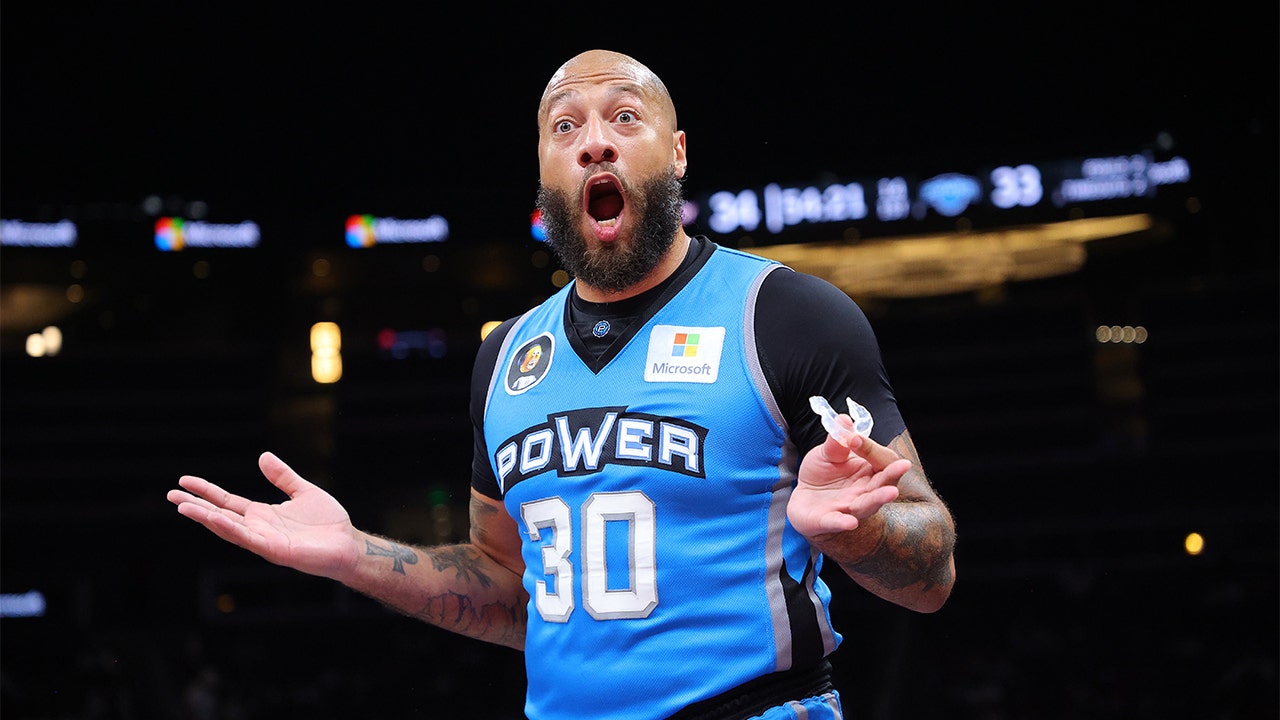
Former NBA player Royce White says he is declaring for next WNBA Draft after Enes Kanter announcement
Royce White says he's declaring for the 2027 WNBA Draft as a transgender woman, joining Enes Kanter Freedom in challenging the league's eligibility rules.
 www.foxnews.com
T. A. Gardner
Serial Thread Killer
Yea, yea, I get it.
I expect leftists to draw such conclusions, but here we are.
It's a deliberate protest stunt, not a serious basketball comeback.
Royce White (born April 10, 1991, so 35) and Enes Kanter Freedom announced intentions to declare for the 2027 WNBA Draft to force the league to clarify (or expose the incoherence of) its eligibility rules on males/trans-identifying athletes in women's sports.
Ex-college star whose fear of flying kept him from NBA joins 'declares' for WNBA
Royce White has followed fellow former NBA player Enes Kanter Freedom in declaring for the 2027 WNBA Draft as the league's transgender debate takes a new turnwww.themirror.com
White has been explicit about the framing.
He told Fox News/OutKick he is "transgender," "a woman," and identifies as such "sometimes... for purpose of basketball, professional basketball."
He says he'll pursue legal action over discrimination if blocked.
The point is to demand the WNBA state clearly whether self-identification alone is enough, or what (if any) medical/physical criteria apply. Kanter Freedom made a similar declaration hours earlier.
Former NBA player Royce White says he is declaring for next WNBA Draft after Enes Kanter announcement
Royce White says he's declaring for the 2027 WNBA Draft as a transgender woman, joining Enes Kanter Freedom in challenging the league's eligibility rules.
They're just piling on in demonstrating what a complete joke the WNBA is. Lingerie league football at least wasn't pretentious.
Yea, yea, I get it. They're just piling on in demonstrating what a complete joke the WNBA is.
Good. You had me worried for a minute.
Lingerie league football at least wasn't pretentious.
And where is it now, alas?