"Experts" Wrong Again: 162,000 Jobs Added in August

Grokmaster

Well-known member
Contributor
Not bad.


August jobs report delivers unexpectedly strong news for US economy​


The U.S. economy added a surprising 162,000 jobs in August, the Labor Department estimated Sept. 4, even as economists said a "low-hire, low-fire" dynamic made it difficult for unemployed Americans to find work.

The 162,000 estimate for August far surpassed forecasters’ expectations and marked a rebound after U.S. employers added a now-revised 21,000 jobs in July. The department previously estimated U.S. employers shed 23,000 jobs in July. Payroll gains for June were also revised higher, reflecting a stronger summer job market than previously thought.


~ Average hourly earnings for employees on private, nonfarm payrolls rose by 10 cents to $37.75 in August, the department said. They increased 3.1% over the year. The department’s next inflation report due out Sept. 11 will reveal whether paychecks kept up with inflation in August. They did not in July.


 
Not bad.


August jobs report delivers unexpectedly strong news for US economy​


The U.S. economy added a surprising 162,000 jobs in August, the Labor Department estimated Sept. 4, even as economists said a "low-hire, low-fire" dynamic made it difficult for unemployed Americans to find work.

The 162,000 estimate for August far surpassed forecasters’ expectations and marked a rebound after U.S. employers added a now-revised 21,000 jobs in July. The department previously estimated U.S. employers shed 23,000 jobs in July. Payroll gains for June were also revised higher, reflecting a stronger summer job market than previously thought.


~ Average hourly earnings for employees on private, nonfarm payrolls rose by 10 cents to $37.75 in August, the department said. They increased 3.1% over the year. The department’s next inflation report due out Sept. 11 will reveal whether paychecks kept up with inflation in August. They did not in July.


Like Wall Street or anyone doesn’t take anything coming out of Trump’s Administration with a grain of salt, especially when Trump fired the head of BLS when he got a bad economic report
 
Like Wall Street or anyone doesn’t take anything coming out of Trump’s Administration with a grain of salt, especially when Trump fired the head of BLS when he got a bad economic report

Think so, Anchovies?
 
Not bad.


August jobs report delivers unexpectedly strong news for US economy​


The U.S. economy added a surprising 162,000 jobs in August, the Labor Department estimated Sept. 4, even as economists said a "low-hire, low-fire" dynamic made it difficult for unemployed Americans to find work.

The 162,000 estimate for August far surpassed forecasters’ expectations and marked a rebound after U.S. employers added a now-revised 21,000 jobs in July. The department previously estimated U.S. employers shed 23,000 jobs in July. Payroll gains for June were also revised higher, reflecting a stronger summer job market than previously thought.


~ Average hourly earnings for employees on private, nonfarm payrolls rose by 10 cents to $37.75 in August, the department said. They increased 3.1% over the year. The department’s next inflation report due out Sept. 11 will reveal whether paychecks kept up with inflation in August. They did not in July.


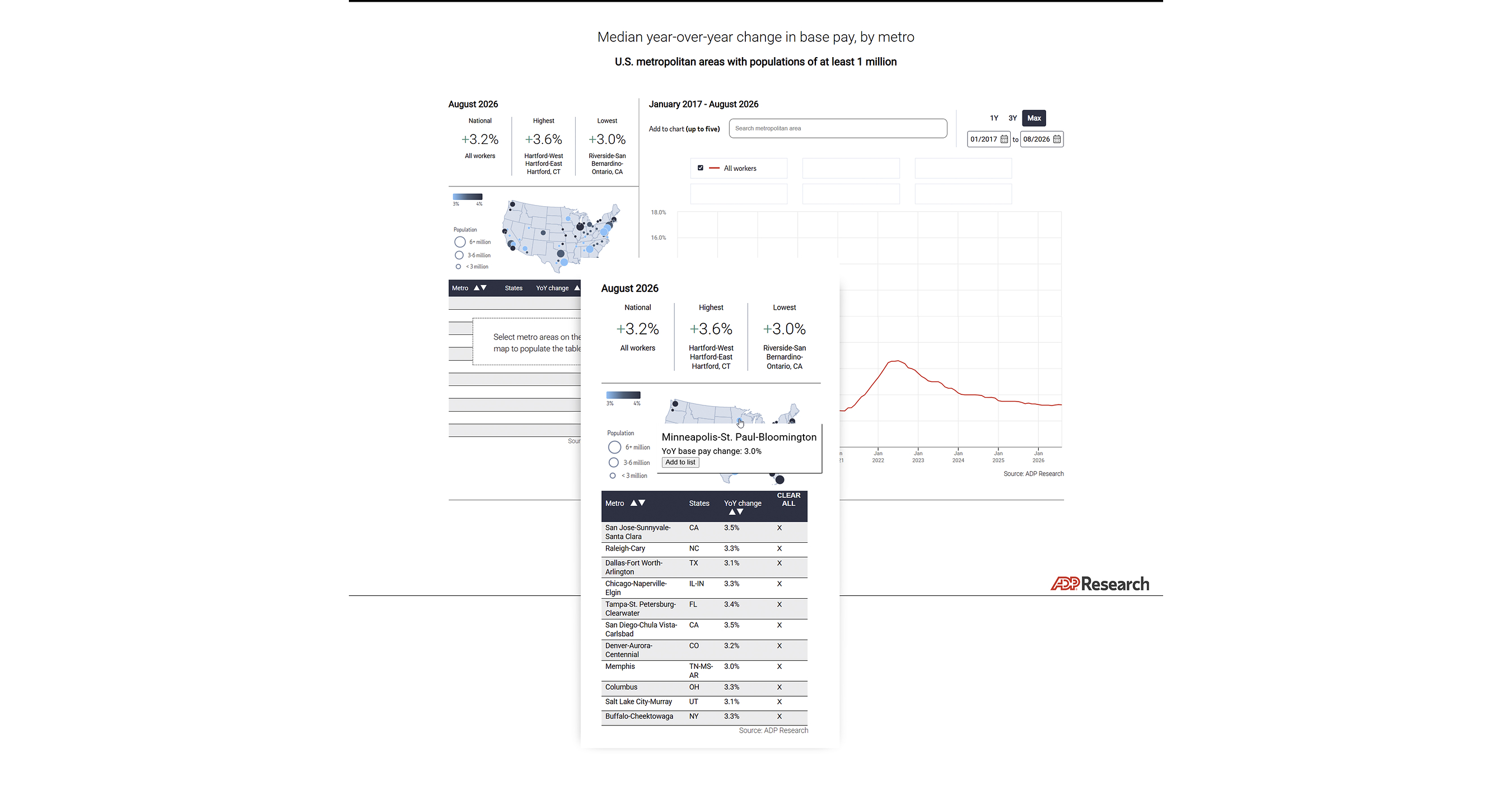
ADP disagrees. By like 140k jobs.

And their leadership hasn't been replaced with loyalists.
 
Like Wall Street or anyone doesn’t take anything coming out of Trump’s Administration with a grain of salt, especially when Trump fired the head of BLS when he got a bad economic report
Wall st. is upset over not getting another interest cut, and both June and July jobs numbers have revised up.

It was Diaper Joe who over-claimed over a million non-existent jobs.
 
Some on my grapevine think that the economy is being collapsed.....some of these same people think that the people in charge in the West want nuclear WW3.....they are actually that insane.

And demonic.

And sadistic.
 
Opposite under Trump, as a rule. Both June and July's numbers have since been revised up.

Who told you that?

Downward, in both the monthly revisions and the annual benchmarks.


Monthly (first print → third/final sample-based estimate)
On a seasonally adjusted basis, the net revision from the first estimate to the third was negative in both years:


  • 2024: mean revision about –20,000 jobs per month (mean absolute revision ~48,000).
  • 2025: mean revision about –58,000 jobs per month (mean absolute revision ~58,000).

So the first monthly prints were, on average, too high. That pattern was especially visible from early 2022 onward and intensified in 2025 (May and June 2025 were the headline cases: May cut from +139k/+144k to +19k; June from +147k to –13k by the third estimate).


Annual benchmarks (survey level → QCEW universe count)
These were the large level adjustments:


  • March 2024 (published February 2025): –589,000 seasonally adjusted (–598,000 not seasonally adjusted), or –0.4 percent.
  • March 2025 (published February 2026): –898,000 seasonally adjusted (–861,000 not seasonally adjusted), or –0.6 percent.

Grokmaster’s reply to you is only half-right, and the “as a rule” part is wrong.

The exact claim:

Opposite under Trump, as a rule. Both June and July's numbers have since been revised up.

June and July 2026 (the two months he cites)​

Official BLS first / second / third estimates of the seasonally adjusted over-the-month change (thousands):

Month1st2nd3rd3rd − 1st
June 2026+57+20+31−26
July 2026−23+21(not out yet)+44 so far


  • July: Yes. The first print was −23,000; the August report revised it to +21,000. That is an upward revision.
  • June: No, not from the original print. It went 57 → 20 → 31. The third estimate is higher than the second, which is what the USA Today/MSN write-up Grokmaster pasted meant by “June … revised higher.” It is still 26,000 below the first estimate.
So “both June and July revised up” is true only if you start the clock at July’s first print and June’s second print. From the actual first releases, June was revised down.

“Opposite under Trump, as a rule”​

That does not match the record we just walked through.

  • The two largest level adjustments in 15 years were the February 2025 and February 2026 annual benchmarks: −589,000 (March 2024) and −898,000 (March 2025). Both downward.
  • Monthly first-to-third revisions in 2024 averaged about −20,000; in 2025 about −58,000. First prints were too high on net.
  • 2026 year-to-date is mixed, not a one-way upward rule: Jan +30, Feb −64, Mar +36, Apr +33, May −109, Jun −26, Jul +44 (so far).

There is no established “under Trump they get revised up” pattern. What is true this month is narrower: July’s first print was revised up, and June’s second print was revised up a little. The first June print was not.


Together they implied more than a million fewer jobs than the monthly surveys had shown. Calendar-year 2025 growth was later described as 181,000 versus an earlier 584,000 figure.


A few individual months were revised up (notably late 2024 after the 2024 benchmark was applied), but the direction that mattered for the two-year picture was downward: first estimates overstated job growth, then both the two subsequent monthly revisions and the annual benchmarks pulled the numbers lower.
 
What has been the history of the Department of Labor's job estimates accuracy compared with the later revisions?


The Department of Labor’s Bureau of Labor Statistics (BLS) produces the monthly nonfarm payroll figures that dominate headlines. Those first-release numbers are estimates from an incomplete sample, not final counts. They are revised twice in the following two months as more survey responses arrive, then again in a large annual “benchmark” that replaces the survey with nearly complete administrative data from unemployment-insurance records (the Quarterly Census of Employment and Wages, or QCEW).

Monthly revisions (first estimate vs. third/final sample-based estimate)​

BLS publishes the full history of these revisions back to 1979. On a seasonally adjusted basis:

  • Average absolute revision (first to third estimate): about 57,000 jobs over the entire period.
  • Since the current probability-sample methods began in 2003: about 51,000 jobs.
  • Net (signed) revision is small and slightly positive on average: roughly +7,000 to +11,000 jobs per month. In other words, the first print has historically been a modest underestimate on net, though the last several years have flipped the other way.
Typical first revision is ~41,000 jobs; the second is ~31,000. Most months stay well inside ±100,000. Large outliers cluster at economic turning points and during the pandemic (March 2020: –672,000; late-2021 recoveries of +389,000 to +437,000). The May–June 2025 pair (combined downward revision of ~258,000) was large by recent standards but not unprecedented once you look past 2020–21.

First-closing survey response rates have fallen since the mid-2010s (now often in the low-to-mid 60s percent), so more of the initial estimate is imputed. Even so, the size of monthly revisions in percentage terms has not blown out; it returned roughly to the 2005–13 average after the pandemic spike. BLS’s own accuracy target is that the first-to-third revision stay within 0.1 percentage point of employment in 10 of 12 months; it has generally met that goal.

Annual benchmark revisions (survey vs. nearly complete administrative count)​

Once a year BLS replaces the March survey level with the QCEW universe count and “wedges” the difference across the surrounding months. These are the revisions that can change the level of employment by hundreds of thousands of jobs.

  • Typical size: well under 0.5 percent of total employment (often 200,000–400,000 jobs).
  • BLS target: average absolute benchmark revision below 0.4 percentage points over a five-year window. It has usually met this.
  • Largest recent cases:
    • March 2009 (Great Recession): about –930,000.
    • March 2025: about –898,000 to –911,000 (largest since 2009; ~0.6 percent of employment).
    • The 2024 benchmark was also sizable (roughly –589,000).
The 2024 and 2025 benchmarks together implied more than a million fewer jobs than the monthly surveys had shown. A smaller 2026 benchmark (around –79,000 for March) suggests the gap has narrowed again after BLS tweaked its business birth-death model.

Pattern over time​

Revisions shrank from the late 1970s through the mid-2010s as collection methods improved (phone and internet instead of mail). They widened again around recessions and after 2020. Since roughly 2022 the first monthly prints have tended to overstate job growth; both the subsequent monthly revisions and the annual benchmarks have then come in lower. That pattern is consistent with a slowing labor market and with known weaknesses in the statistical model that estimates jobs at brand-new and dying firms—weaknesses that show up most clearly when the economy is changing direction.

In short: the first payroll number is a timely but incomplete snapshot. History shows it is usually within tens of thousands of the later sample-based figure and within a few tenths of a percent of the eventual administrative benchmark. The biggest misses have occurred at turning points, not randomly, and the largest level adjustments in 15 years arrived in 2024–25. The process itself—sample first, more sample next, universe count last—is the designed tradeoff between speed and accuracy.
 
Who told you that?

Downward, in both the monthly revisions and the annual benchmarks.


Monthly (first print → third/final sample-based estimate)
On a seasonally adjusted basis, the net revision from the first estimate to the third was negative in both years:


  • 2024: mean revision about –20,000 jobs per month (mean absolute revision ~48,000).
  • 2025: mean revision about –58,000 jobs per month (mean absolute revision ~58,000).

So the first monthly prints were, on average, too high. That pattern was especially visible from early 2022 onward and intensified in 2025 (May and June 2025 were the headline cases: May cut from +139k/+144k to +19k; June from +147k to –13k by the third estimate).


Annual benchmarks (survey level → QCEW universe count)
These were the large level adjustments:


  • March 2024 (published February 2025): –589,000 seasonally adjusted (–598,000 not seasonally adjusted), or –0.4 percent.
  • March 2025 (published February 2026): –898,000 seasonally adjusted (–861,000 not seasonally adjusted), or –0.6 percent.

Grokmaster’s reply to you is only half-right, and the “as a rule” part is wrong.

The exact claim:


June and July 2026 (the two months he cites)​

Official BLS first / second / third estimates of the seasonally adjusted over-the-month change (thousands):

Month1st2nd3rd3rd − 1st
June 2026+57+20+31−26
July 2026−23+21(not out yet)+44 so far


  • July: Yes. The first print was −23,000; the August report revised it to +21,000. That is an upward revision.
  • June: No, not from the original print. It went 57 → 20 → 31. The third estimate is higher than the second, which is what the USA Today/MSN write-up Grokmaster pasted meant by “June … revised higher.” It is still 26,000 below the first estimate.
So “both June and July revised up” is true only if you start the clock at July’s first print and June’s second print. From the actual first releases, June was revised down.

“Opposite under Trump, as a rule”​

That does not match the record we just walked through.

  • The two largest level adjustments in 15 years were the February 2025 and February 2026 annual benchmarks: −589,000 (March 2024) and −898,000 (March 2025). Both downward.
  • Monthly first-to-third revisions in 2024 averaged about −20,000; in 2025 about −58,000. First prints were too high on net.
  • 2026 year-to-date is mixed, not a one-way upward rule: Jan +30, Feb −64, Mar +36, Apr +33, May −109, Jun −26, Jul +44 (so far).

There is no established “under Trump they get revised up” pattern. What is true this month is narrower: July’s first print was revised up, and June’s second print was revised up a little. The first June print was not.


Together they implied more than a million fewer jobs than the monthly surveys had shown. Calendar-year 2025 growth was later described as 181,000 versus an earlier 584,000 figure.


A few individual months were revised up (notably late 2024 after the 2024 benchmark was applied), but the direction that mattered for the two-year picture was downward: first estimates overstated job growth, then both the two subsequent monthly revisions and the annual benchmarks pulled the numbers lower.
In the August 2026 jobs report released by the U.S. Bureau of Labor Statistics, prior estimates for June and July nonfarm payrolls were revised upward by a combined 55,000 jobs. [1]

Monthly Payroll Revisions
    • June 2026: The change in total nonfarm payroll employment for June was revised up by 11,000, from 20,000 to 31,000 per the Robert Half Research summary of the U.S. Bureau of Labor Statistics data.
    • July 2026: July was revised up by 44,000, from a loss of 23,000 to a gain of 21,000. -- [Robert Half Research].
 
Back
Top