don't attend the "civil war"

I have seen and heard it discussed with a gleam in their eye, talking about the weapons they are collecting. IN fact a poster on this board told me how he was so looking forward to it so he could put a cold metal bullet in my head.

That's bullshit. Bullets are HOT metal.
 
Your circle of imaginary black acquaintances seems to be expanding.
What's this, faggot?

Hilton%2B5.jpeg
 
Georgia Military Academy was a Federal soldier training school before the secession of GA.


Established in Marietta and opened to students in July 1851, the Georgia Military Institute (GMI) was the principal source of education for new engineers and teachers in the state during the decade prior to the Civil War (1861-65). Originally funded by private subscription and donations, GMI began its official relationship with the state in 1852, when the legislature chartered the school and presented it with muskets, swords, and a battery of four cannons. Although GMI began with only three instructors and seven students, it quickly attracted a large number of cadets from Georgia’s wealthiest families. Between 1853 and 1861, GMI’s student body fluctuated between 150 and 200 cadets.

GMI’s 110-acre campus included a parade ground, an academic building, four student barracks, and a residence for the school superintendent. Like most southern military schools of the late antebellum period, GMI based its curriculum on the course of study at the U.S. Military Academy at West Point, New York. Discipline at the institution was strict, similar to that at the Virginia Military Institute in Lexington, Virginia, and the Citadel in Charleston, South Carolina. Between 50 and 75 percent of students left GMI each year because of the tough physical and academic standards.

Sometime during the 1850s the state legislature began subsidizing the education of ten cadets yearly as a way of providing qualified engineers and teachers for state projects. Upon graduation, those cadets were required to perform two years of service to the state.

GMI’s existence was threatened in 1861, when Georgia seceded from the Union and Governor Joseph E. Brown called upon GMI superintendent Francis W. Capers to provide drill instructors for the new Georgia volunteers then flooding training camps in the state. Other GMI cadets left to serve in newly forming Southern armies in 1861 and 1862. The school survived by admitting more students, but the Confederate government’s April 1862 Conscription Act left cadets susceptible to the draft, again threatening GMI’s survival. Brown interceded on behalf of GMI and protected the institution by making it home to the state’s engineer corps. Brown appointed Capers as chief engineer of Georgia with the military rank of major.

Although the cadet battalion spent most of the Civil War serving as funeral details, provost guards, prisoner escorts, and drill instructors, the arrival of Union general William T. Sherman’s troops in spring 1864 forced Georgia officials to reassign every available man to the active defense of the state. Desiring to see his cadets enter service as a volunteer unit and not under the draft, Capers led them into the regular Confederate army in May. As Sherman’s army approached Dalton, GMI cadets were assigned to active duty in the Confederate Army of Tennessee. Although Sherman’s troops burned the GMI buildings in Marietta, the cadet battalion entered active service against the Union men and contested the Union invasion along the Chattahoochee River in July and during the siege of Atlanta in August.

During the late summer and fall of 1864 Brown reassigned the GMI cadets to protect the state capital at Milledgeville from Union cavalry raids. In mid-November 1864 the cadets left Milledgeville as part of a ragtag group of militia and convicts hoping to stop Sherman’s march to the sea. Despite their efforts Savannah fell in December, and the GMI battalion spent the remainder of the war acting as guards in Milledgeville and Augusta. The battalion officially disbanded on May 20, 1865.

After the war GMI alumni and Capers made several attempts to reopen the school, but all attempts failed to garner the needed financial support from the state. The Georgia legislature instead used the limited funds available during Reconstruction on public education at nonmilitary schools.

https://www.georgiaencyclopedia.org/articles/history-archaeology/georgia-military-institute/

Not one fucking word about being a "Federal soldier training school before the secession of GA.".
 
Georgia Military Academy was a Federal soldier training school before the secession of GA.


Woodward Academy: A Private, Pre-K-12, Day School in Metro Atlanta


Woodward Academy was founded in 1900 as Georgia Military Academy.

The school opened as Georgia Military Academy, a military boarding school for boys, with only 30 students and one building called Founder's Hall.

By 1910, GMA had 14 teachers, a student body of 150 boys, two more buildings, and a football field. In these early years, teachers and their families lived with cadets in home-like buildings arranged around plazas, playgrounds, and courtyards.

https://www.woodward.edu/about/whoweare/history

Not one fucking word about being a "Federal soldier training school before the secession of GA.".

Now you're just retarded.
 
I don't have any of those, faggot. Just because you never venture out your basement and never see any black people doesn't mean I don't. :rolleyes:

I learned about Sherman from an old black woman in GA when I was a kid, and she didn't have anything nice to say about him. I was rather shocked, tbh.

Same thing about the GA military Institute. He told the whole story how it was, kinda neat. He wasn't mad and hurt like the old woman, though.

That was in a different town..can't remember which one..I wanna say Athens, but so long ago.

Yea as If an old Black women in the south would tell a cracker kid what see really thought :laugh: , especially in the 50's and 60's in the south :palm:
 
Established in Marietta and opened to students in July 1851, the Georgia Military Institute (GMI) was the principal source of education for new engineers and teachers in the state during the decade prior to the Civil War (1861-65). Originally funded by private subscription and donations, GMI began its official relationship with the state in 1852, when the legislature chartered the school and presented it with muskets, swords, and a battery of four cannons. Although GMI began with only three instructors and seven students, it quickly attracted a large number of cadets from Georgia’s wealthiest families. Between 1853 and 1861, GMI’s student body fluctuated between 150 and 200 cadets.

GMI’s 110-acre campus included a parade ground, an academic building, four student barracks, and a residence for the school superintendent. Like most southern military schools of the late antebellum period, GMI based its curriculum on the course of study at the U.S. Military Academy at West Point, New York. Discipline at the institution was strict, similar to that at the Virginia Military Institute in Lexington, Virginia, and the Citadel in Charleston, South Carolina. Between 50 and 75 percent of students left GMI each year because of the tough physical and academic standards.

Sometime during the 1850s the state legislature began subsidizing the education of ten cadets yearly as a way of providing qualified engineers and teachers for state projects. Upon graduation, those cadets were required to perform two years of service to the state.

GMI’s existence was threatened in 1861, when Georgia seceded from the Union and Governor Joseph E. Brown called upon GMI superintendent Francis W. Capers to provide drill instructors for the new Georgia volunteers then flooding training camps in the state. Other GMI cadets left to serve in newly forming Southern armies in 1861 and 1862. The school survived by admitting more students, but the Confederate government’s April 1862 Conscription Act left cadets susceptible to the draft, again threatening GMI’s survival. Brown interceded on behalf of GMI and protected the institution by making it home to the state’s engineer corps. Brown appointed Capers as chief engineer of Georgia with the military rank of major.

Although the cadet battalion spent most of the Civil War serving as funeral details, provost guards, prisoner escorts, and drill instructors, the arrival of Union general William T. Sherman’s troops in spring 1864 forced Georgia officials to reassign every available man to the active defense of the state. Desiring to see his cadets enter service as a volunteer unit and not under the draft, Capers led them into the regular Confederate army in May. As Sherman’s army approached Dalton, GMI cadets were assigned to active duty in the Confederate Army of Tennessee. Although Sherman’s troops burned the GMI buildings in Marietta, the cadet battalion entered active service against the Union men and contested the Union invasion along the Chattahoochee River in July and during the siege of Atlanta in August.

During the late summer and fall of 1864 Brown reassigned the GMI cadets to protect the state capital at Milledgeville from Union cavalry raids. In mid-November 1864 the cadets left Milledgeville as part of a ragtag group of militia and convicts hoping to stop Sherman’s march to the sea. Despite their efforts Savannah fell in December, and the GMI battalion spent the remainder of the war acting as guards in Milledgeville and Augusta. The battalion officially disbanded on May 20, 1865.

After the war GMI alumni and Capers made several attempts to reopen the school, but all attempts failed to garner the needed financial support from the state. The Georgia legislature instead used the limited funds available during Reconstruction on public education at nonmilitary schools.

https://www.georgiaencyclopedia.org/articles/history-archaeology/georgia-military-institute/

Not one fucking word about being a "Federal soldier training school before the secession of GA.".
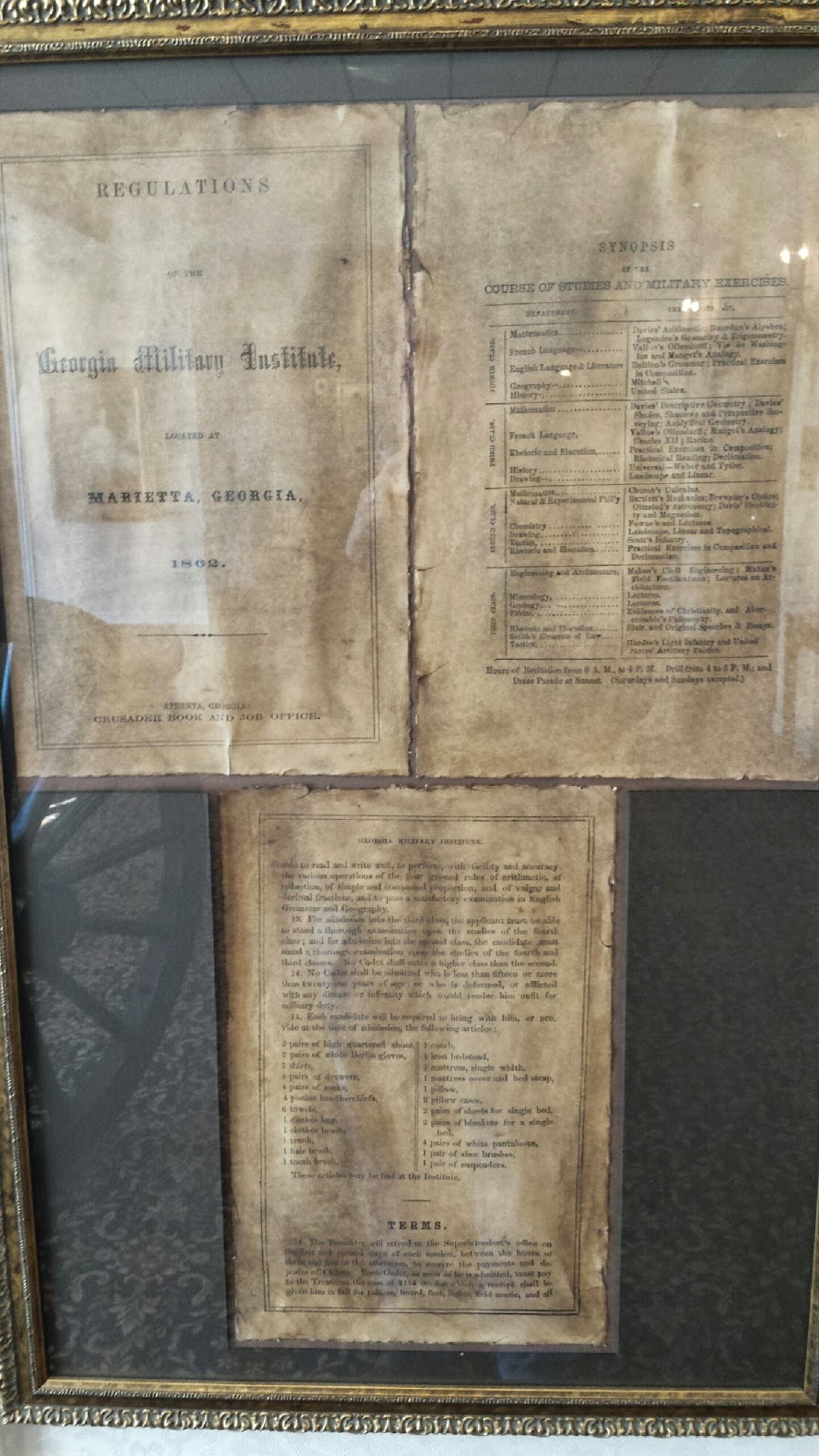
That's the place. Perhaps you missed this part:
"GMI based its curriculum on the course of study at the U.S. Military Academy at West Point, New York. Discipline at the institution was strict, similar to that at the Virginia Military Institute in Lexington, Virginia, and the Citadel in Charleston, South Carolina. Between 50 and 75 percent of students left GMI each year because of the tough physical and academic standards."

Gee, I wonder why? :thinking:

Are you claiming Army Engineers are not soldiers?

Kick yourself, you stupid fuck! It was for training military, idiot!
 
Last edited:
That's the place. Perhaps you missed this part: "GMI based its curriculum on the course of study at the U.S. Military Academy at West Point, New York. Discipline at the institution was strict, similar to that at the Virginia Military Institute in Lexington, Virginia, and the Citadel in Charleston, South Carolina. Between 50 and 75 percent of students left GMI each year because of the tough physical and academic standards."

I didn't miss it.

Not one fucking word about being a "Federal soldier training school before the secession of GA."

You fucked up. Admit it.
 
Yea as If an old Black women in the south would tell a cracker kid what see really thought :laugh: , especially in the 50's and 60's in the south :palm:


As if one wouldn't, you yankee Jew fuck!

You don't know a fucking thing about where you're at even. Where you're at, my family used to own hundreds of acres.

They had black people that "worked for them". Well, the time came and they gave them the choice:

You can stay here and work the land and call it your own, or come with us to FL.

They came with us to FL. There's a 2-tiered reason why.

1, nobody likes change

2, racists probably would have taken that land in NC from them anyway.

Now..one of their descendants offspring owns most of that land in FL and some of the surrounding neighbors even.

I say they made the right choice, IMO.

My family did give some to this and that and kept some..but the black folk got their share, too.

Their share that they earned, like the back 80 to 160. Which their offspring turned into much more than that.

Good land, too. Creek running through, Artesian wells with good water. Can't ask for much more than that. :dunno:
 
Last edited:
I doubt he's a Jew.


:coolstorybro:


:dunno: IDGAF, it is what it is. My family abandoned it in 1851 and everybody, like 5-6 families went south to Florida.

It was like a family co-op, yannow? No, you don't know, because you're just looking for a "gotcha" like a retard when I'm talking about how things really were.

A black family owns most of my family's former land and then some to this day! One of the sons was motivated and made things happen.

Some families died out completely. Nothing you can do about that.
 
Last edited:
Back
Top