
You are using an out of date browser. It may not display this or other websites correctly.
You should upgrade or use an alternative browser.
You should upgrade or use an alternative browser.
White people set to become minority in US by 2050 - 13 years before Britain
- Thread starter Guno צְבִי
- Start date


Taichiliberal
Shaken, not stirred!
No, you just keep trying to split a hair by repeating the same notion while ignoring real time facts that contradict you. As the "diversity" of the population increases and the voting pool increases, the victory margin of the GOP (and traditional old school Dem) lessens. We see that as a factor in the special elections and such across the nation. This is why you see maga/alt-right folk have a cat fit when faced with the population change predictions. It is what it is.I think we're talking about two different things.
The original demographics = destiny argument wasn't that Democrats would sometimes win elections. It was that demographic changes, specifically increased Hispanic and Asian voters, would make winning at the national level very difficult for Republicans.
Republicans currently control the Presidency, Senate and House. That doesn't mean Democrats won't win in the future, but it hasn't played out the way the Democratic political consultants expected it to. At least yet.

It's also why the MAGATs are frantically gerrymandering in a valiant but eventually futile attempt to stay in power. They can't sell their worn, outdated, racist ideas so they have to cheat.No, you just keep trying to split a hair by repeating the same notion while ignoring real time facts that contradict you. As the "diversity" of the population increases and the voting pool increases, the victory margin of the GOP (and traditional old school Dem) lessens. We see that as a factor in the special elections and such across the nation. This is why you see maga/alt-right folk have a cat fit when faced with the population change predictions. It is what it is.

cawacko
Well-known member
Respectfully Taichi, you're changing their definition.No, you just keep trying to split a hair by repeating the same notion while ignoring real time facts that contradict you. As the "diversity" of the population increases and the voting pool increases, the victory margin of the GOP (and traditional old school Dem) lessens. We see that as a factor in the special elections and such across the nation. This is why you see maga/alt-right folk have a cat fit when faced with the population change predictions. It is what it is.
The Democratic consultants who argued demographics = destiny were not stating this from an intra party position. They were not arguing that in the future Democrats like Obama, Clinton, Biden, Harris, Schumer and Pelosi would have less power and the party would be run by the Bernie's and AOC's. Their argument was not the Democratic Party would be remade into a more progressive party.
You are 100% free to believe that is the case but that is not the position they were arguing.
They argued that with America becoming more diverse (largely focusing on Hispanics and Asians) that Republicans would become increasingly less able to win national elections.
At some point in the future its certainly possible Democrats win most national elections, but it hasn't happened yet. And we don't hear the demographics = destiny argument today like we did in the past.
Taichiliberal
Shaken, not stirred!
You wrote: "They argued that with America becoming more diverse (largely focusing on Hispanics and Asians) that Republicans would become increasingly less able to win national elections."Respectfully Taichi, you're changing their definition.
The Democratic consultants who argued demographics = destiny were not stating this from an intra party position. They were not arguing that in the future Democrats like Obama, Clinton, Biden, Harris, Schumer and Pelosi would have less power and the party would be run by the Bernie's and AOC's. Their argument was not the Democratic Party would be remade into a more progressive party.
You are 100% free to believe that is the case but that is not the position they were arguing.
They argued that with America becoming more diverse (largely focusing on Hispanics and Asians) that Republicans would become increasingly less able to win national elections.
At some point in the future its certainly possible Democrats win most national elections, but it hasn't happened yet. And we don't hear the demographics = destiny argument today like we did in the past.
Respectfully, although we're in agreement to a degree, it's a little more than what you say:
Demographics Is Destiny—And Zohran Mamdani Just Proved It
www.crisisinvesting.com/p/demographics-is-destinyand-zohran
Gwen's Take: Demographics as political destiny
www.pbs.org/newshour/politics/gwens-take-demographics-political-destiny
Last edited:

The Right can't meme.
Taichiliberal
Shaken, not stirred!
Agreed. But some folk, whether partisan or neutral, keep a myopic viewpoint in order to substantiate their claim. I tend to look at the whole picture. One of the constants in my lifetime is that the GOP has always done better with low voter turnout. People tend to "give up" when they see things are not changing. But, as the young become the old and new blood comes into the picture, suddenly those with a "never give up" attitude are joined by a new crop of voters ... and that new voter base may not reflect the dynamics/demographics of the generational status quo.It's also why the MAGATs are frantically gerrymandering in a valiant but eventually futile attempt to stay in power. They can't sell their worn, outdated, racist ideas so they have to cheat.
Put it this way, ever since that NY Times article in the 1990's predicted a racial census shift by 2040, a lot of folk on either side of the aisle just ain't been right. Now realistically, does that mean we end up with lock step mindset of non-white voters? Highly unlikely. But given the recent showing of "progressive" voters upsetting are 2 party system, it wouldn't take much to produce a "color blind" political party/social effort that changes the status quo of the mental consciousness.
That's my take, anyway.

I'm not a minority, I'm a limited edition.White Americans will become a minority group in the US for the first time in the country's history by 2050, according to fresh projections from the US Census Bureau.
The data reveals a dramatic transformation in the nation's ethnic composition over seven decades - just 40 years ago, around 80 per cent of all Americans were white.
Declining birth rates among white Americans are also accelerating the shift.
The changes are expected to reach their peak impact between 2040 and 2050.
They represent one of the most rapid population shifts in the US since the first European settlement was established more than 400 years ago.
I am a white guy though, lol.
cawacko
Well-known member
To be clear where I was coming from, I'm thinking back to the (i believe 2002) book by some Dem consultants called the Emerging Democratic Majority.You wrote: "They argued that with America becoming more diverse (largely focusing on Hispanics and Asians) that Republicans would become increasingly less able to win national elections."
Respectfully, although we're in agreement to a degree, it's a little more than what you say:
Demographics Is Destiny—And Zohran Mamdani Just Proved It
www.crisisinvesting.com/p/demographics-is-destinyand-zohran
Gwen's Take: Demographics as political destiny
www.pbs.org/newshour/politics/gwens-take-demographics-political-destiny
Their thesis was with changing demographics (along with growth of other Democratic leaning groups) Democrats were going to be able to dominate at the national level for a long time. That's where the demographics = destiny thought process really originated, at least as I understand it.
I understand you are pointing to the NYC Mayor's race and people being more progressive, and that's fine. But that's going beyond that book. That book didn't break down whether it would be more progressive Dems in power or more mainstream Dems. It's spoke simply about Democrats as a whole.
cawacko
Well-known member
That was really Bernie's pitch, a multi-racial 'color blind' working class coalition that would create a political revolution (or change the status quo of mental consciousness to use your words).Agreed. But some folk, whether partisan or neutral, keep a myopic viewpoint in order to substantiate their claim. I tend to look at the whole picture. One of the constants in my lifetime is that the GOP has always done better with low voter turnout. People tend to "give up" when they see things are not changing. But, as the young become the old and new blood comes into the picture, suddenly those with a "never give up" attitude are joined by a new crop of voters ... and that new voter base may not reflect the dynamics/demographics of the generational status quo.
Put it this way, ever since that NY Times article in the 1990's predicted a racial census shift by 2040, a lot of folk on either side of the aisle just ain't been right. Now realistically, does that mean we end up with lock step mindset of non-white voters? Highly unlikely. But given the recent showing of "progressive" voters upsetting are 2 party system, it wouldn't take much to produce a "color blind" political party/social effort that changes the status quo of the mental consciousness.
That's my take, anyway.
But yeah, there was pushback to that including obviously within the Democratic Party itself.

Librtlover
Verified User
I've known for a long time that the SPLC was a race baiting sham of an organization. They, the (SPLC)Jews hate white people.
they hate them so much they create fake hate groups to frame them for hate.
see SPLC funding white supremacy articles.
has for decades been paying people to play the part of a KKK racist, that will in their partisan minds put the race hating blame on any and all Conservatives and Republicans. By the way, most of the leadership roles of the SPLC are held by Jewish people who have the same racist attitude of whites
as does the forum member gunzo.

Jerry Mathers
Was it me?
yes. gunzo is our resident hateful Jew.I've known for a long time that the SPLC was a race baiting sham of an organization. They, the (SPLC)
has for decades been paying people to play the part of a KKK racist, that will in their partisan minds put the race hating blame on any and all Conservatives and Republicans. By the way, most of the leadership roles of the SPLC are held by Jewish people who have the same racist attitude of whites
as does the forum member gunzo.
They have plenty of time to use their wealthy donors and corporate cash to keep power. The institutions are peopled by white people. That does not change by winning a vote. It will take a long time before the minorities actually get power.It's also why the MAGATs are frantically gerrymandering in a valiant but eventually futile attempt to stay in power. They can't sell their worn, outdated, racist ideas so they have to cheat.
cawacko
Well-known member
I'm trying to understand the world view.They have plenty of time to use their wealthy donors and corporate cash to keep power. The institutions are peopled by white people. That does not change by winning a vote. It will take a long time before the minorities actually get power.
Universities, businesses, museums, the arts, the sports world etc., white people either hold all or most of the power, and its a scenario where political differences are put aside and white people essentially unite as one with the goal to maintain control and power?

yes. gunzo is our resident hateful Jew.
I've seen no evidence to confirm his claim to a be Jew.
Taichiliberal
Shaken, not stirred!
Well Wack, the 2002 book is outdated, as changes within the Dem party shows. The definition MUST adhere to the reality that is burgeoning nationwide, least it becomes archaic.To be clear where I was coming from, I'm thinking back to the (i believe 2002) book by some Dem consultants called the Emerging Democratic Majority.
Their thesis was with changing demographics (along with growth of other Democratic leaning groups) Democrats were going to be able to dominate at the national level for a long time. That's where the demographics = destiny thought process really originated, at least as I understand it.
I understand you are pointing to the NYC Mayor's race and people being more progressive, and that's fine. But that's going beyond that book. That book didn't break down whether it would be more progressive Dems in power or more mainstream Dems. It's spoke simply about Democrats as a whole.
You can repeat your point, but its pretty much moot at this point in time.
cawacko
Well-known member
You and I are in agreement about the book being outdated.Well Wack, the 2002 book is outdated, as changes within the Dem party shows. The definition MUST adhere to the reality that is burgeoning nationwide, least it becomes archaic.
You can repeat your point, but its pretty much moot at this point in time.
Question for you from a progressive perspective. NYC elected Mamdani. Seattle elected a DSA. Karen Bass in L.A. did a poor job but Raman, the progressive/DSA has struggled in their race. And this article is from yesterday's SF Chronicle. (they wouldn't let me post the whole article, word limit on JPP)
Clearly there are Bernie/AOC supporters across the country. But in the most blue urban areas, people are supporting Democrats of course but what do you think holds them back from supporting progressives/DSA's?
S.F. progressives were just trounced in the election. Can they bounce back in the Lurie era?
San Francisco progressives once again came up short at the ballot this week after suffering a string of bruising electoral defeats in recent years.
The latest losses have people on the left end of the city’s political spectrum grappling with tough questions about how they can craft a winning message to regain power, who their leaders should be and which causes they should focus on in the months and years ahead.
In two Board of Supervisors races Tuesday, voters overwhelmingly embraced allies of moderate Mayor Daniel Lurie, rejecting challengers who would have shifted the city’s legislative branch to become more skeptical of Lurie’s centrist agenda. Phil Kim, a Lurie-endorsed school board candidate, also won reelection, defeating two challengers who ran to his left.
Additionally, Proposition D, a union-backed ballot measure that would raise taxes on large companies to fund city services, was trailing by 8.4 points in the latest vote count Friday. Even in the unlikely event that the measure — which was supported by progressive Sen. Bernie Sanders, independent-Vt. — ekes out a narrow win as more ballots are tallied, it would fall well short of a sweeping mandate for increasing taxes on big businesses in San Francisco.
The results continue a trend underway since 2022, when city voters recalled three left-leaning school board members and a district attorney who championed criminal justice reform. In 2024, voters decisively backed former Mayor London Breed’s ballot measures to expand police powers and mandate drug screening for welfare recipients. The same year, moderates gained control of the San Francisco Democratic Party, and the Board of Supervisors shifted to the center as well.
Now, local progressives are searching for a viable path forward in the Lurie era, when the moderate mayor boasts widespread popularity and the electorate has — so far — backed his political priorities. Well-heeled political donors who support Lurie have spent large amounts of money to advance moderate candidates and causes and will continue to do so.
The November election will be the next test for progressives, as voters weigh in on several supervisor races and choose a successor for Speaker Emerita Nancy Pelosi. Progressives are also pushing ballot measures to advance the creation of a public bank and earmark a tax on expensive real estate sales to fund affordable housing. At the same time, Lurie is seeking reforms to the city’s governance structure, including an effort to raise the threshold for measures to qualify for the ballot via signature drive — a path often used by progressives.
Jim Ross, a Bay Area political consultant who has worked with progressives, cautioned that they are a loosely defined group usually drawn together in “a coalition of convenience.” He said the left flank of San Francisco politics lacks the well-funded organizations that have invested heavily to lift the prospects of moderates in recent elections.
“People who believe in, support or want more progressive policies in San Francisco need to or should really take stock of how they move forward,” Ross said. “One of those issues is there’s not really a true leader of progressives in San Francisco right now.”
One major progressive leader in the past was former Supervisor Aaron Peskin, who ran for mayor against Lurie in 2024 but came in third place, behind Breed. Peskin remains an influential figure in San Francisco but was term-limited from the board. He probably won’t be able to return to the legislative branch — as he did before — because a ballot measure that would impose lifetime term limits on supervisors was leading by 10 points in the latest count.
San Francisco progressives are known in part for their skepticism toward market-rate housing projects, which they generally view as fueling the displacement of low-income residents from neighborhoods such as the Mission. They are more likely than moderates to seek constraints on police power and criticize the influence of large tech companies. They typically favor harm-reduction strategies for drug users instead of arresting them or forcing them into treatment.
But recent elections have moved the city’s leadership away from each of those stances.
Lurie and a majority of city supervisors favor policies that loosen restrictions on residential development, including market-rate homes often derided by progressives as “luxury” housing. Both of Lurie’s board allies up for election Tuesday, Stephen Sherrill and Alan Wong, were criticized by opponents for their support of the mayor’s “Family Zoning” plan to allow denser housing in parts of the city. Those attacks didn’t land: As of the latest count, Sherrill and Wong were winning their respective races with about 70% of the vote.
“If it wasn’t already clear, building more housing is popular,” Supervisor Bilal Mahmood wrote on social media in response to the election results Wednesday. “YIMBYs are here to stay.”
Lurie has also taken a friendly posture toward tech companies, including those driving the city’s booming artificial intelligence sector, which he sees as crucial to accelerating San Francisco’s slow economic recovery from the pandemic. He has instituted police crackdowns on public drug use and disorder and has sought to curb some of the city’s harm-reduction policies.
Dean Preston, a progressive former supervisor who was unseated by Mahmood in 2024, said the San Francisco left has still notched some important wins despite what he called a “rightward shift” among many local candidates. He pointed to the passage of a 2022 ballot measure he championed to tax the owners of vacant homes, as well as the 2024 victories of two progressive supervisors, Jackie Fielder and Chyanne Chen.
Yet Preston said progressives have been fighting against “an unlimited fire hose of tech money” opposed to their preferred candidates and causes.
Sherrill and Wong, for example, each benefited from six-figure spending by political action committees funded by wealthy donors, many of whom were tied to the tech industry. And Lurie is a Levi Strauss heir who largely self-funded his successful 2024 campaign; in office, he has continued to tap his personal wealth to fund outside consultants who help him craft his messaging.
“There’s been an avalanche of money invested in trying to change and remake the city in many ways, both in terms of gentrifying individual neighborhoods and in terms of trying to change political narratives,” Preston said. “The path back for progressives and people on the left is both exposing that and laying out the road map for something better, and keeping the focus on the things that are being obscured by these PR machines.”
Preston said Lurie has gotten little blame for the fact that homicides are up this year and that housing is becoming increasingly unaffordable for both renters and homeowners. The AI boom, which is partly to blame for rising housing costs, has also led some large companies in San Francisco to lay off workers in droves, Preston noted. AI could become a political vulnerability for Lurie if those job losses get much worse, which some experts fear they might.
“There’s a growing disconnect between the PR operation of this administration and what people are experiencing in the city,” Preston said.
Sunny Angulo, executive director of the progressive San Francisco policy organization Propel, said left-leaning activists need to find ways of “connecting with people about the realities of an affordability crisis” in the November election. She said that may mean focusing more on policy solutions instead of simply antagonizing Lurie, who enjoyed a 74% approval rating in a recent Chronicle poll.
“Blaming the mayor only gets us so far,” Angulo said. “We have to put solutions out that proactively help solve these problems, that help present an alternative vision to the one that people are currently struggling through. Villains are good for storytelling, but sometimes I think voters are fatigued. … We can’t just oppose things.”
One issue progressives may rally around is a potential November ballot measure that would dedicate funds from an existing tax on pricey real estate transactions to affordable housing projects. San Francisco’s chapter of the Democratic Socialists of America, a left-wing group, is soliciting signatures to get the measure on the ballot.
Canvassers have been met with encouraging reactions from San Francisco residents who are worried about rising costs and an increasingly inaccessible housing market, said Aditya Bhumbla, a co-chair of the group.
“People can feel viscerally that we are on unstable ground for things you know and love in San Francisco,” Bhumbla said. The DSA San Francisco hopes the tax proposal will resonate with voters concerned about affordability and the displacement of people such as artists and bike mechanics, Bhumbla said.
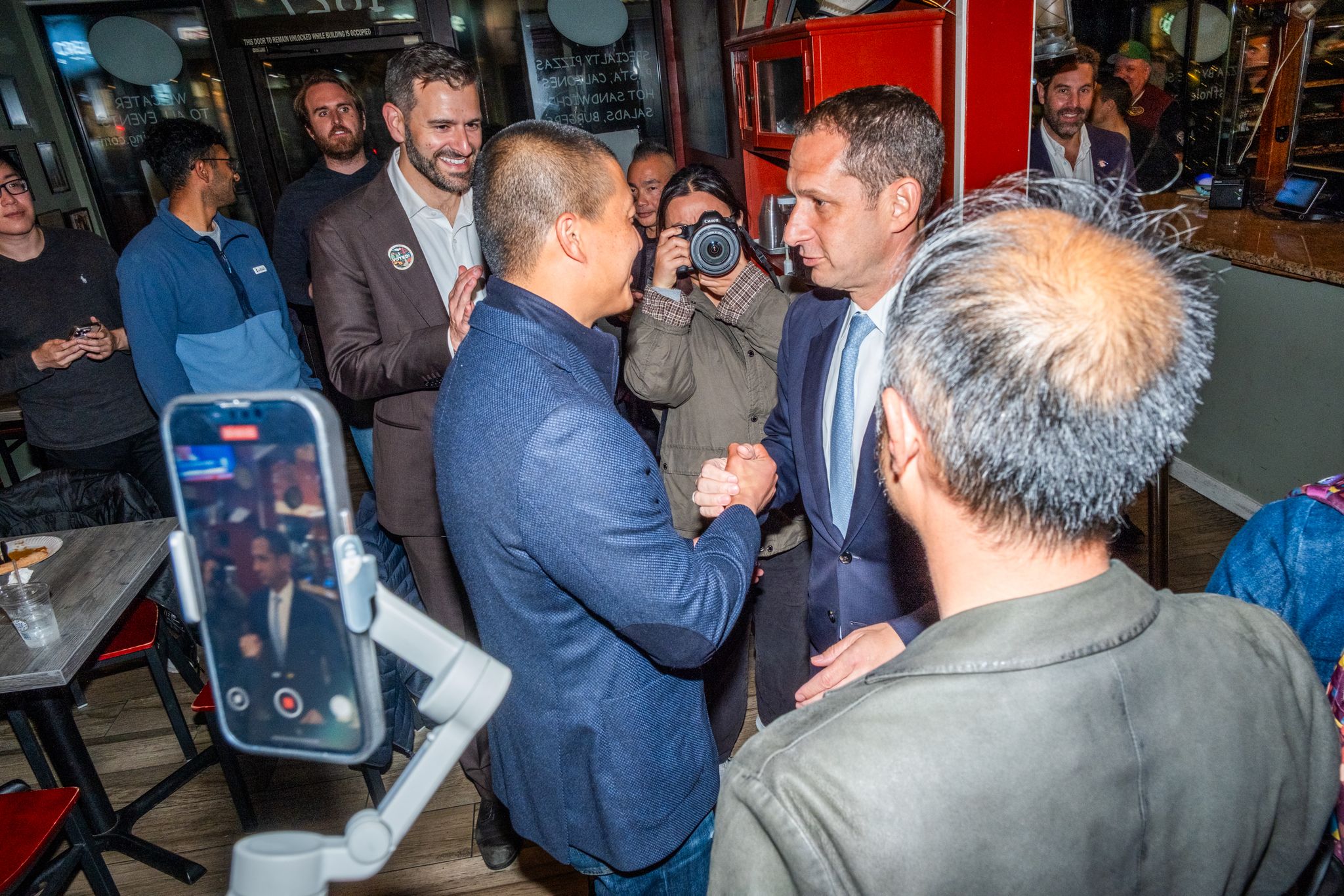
S.F. progressives were just trounced in the election. Can they bounce back in the Lurie era?
Now, San Francisco progressives are searching for a viable path forward in an era dominated by moderate Mayor Daniel Lurie, who is broadly popular.
 www.sfchronicle.com
Taichiliberal
Shaken, not stirred!
Ahh, but SF is but one example....not indicative of what has been transpiring throughout the country in other races. I don't expect overnight, overall change or success .... that would be silly. But as we see, it's happening. Which is why our resident sheet wearers are having a hissy fit.You and I are in agreement about the book being outdated.
Question for you from a progressive perspective. NYC elected Mamdani. Seattle elected a DSA. Karen Bass in L.A. did a poor job but Raman, the progressive/DSA has struggled in their race. And this article is from yesterday's SF Chronicle. (they wouldn't let me post the whole article, word limit on JPP)
Clearly there are Bernie/AOC supporters across the country. But in the most blue urban areas, people are supporting Democrats of course but what do you think holds them back from supporting progressives/DSA's?
S.F. progressives were just trounced in the election. Can they bounce back in the Lurie era?
San Francisco progressives once again came up short at the ballot this week after suffering a string of bruising electoral defeats in recent years.
The latest losses have people on the left end of the city’s political spectrum grappling with tough questions about how they can craft a winning message to regain power, who their leaders should be and which causes they should focus on in the months and years ahead.
In two Board of Supervisors races Tuesday, voters overwhelmingly embraced allies of moderate Mayor Daniel Lurie, rejecting challengers who would have shifted the city’s legislative branch to become more skeptical of Lurie’s centrist agenda. Phil Kim, a Lurie-endorsed school board candidate, also won reelection, defeating two challengers who ran to his left.
Additionally, Proposition D, a union-backed ballot measure that would raise taxes on large companies to fund city services, was trailing by 8.4 points in the latest vote count Friday. Even in the unlikely event that the measure — which was supported by progressive Sen. Bernie Sanders, independent-Vt. — ekes out a narrow win as more ballots are tallied, it would fall well short of a sweeping mandate for increasing taxes on big businesses in San Francisco.
The results continue a trend underway since 2022, when city voters recalled three left-leaning school board members and a district attorney who championed criminal justice reform. In 2024, voters decisively backed former Mayor London Breed’s ballot measures to expand police powers and mandate drug screening for welfare recipients. The same year, moderates gained control of the San Francisco Democratic Party, and the Board of Supervisors shifted to the center as well.
Now, local progressives are searching for a viable path forward in the Lurie era, when the moderate mayor boasts widespread popularity and the electorate has — so far — backed his political priorities. Well-heeled political donors who support Lurie have spent large amounts of money to advance moderate candidates and causes and will continue to do so.
The November election will be the next test for progressives, as voters weigh in on several supervisor races and choose a successor for Speaker Emerita Nancy Pelosi. Progressives are also pushing ballot measures to advance the creation of a public bank and earmark a tax on expensive real estate sales to fund affordable housing. At the same time, Lurie is seeking reforms to the city’s governance structure, including an effort to raise the threshold for measures to qualify for the ballot via signature drive — a path often used by progressives.
Jim Ross, a Bay Area political consultant who has worked with progressives, cautioned that they are a loosely defined group usually drawn together in “a coalition of convenience.” He said the left flank of San Francisco politics lacks the well-funded organizations that have invested heavily to lift the prospects of moderates in recent elections.
“People who believe in, support or want more progressive policies in San Francisco need to or should really take stock of how they move forward,” Ross said. “One of those issues is there’s not really a true leader of progressives in San Francisco right now.”
One major progressive leader in the past was former Supervisor Aaron Peskin, who ran for mayor against Lurie in 2024 but came in third place, behind Breed. Peskin remains an influential figure in San Francisco but was term-limited from the board. He probably won’t be able to return to the legislative branch — as he did before — because a ballot measure that would impose lifetime term limits on supervisors was leading by 10 points in the latest count.
San Francisco progressives are known in part for their skepticism toward market-rate housing projects, which they generally view as fueling the displacement of low-income residents from neighborhoods such as the Mission. They are more likely than moderates to seek constraints on police power and criticize the influence of large tech companies. They typically favor harm-reduction strategies for drug users instead of arresting them or forcing them into treatment.
But recent elections have moved the city’s leadership away from each of those stances.
Lurie and a majority of city supervisors favor policies that loosen restrictions on residential development, including market-rate homes often derided by progressives as “luxury” housing. Both of Lurie’s board allies up for election Tuesday, Stephen Sherrill and Alan Wong, were criticized by opponents for their support of the mayor’s “Family Zoning” plan to allow denser housing in parts of the city. Those attacks didn’t land: As of the latest count, Sherrill and Wong were winning their respective races with about 70% of the vote.
“If it wasn’t already clear, building more housing is popular,” Supervisor Bilal Mahmood wrote on social media in response to the election results Wednesday. “YIMBYs are here to stay.”
Lurie has also taken a friendly posture toward tech companies, including those driving the city’s booming artificial intelligence sector, which he sees as crucial to accelerating San Francisco’s slow economic recovery from the pandemic. He has instituted police crackdowns on public drug use and disorder and has sought to curb some of the city’s harm-reduction policies.
Dean Preston, a progressive former supervisor who was unseated by Mahmood in 2024, said the San Francisco left has still notched some important wins despite what he called a “rightward shift” among many local candidates. He pointed to the passage of a 2022 ballot measure he championed to tax the owners of vacant homes, as well as the 2024 victories of two progressive supervisors, Jackie Fielder and Chyanne Chen.
Yet Preston said progressives have been fighting against “an unlimited fire hose of tech money” opposed to their preferred candidates and causes.
Sherrill and Wong, for example, each benefited from six-figure spending by political action committees funded by wealthy donors, many of whom were tied to the tech industry. And Lurie is a Levi Strauss heir who largely self-funded his successful 2024 campaign; in office, he has continued to tap his personal wealth to fund outside consultants who help him craft his messaging.
“There’s been an avalanche of money invested in trying to change and remake the city in many ways, both in terms of gentrifying individual neighborhoods and in terms of trying to change political narratives,” Preston said. “The path back for progressives and people on the left is both exposing that and laying out the road map for something better, and keeping the focus on the things that are being obscured by these PR machines.”
Preston said Lurie has gotten little blame for the fact that homicides are up this year and that housing is becoming increasingly unaffordable for both renters and homeowners. The AI boom, which is partly to blame for rising housing costs, has also led some large companies in San Francisco to lay off workers in droves, Preston noted. AI could become a political vulnerability for Lurie if those job losses get much worse, which some experts fear they might.
“There’s a growing disconnect between the PR operation of this administration and what people are experiencing in the city,” Preston said.
Sunny Angulo, executive director of the progressive San Francisco policy organization Propel, said left-leaning activists need to find ways of “connecting with people about the realities of an affordability crisis” in the November election. She said that may mean focusing more on policy solutions instead of simply antagonizing Lurie, who enjoyed a 74% approval rating in a recent Chronicle poll.
“Blaming the mayor only gets us so far,” Angulo said. “We have to put solutions out that proactively help solve these problems, that help present an alternative vision to the one that people are currently struggling through. Villains are good for storytelling, but sometimes I think voters are fatigued. … We can’t just oppose things.”
One issue progressives may rally around is a potential November ballot measure that would dedicate funds from an existing tax on pricey real estate transactions to affordable housing projects. San Francisco’s chapter of the Democratic Socialists of America, a left-wing group, is soliciting signatures to get the measure on the ballot.
Canvassers have been met with encouraging reactions from San Francisco residents who are worried about rising costs and an increasingly inaccessible housing market, said Aditya Bhumbla, a co-chair of the group.
“People can feel viscerally that we are on unstable ground for things you know and love in San Francisco,” Bhumbla said. The DSA San Francisco hopes the tax proposal will resonate with voters concerned about affordability and the displacement of people such as artists and bike mechanics, Bhumbla said.
S.F. progressives were just trounced in the election. Can they bounce back in the Lurie era?
Now, San Francisco progressives are searching for a viable path forward in an era dominated by moderate Mayor Daniel Lurie, who is broadly popular.
And so it goes, as they say.
A simple DNA test would prove the Jewish ancestry.
cawacko
Well-known member
I'm not trying to fight with you here but most Republican don't want Democrats winning office. They don't get so granular in saying 'well that Democrat is more mainstream/establishment, so as long as they aren't progressive/dsa then it's ok that they win".Ahh, but SF is but one example....not indicative of what has been transpiring throughout the country in other races. I don't expect overnight, overall change or success .... that would be silly. But as we see, it's happening. Which is why our resident sheet wearers are having a hissy fit.
And so it goes, as they say.
You're right SF is just one City. But it's also one of the most liberal cities in the country. That progressives are struggling there at the moment doesn't mean they can't have success elsewhere, but it speaks to the challenges of the movement.