What have Communists unleashed?


Effective Capacity-Building for Global Poverty Reduction​

#1


Management of Development Cooperation by Partner Country
9
Norway is a leading contributor to bilateral and multilateral development cooperation activities, as well as to international agencies focused on development issues. As a policy objective, Norway aims to allocate 1% to the OECD DAC-approved development aid mechanism. In addition, many Norwegian NGOs play a prominent role in international aid.

Norway has further strengthened its policies by increasing spending and promoting specific initiatives, such as education for women, global health, combating deforestation, and sustainable development of oceans. Norway’s international aid activities aim to combat poverty and improve women’s ability to participate fully in the economy.

In general, Norway favors global free trade arrangements, yet maintains a high level of protectionism with respect to importing cultural products. However, the 30 least developed countries have free export access to the Norwegian market, and imports from these countries have risen.
Monitoring the capacity-building in recipient countries has become systematic, with four objectives: 1) evaluate the results achieved in relation to specified goals and plans; 2) assess whether resource use aligns with the results achieved; 3) systematize lessons learned to ensure the quality of future projects and improve outcomes through effective learning processes; and 4) provide information to authorities and the general public.

Citations:
Donor Tracker. n.d. “At A Glance Norway.” https://donortracker.org/donor_profiles/norway

Norad. n.d. “Norwegian Development Aid – Statistics and Results.” https://resultater.norad.no/en

Norad. n.d. “Systematic Evaluation of Norwegian Aid.” https://www.norad.no/en/front/evaluation/

OECD. 2023. “Norway.” In Development Co-operation Profiles. Paris: OECD Publishing. https://doi.org/10.1787/aaf0304f-en
 
These are the programs that have put Norway at the top


Americans want this type of system because unlike your unfettered capitalism


IT WORKS
 
listen you belligerent fucking cunt.

you're not even close to being smart. you're an arrogant fucking iidot.
I have a 130 IQ


YOUR SILLY INSULTS ARE MEANINGLESS TO ME

THE EXPERTS SAY IM GENIUS LEVEL

you are just some lame assed idiot on the internets
 
Now can you define democratic socialism?
It is repackaged Communism.

Capitalism is a system designed by the owning class to exploit the rest of us for their own profit. We must replace it with democratic socialism, a system where ordinary people have a real voice in our workplaces, neighborhoods, and society.

We want a democracy that creates space for us all to flourish not just survive and answers the fundamental questions of our lives with the input of all.


From original Marx, that says the same thing as he does. They see the problem with society as one of economic class, the proletariat ("rest of us") versus the bourgeoise ("owning class"). This is straight out of Marx. They want to replace that with what amounts to worker's collectives. Again, that's pure Marx.

That has been tried repeatedly with Communist regimes. In every case, the collectives become dominated by party hacks who then elect a party boss (dictator) and that's end of the "Democratic" part of their plan. At that point, the party now in power enacts laws, becomes corrupt, and gains total power to 'Ensure the revolution / change / whatever they're calling it' remains in place. That is, they tell society that's the only way to ensure the system remains in place and is guarded against going back to something else.

In Mexico, that was PRI (Partido Revolucionario Institucional) or Institutionalized Revolutionary Party. That is, they became the state and made their Socialist revolution an institution that couldn't be overturned. For a century they ruled Mexico without worry about opposition. Sure, they allowed other political parties, but if you joined one of those you were blocked from many jobs and any in government. You could expect extra scrutiny by the government. YOU WERE SUSPECT.

That's always how it works. The Democratic Socialists get into power, they will end Democracy in the name of protecting Socialism. They have elections in Cuba, N. Korea, China, and had them in the Soviet Union, Venezuela, Zimbabwe, and elsewhere. Once in power, the Left will NOT give up power.
 
151 bitch.
You have a high bitch rating
Barack Obama, as titular head of the democrat party, has used the most violent and radical elements of the left since 2008. The violence of the Floyd insurgency and the current ICE Out Insurrection are the primary political tool of Obama's democrats.

But can Obama control his Brown Shirts? The Biden Puppetcy was a thinly veiled 3rd term for Obama that fooled literally no one. The Brown Shirts recently turned on child molester and democrat darling Scott Weiner in California, and Dan Goldman.

Now the Brown Shirts have turned on Obama's puppet. Veggie Joe endured the ire of the radical fringe - which now is the mainstream of democrats.

View: https://x.com/AndrewKolvet/status/2071036212555468937?ref_src=twsrc%5Etfw%7Ctwcamp%5Etweetembed%7Ctwterm%5E2071036212555468937%7Ctwgr%5E026ce58407b39b3a34c897c775392cdfc174ee5c%7Ctwcon%5Es1_&ref_url=https%3A%2F%2Ftownhall.com%2Ftipsheet%2Fmattvespa%2F2026%2F06%2F29%2Fjoe-why-did-you-go-to-this-event-n2678451


What Obama created and nurtured appears ready to consume it's creator.
the subject

The OP needed explaining of the terms
 
It is repackaged Communism.

Capitalism is a system designed by the owning class to exploit the rest of us for their own profit. We must replace it with democratic socialism, a system where ordinary people have a real voice in our workplaces, neighborhoods, and society.

We want a democracy that creates space for us all to flourish not just survive and answers the fundamental questions of our lives with the input of all.


From original Marx, that says the same thing as he does. They see the problem with society as one of economic class, the proletariat ("rest of us") versus the bourgeoise ("owning class"). This is straight out of Marx. They want to replace that with what amounts to worker's collectives. Again, that's pure Marx.

That has been tried repeatedly with Communist regimes. In every case, the collectives become dominated by party hacks who then elect a party boss (dictator) and that's end of the "Democratic" part of their plan. At that point, the party now in power enacts laws, becomes corrupt, and gains total power to 'Ensure the revolution / change / whatever they're calling it' remains in place. That is, they tell society that's the only way to ensure the system remains in place and is guarded against going back to something else.

In Mexico, that was PRI (Partido Revolucionario Institucional) or Institutionalized Revolutionary Party. That is, they became the state and made their Socialist revolution an institution that couldn't be overturned. For a century they ruled Mexico without worry about opposition. Sure, they allowed other political parties, but if you joined one of those you were blocked from many jobs and any in government. You could expect extra scrutiny by the government. YOU WERE SUSPECT.

That's always how it works. The Democratic Socialists get into power, they will end Democracy in the name of protecting Socialism. They have elections in Cuba, N. Korea, China, and had them in the Soviet Union, Venezuela, Zimbabwe, and elsewhere. Once in power, the Left will NOT give up power.


"Democratic socialism is repackaged communism" is an overstatement, but it has a kernel of truth worth unpacking.

It's not a one-to-one reboot, but there's substantial ideological and historical overlap that critics rightly highlight.

Definitions & Distinctions​

  • Communism (Marxist-Leninist version): Revolutionary overthrow of capitalism, abolition of private property, central planning, dictatorship of the proletariat (in practice, one-party authoritarianism), and a classless society. Historical examples led to the 100M+ deaths we discussed.
  • Democratic socialism: Seeks socialist ends (heavy public ownership/control of key industries, wealth redistribution, reduced role for private capital) through democratic elections rather than revolution. Bernie Sanders, Alexandria Ocasio-Cortez, and similar figures are the modern U.S. face. They often praise Nordic models but push further left (e.g., "Medicare for All," Green New Deal, wealth taxes, worker co-ops).
  • Social democracy (the blurry middle): Accepts capitalism as the engine but adds strong welfare, unions, and regulation. This is the actual Nordic model.
Democratic socialism is not identical to 20th-century communism — it rejects violent revolution and (usually) one-party rule. However, critics argue it's "repackaged" because:

  • It shares the core Marxist critique of capitalism as inherently exploitative and the goal of moving beyond it toward collective control.
  • Many self-described democratic socialists (including historical figures in the tradition) view it as a stepping stone or gradual path to fuller socialism/communism.
  • In practice, attempts at large-scale democratic socialism often expand government power dramatically, create economic distortions, and slide toward more authoritarian tendencies (see Venezuela under Chávez/Maduro, or historical examples like Allende's Chile). High-tax welfare states that work (Nordics) do so by staying firmly capitalist.

Evidence of Overlap​

Democratic socialists frequently cite or defend aspects of past socialist experiments while distancing from the worst atrocities. The "repackaged" charge comes from:

  • Shared intellectual roots in Marx, Engels, and later theorists.
  • Policy goals that erode private property rights and market signals (e.g., nationalization, price controls, heavy regulation).
  • Polling and rhetoric among younger adherents showing openness to more radical "socialism" labels.
That said, it's not fair to equate a Nordic-style social democrat with Pol Pot. The real danger is mission creep: democratic socialists often criticize successful welfare capitalism as "not real socialism" and push for more state control, which risks repeating incentive and authoritarian problems on a slower timeline.

Bottom line: It's better described as repackaged socialism with democratic mechanisms. Whether it inevitably leads back to communist-style failures is debated — history suggests high caution. The safest, most prosperous path empirically remains capitalism with targeted safety nets, not ever-expanding collective ownership.


Social democracy is a broad, centre-left[1] social, economic, and political ideology within the wider socialist movement[2] that supports political and economic democracy[3] and a gradualist, reformist, and democratic approach toward achieving social equality. In modern practice, social democracy has taken the form of a predominantly capitalist,[4] yet robust welfare state, with policies promoting social justice, market regulation, and a more equitable distribution of income.[4][5]
It does not support "economic democracy." It favors the group over the individual. In achieving "social equality" it will bring only an equally enslaved population living in equal misery just as it has everywhere else it's been tried.

The "capitalist" state won't exist. Instead, the dictatorship will collude with the richest and most powerful in Statist Capitalism The State dictates and the Capitalists make what they're told to make. Everybody else is equally poor and dependent on government for everything.


Social democracy has been described as the most common form of Western or modern socialism,as well as the reformist wing of democratic socialism.Amongst social democrats, attitudes towards socialism vary: some retain socialism as a long-term goal, with social democracy being a political and economic democracy supporting a gradualist, reformist, and democratic approach towards achieving socialism. Others view it as an ethical ideal to guide reforms within capitalism. While both social democracy and democratic socialism once referred to movements seeking to achieve socialism, modern social democracies retain a capitalist system, whereas democratic socialists continue to advocate for its abolition.Nevertheless, the distinction remains blurred in colloquial settings, and the two terms are commonly used synonymously.
As the DSA self-describes it, where is what they want practiced, today, right now, in the Western world?
 
It does not support "economic democracy." It favors the group over the individual. In achieving "social equality" it will bring only an equally enslaved population living in equal misery just as it has everywhere else it's been tried.

The "capitalist" state won't exist. Instead, the dictatorship will collude with the richest and most powerful in Statist Capitalism The State dictates and the Capitalists make what they're told to make. Everybody else is equally poor and dependent on government for everything.
That is not the results seen in actual practice

You are uniformed, stupid and or dishonest


services.


Gender Equality​

#3


Policy Efforts and Commitment to Achieving Gender Equality
9
Gender equality is pursued as a significant policy objective in all areas of public and private activity. There are no quantitative national policy goals, except for a legal requirement (effective 2023) stipulating that at least 40% of board members in all enterprises must be women. The first comprehensive law promoting gender equality was adopted in 1978 and was later revised and extended in 2016 to cover all forms of discrimination. A separate national institution, the Equality and Anti-Discrimination Ombud, oversees the implementation of the law and holds the legal authority to handle specific cases of discrimination.
The proportional representation of men and women in all societal arenas and activities is monitored through general statistical compilations and reports, although it is not the responsibility of any single national unit. While women are now quite well represented in politics and organizations, and increasingly so in business, the labor market and education system remain heavily gendered. Care work in the public sector – and the professional education leading to these occupations – is dominated by women, who typically occupy between 70% and 80% of both study places and jobs. Girls consistently achieve better grades in the school system, leading to high-prestige professions such as medicine, law, and psychology seeing the proportion of female workers increase to well over half. Universities regularly propose quotas for male students; however, there is currently no legal foundation for implementing such measures.

Citations:
Nærings – og fiskeridepartementet. 2023. “Historisk enighet om krav til kjønnsbalanse i norske styrer.” https://www.regjeringen.no/no/aktue...-til-kjonnsbalanse-i-norske-styrer/id2985631/

The Equality and Anti-Discrimination Ombud. https://www.ldo.no/en/ldo-english-page/

Barne – og likestillingsdepartementet. 1978. Likestillingsloven. https://lovdata.no/dokument/NLO/lov/1978-06-09-45


Strong Families​

#2


Family Policies
9
Unpaid family care work is broadly associated with a traditional, subordinate role for women and stands in contrast to an official social and tax policy promoting female labor market participation. Economic benefits and tax incentives to sustain one-earner households have been abandoned and replaced with a generous system of child-related services and benefits for economically active parents. Full wage continuation is granted for 12 months of parental leave for a new child.

Ninety-five percent of children aged 1 – 5 attend preschool, and parents have a maximum of 20 days of paid leave in case of child sickness. If a child is chronically ill or disabled, more generous needs-tested schemes exist. Preschools are heavily subsidized, and there is a national maximum on parent co-payment.

Gender equality objectives are reflected in the exclusive right for fathers to take four months of the parental leave period, and the right to stay at home with a sick child is equally distributed among parents. There is a universal, flat-rate child allowance paid per child until the age of 18. Single parents receive an allowance for an extra child. Rights to leave paid work to care for elderly parents are less developed and exist only as a needs-tested scheme administered by local authorities.

Citations:
OECD. 2023. Exploring Norway’s Fertility, Work, and Family Policy Trends. Paris: OECD Publishing. https://doi.org/10.1787/f0c7bddf-en


Sustainable Pension System​

#1


Policies Aimed at Old-Age Poverty Prevention
9
Since 1956, Norway has provided a universal minimum pension to all individuals with little or no additional right to a work-related pension. In 2023 the level of the minimum pension for a one-person household was 60% of the median income of all those in full employment. This is largely sufficient to prevent poverty among many elderly.
However, minimum pensioners are constantly highlighted as a group with demanding financial living conditions, particularly for elderly individuals living alone. In general, if household expenditures on vital goods are extraordinarily high (e.g., heating in the winter, medicines), additional economic assistance can be received through a means-tested scheme.

Citations:
Wright, M.Y. 2022. “Gode pensjonsordninger gir lav fattigdom blant eldre i Norge.” Memu Mennesker og Muligheter. https://memu.no/artikler/gode-pensjonsordninger-gir-lav-fattigdom-blant-eldre-i-norge/

Hetland, A. 2023. Minstepensjonister i parforhold. Statistics Norway. https://www.ssb.no/sosiale-forhold-...onad/artikler/minstepensjonister-i-parforhold

Policies Targeting Intergenerational Equity
9
The universal, tax-financed old-age pension system was radically reformed in 2011. The previous defined-benefit system was transformed to install a mechanism for adjusting pension rights in relation to increased life expectancy. This average increase in longevity results in a reduction in the pension received by those choosing to retire early. Consequently, future cohorts will need to work longer to receive the same generous level of pension as earlier cohorts. The economic incentives to work longer are strong.

The system remains a pay-as-you-go structure, where the younger, working population funds the pensions of the elderly. However, there are guarantees that if the elderly do not extend their working careers in line with increased longevity, pension levels will fall to avoid placing an undue burden on the younger workforce. This combination of intergenerational solidarity and a significant element of individual choice among the elderly is widely considered a fair system. It is economically sustainable and robust against a likely future increase in longevity.

However, for individuals with health challenges who cannot realistically choose between retirement and work, the system may produce socially unfair consequences. As a result, a new and separate disability pension has been introduced, paying roughly two-thirds of former income regardless of the number of years in employment.

Citations:


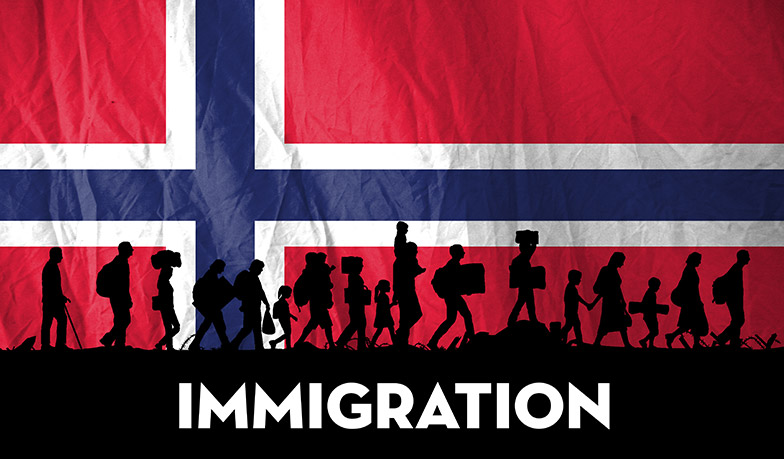
Sustainable Inclusion of Migrants​

#12


Integration Policy
8
Integration policy in Norway is relatively well-organized and well-funded. The key policy objective, which is legislated, is to ensure access to training, education, and employment for immigrants to prevent dependence on social security benefits. Rules for applying for citizenship vary depending on the migrant’s country of origin. Despite comprehensive measures

So move to Norway.

Oh right, they don't have open borders like you demand the USA have..

You CAN'T move there...

 
Back
Top