How these things are handled are a reflection of the POTUS in charge and if he is a self centered coward you get what we saw with Trump.
You can see below how other POTUS handled such situations...
----------
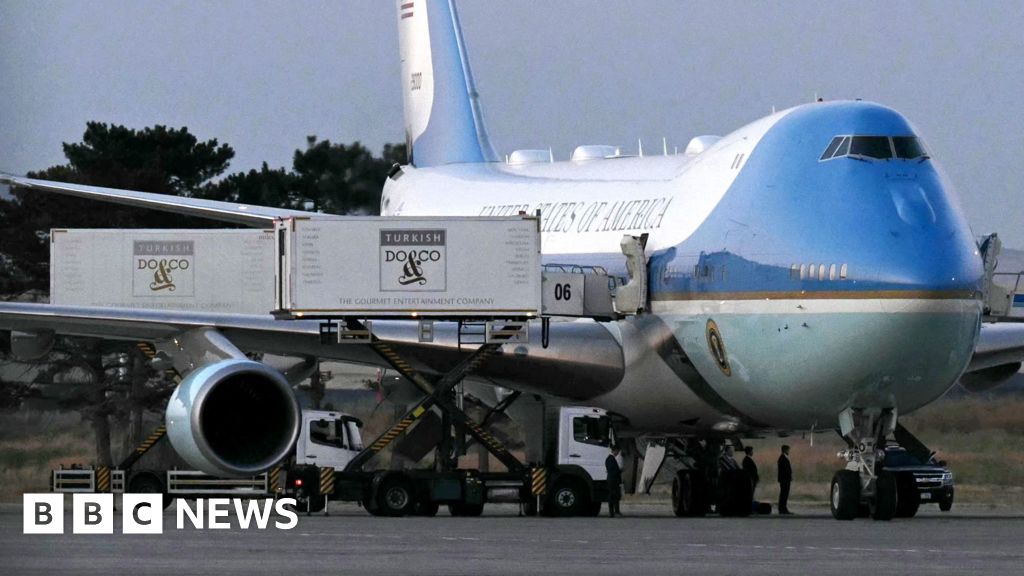
Bill Clinton’s March 2000 trip to Pakistan. Following the exposure of Donald Trump’s secret plane-swap in Turkey—where he hid in a catering truck to board a separate military aircraft, leaving staff and reporters on Air Force One as an unwitting decoy—veteran journalists and historians have pointed out how past administrations handled similar threats differently. [
1,
2,
3,
4,
5]
Past presidents have handled extreme travel threats with distinct tactical and ethical differences: [
1,
2]
1. Bill Clinton (Pakistan, 2000)
In March 2000, President Clinton faced severe security threats when traveling from India to Pakistan following the Kargil War. The Secret Service enacted an elaborate deception: [
1,
2]
- The Tactic: Clinton publicly walked toward the door of a military aircraft, shaking hands with dignitaries to make it look like he was boarding. Instead, he slipped around the front of the aircraft and boarded an unmarked white jet parked nearby. The traditional Air Force One flew ahead as the decoy, landing in front of waiting media while a Secret Service agent dressed to resemble Clinton emerged from the plane. On the ground, the Secret Service deployed six identical presidential limousines to further obscure which vehicle he was in. [1, 2, 3]
- The Key Difference: According to Susan Page, the USA Today journalist who was president of the White House Correspondents’ Association at the time, the White House brought the press leadership into an off-the-record briefing before the operation. They explicitly told the press about the danger and the incoming security procedures. [1, 2, 3]
2. George W. Bush (Iraq, 2003)
For the famous Thanksgiving 2003 surprise trip to visit troops in Baghdad, the threat of the plane being shot down by insurgents was exceptionally high. [
1]
- The Tactic: To maintain total operational security, Bush sneaked off his compound in Texas, wore a baseball cap over his face, and used an unmarked vehicle to board Air Force One in secrecy. [1]
- The Key Difference: The journalists selected for the trip were fully informed of the immense risk before they even boarded. They volunteered for the mission, were forced to surrender all cell phones and pagers, and knew exactly what the security protocols were. No one was left behind on a "decoy" plane without their knowledge. [1, 2, 3]
3. Barack Obama (Afghanistan, 2012)
President Obama made a highly classified midnight trip to Kabul to sign a strategic partnership agreement.
- The Tactic: Air Force One took off from Joint Base Andrews in total darkness with all interior lights off and window shades pulled down to avoid detection by ground spotters. [1, 2, 3]
- The Key Difference: While the public and the broader press corps were kept in the dark until he landed, the press pool traveling on the aircraft was entirely aware that they were flying into a war zone under a media blackout. [1, 2]
Why the Trump Incident is Being Treated Differently
National security and journalism experts note that Trump’s ruse represents a massive departure from standard presidential protocols: [
1,
2]
- Total Deception of Staff and Press: Unlike Clinton, Bush, or Obama, the Trump White House never informed the traveling press pool or several key staffers about the switch. Reporters were ordered to pull their window shades down, unknowingly sitting on what the Secret Service was actively treating as a high-risk target for an Iranian missile strike. [, 2, 3, 4]
- The Aftermath: Former CIA Director John Brennan and media ethics experts noted that past administrations abided by an "ethical requirement" to inform the press pool if they were being placed in life-threatening danger, rather than using them as human bait to draw attention away from the commander-in-chief. [1, 4]


www.bbc.com