
T. A. Gardner
Serial Thread Killer
He's a friend of mine. I'm the Master of Sarcasm.
You must be sleeping with the Master of Absurdity.

He's a friend of mine. I'm the Master of Sarcasm.
You must be sleeping with the Master of Absurdity.
All the 'silicon' in Silicon Valley has moved to Arizona and Texas.Florida, like Arizona, certainly benefit from its weather vis a vis desirability of retirees. Florida experienced a real boom during/post COVID from businesses (and people) moving there.
Miami has had a decent number of big financial and tech firms move there. It's not threatening the Silicon Valley but its creating its own little eco system.

I struggle with this idea that someone doesn't have enough money to retire in Florida so instead they'll stay in a place like New York. (not to suggest everyone should or needs to retire in Florida.) Lots of people in California have sold their homes and moved to lower cost states like Arizona.Yup. The wealthy from the US north and Canada have always looked to the US south overwhelming for retirement options.
--------
Wealthy Canadians injected massive amounts of liquidity into the Arizona real estate market during the 2008–2012 subprime mortgage crisis. [1, 2]
While economists debate whether Canadians single-handedly "saved" the entire market, real estate data confirms that Canadian buyers acted as a critical stabilizing force. They absorbed overwhelming foreclosure inventory by aggressively purchasing second, third, and fourth vacation or investment properties at a deep discount. [1, 2, 3]
The Numbers: The Scale of the Canadian Influx
During the absolute trough of the Arizona housing crash, Canadian buyers swarmed the market due to a rare convergence of economic factors:
Overwhelming Market Dominance
By 2011 to 2015, data from veteran industry groups like the Cromford Report revealed that Canadians accounted for a staggering 93% of all foreign home purchases in Arizona. [, 2]Massive Transaction Volumes
In 2011 alone, Canadians purchased 11,400 homes in Maricopa County (the Phoenix metro area). For many local luxury real estate agents, Canadian buyers suddenly made up 85% or more of their total business volume. [1, 2]Multi-Property "Bargain Hunting"
With local domestic buyers locked out of the market due to ruined credit or tight banking regulations, cash-rich Canadians jumped in. Investors routinely picked up multiple properties—using one as a personal snowbird winter getaway and listing the 2nd, 3rd, or 4th properties as high-yield rental investments. [1, 2, 3, 4, 5]
The "Perfect Storm" That Fuelled the Buying Spree
Articles from outlets like The Calgary Herald and Marketplace outlined three exact economic mechanisms that allowed Canadians to stabilize the market: [1, 2]
- The Parity Loonie: Between 2010 and 2013, the Canadian dollar (Loonie) was exceptionally strong, frequently trading at parity or even higher than the US dollar. This gave Canadians immense cross-border purchasing power. [1, 2]
- Bargain-Basement Pricing: Phoenix-area home prices collapsed by 50% to 70% from their 2006 peaks. Properties that originally cost $400,000 were trading as foreclosures for $120,000 to $150,000, presenting irresistible discounts. [1, 2]
- The Liquid Cash Advantage: Unlike American buyers who relied on frozen US credit markets, affluent Canadians utilized equity from Canada's un-crashed housing market or deployed liquid cash reserves to close deals instantly. [1]

Florida is one of the cultural assholes of AmericaI struggle with this idea that someone doesn't have enough money to retire in Florida so instead they'll stay in a place like New York. (not to suggest everyone should or needs to retire in Florida.) Lots of people in California have sold their homes and moved to lower cost states like Arizona.
Wealthy people can retire anywhere but far more people who aren't wealthy retire each year than wealthy ones.
While you are just an asshole in America...Florida is one of the cultural assholes of America

I cannot figure out if you write that as something that follows from something i posted? Or said? I also cannot figure out what your assumption there is founded in? I am completely confused by it??I struggle with this idea that someone doesn't have enough money to retire in Florida so instead they'll stay in a place like New York.
Yes man people, of all stages have retirement plans that involve a move for various reasons beyond just financial.(not to suggest everyone should or needs to retire in Florida.) Lots of people in California have sold their homes and moved to lower cost states like Arizona.
Yes.Wealthy people can retire anywhere but far more people who aren't wealthy retire each year than wealthy ones.

Hilarious trolling by the Sunshine State !!That's right folks! Everybody's 'favorite' Communist has been named Economic Developer of the Year by the Florida Chamber of Commerce for his unrelenting efforts to send that state tens of billions in new jobs, corporate money, and new businesses since he took office!

Florida official thanks ‘Economic Developer of the Year’ Mamdani with savage Times Square billboard
Florida business boosters are trolling New York City Mayor Zohran Mamdani in the heart of Times Square — thanking him for sending jobs, companies and wealthy residents south as the Sunshine State l…nypost.com

Florida names NYC Mayor Zohran Mamdani 'Economic Developer of the Year' in Times Square campaign
The Florida Chamber launched a Times Square billboard thanking NYC Mayor Zohran Mamdani for driving jobs south. CEO Mark Wilson tells Fox News Digital why free enterprise wins.www.foxbusiness.com
They even put up an electronic billboard in Times Square to celebrate it!

Talk about rubbing somebody's dick in the dirt--if only Mamdani had one...

Link to your claim, or it's more of your madeup bullshit.YOu know Floriduh has actually been losing jobs this year, right?
This is Faux Noize just living up to their name.

 www.bls.gov

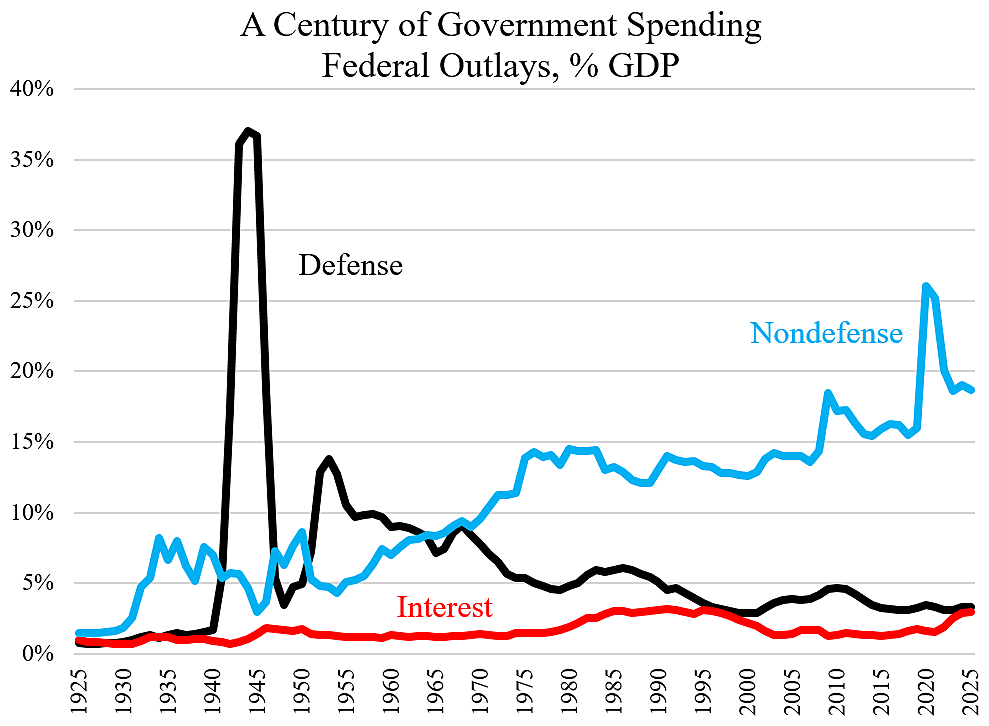
trump's runnaway spending just pushed out debt over $40 trillionThat's right folks! Everybody's 'favorite' Communist has been named Economic Developer of the Year by the Florida Chamber of Commerce for his unrelenting efforts to send that state tens of billions in new jobs, corporate money, and new businesses since he took office!
Florida official thanks ‘Economic Developer of the Year’ Mamdani with savage Times Square billboard
Florida business boosters are trolling New York City Mayor Zohran Mamdani in the heart of Times Square — thanking him for sending jobs, companies and wealthy residents south as the Sunshine State l…
Florida names NYC Mayor Zohran Mamdani 'Economic Developer of the Year' in Times Square campaign
The Florida Chamber launched a Times Square billboard thanking NYC Mayor Zohran Mamdani for driving jobs south. CEO Mark Wilson tells Fox News Digital why free enterprise wins.
They even put up an electronic billboard in Times Square to celebrate it!
Talk about rubbing somebody's dick in the dirt--if only Mamdani had one...
You know what's sad? This is the smartest thing I've ever seen you post.Go look in a mirror for starters.

Normally someone who could be found laying dead in a massive ditch with a hole in the back of his head somewhere in jerkwater China, the Soviet union, North Korea, Cambodia, Cuba or any number of other places. A foolish person who believed in unicorns and other silly ideas that were used as fools for the Communist 1 percenters to gain power and than quickly discarded and laughed at as they were called USEFUL IDIOTS by the afor mentioned 1 percenters. You understand now?What exactly is a communist????
Said the guy living and sweltering in Mayberry North Carolina,...or is it FARMVILLE ?Florida is one of the cultural assholes of America


Stoney, it's apparent that you don't know. Here a link that might help you.Normally someone who could be found laying dead in a massive ditch with a hole in the back of his head somewhere in jerkwater China, the Soviet union, North Korea, Cambodia, Cuba or any number of other places. A foolish person who believed in unicorns and other silly ideas that were used as fools for the Communist 1 percenters to gain power and than quickly discarded and laughed at as they were called USEFUL IDIOTS by the afor mentioned 1 percenters. You understand now?
And Arizona is already saying no as they look to slow this down.All the 'silicon' in Silicon Valley has moved to Arizona and Texas.
Intel etc., are there too. They all have clearly told California "Fuck you!" on building there.
The code monkeys and such will follow in due time. California is losing the high-tech market just as New Jersey, Muschettes, and New York did before them. Yes, prior to the semiconductor and PC revolution, what was the high-tech electronics market was all in those eastern states.
What "runaway spending" would that be?trump's runnaway spending just pushed out debt over $40 trillion
it's going to get worse, because the illegal, stupid war he started has no end in sight
the world's economy is in the shitter
trump's focusing on fixing all of the above. just kidding, he's focusing on covering statues in gold.
But you go ahead and obsess over them "evil socialists", trumtard.
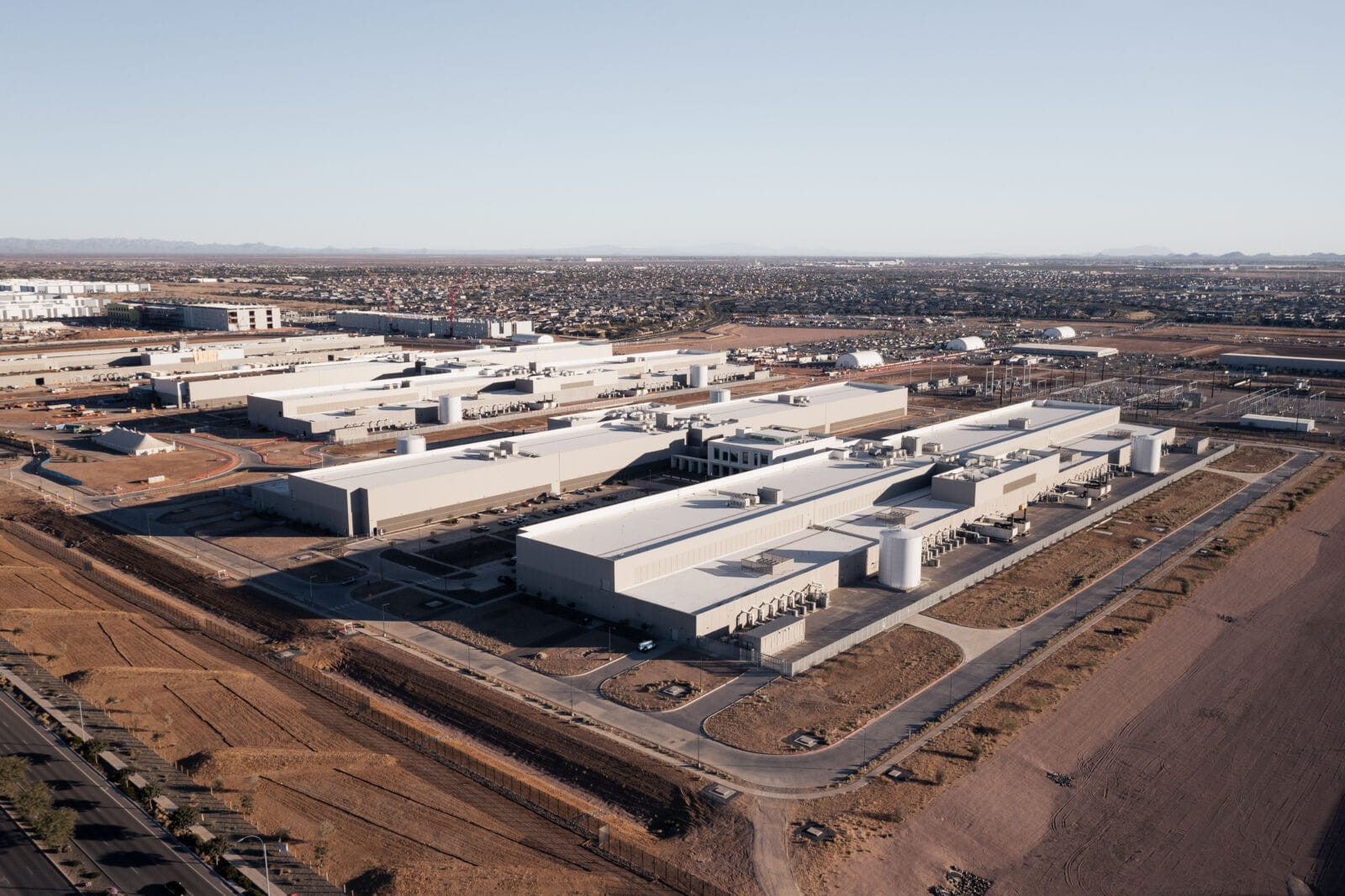
The only one I know of that has been fought against building here is one just outside of Tucson, the 'Berkeley' of Arizona, where the Leftist / Progressive local government and its supporters follow the BANANA ideal.And Arizona is already saying no as they look to slow this down.
Arizona Tapping Brakes on Data Center Development
 azbigmedia.com
As always you are incapable of assessing any situation honestly and without a left/right lens where you ALWAYS 100% of the TIME only assign 'left fault'. You are pathologically incapable of proper and objective assessment to any topic due to ALWAYS 100% of the time starting with your determination that 'it is the lefts fault' first and then finding an argument to try and bolster that.The only one I know of that has been fought against building here is one just outside of Tucson, the 'Berkeley' of Arizona, where the Leftist / Progressive local government and its supporters follow the BANANA ideal.
Phoenix ranks No. 2 in US for planned data center development - AZ Big Media
According to JLL's North America Data Center Report – Midyear 2025, the Valley is in a prime position as vacancy rates plummet to 2.3%
Opposition mostly comes from the usual suspects on the Left's environmentalist front. They're BANANAs too.
All the facts align to show resistance to data centers in Red States is not primarily driven by partisan leftist organizing; rather, it has become a highly popular, bipartisan backlash that unites both conservative and liberal residents. [1, 2]
Polling and local election dynamics indicate that opposition to local data center development spans the entire political spectrum. Gallup polling shows that 63% of Republicans and 75% of Democrats oppose local data center construction. In fact, self-identified conservative Republicans show higher rates of opposition to local data centers than moderate Republicans. [1, 2, 3, 4]
The widespread pushback across conservative-leaning states and counties is driven by a distinct mix of economic, environmental, and populist concerns that transcend standard party lines: [1]
Key Drivers of Conservative and Local Backlash
While Democrats are statistically more likely to cite macro-environmental and climate impacts, the concrete, localized realities—noise pollution, altered land use, higher utility bills, and corporate distrust—have turned data center opposition into one of the most uniquely bipartisan grassroots movements in modern American politics. [1, 2, 3, 4, 5]
- Utility Rate Hikes: Data centers require massive amounts of power. Residents across both parties frequently object to projects out of a well-founded fear that surging energy demands will drive up local residential electricity bills. [1, 2]
- Resource Depletion: In rural and agricultural communities common in Red States, there is heavy resistance over the immense volume of water required to cool the facilities, which critics argue threatens local water tables and farms. [1, 2]
- Right-Wing Populism: Prominent right-wing populist politicians—such as Marjorie Taylor Greene and Thomas Massie—have actively raised alarms about government overreach, corporate land grabs, and the exploitation of private property rights by massive tech conglomerates. [1]
- Secrecy and Government Deals: A major catalyst for local anger is a perceived lack of transparency. Local governments frequently offer secretive tax breaks, heavily redacted utility contracts, and fast-tracked zoning approvals to tech giants, fueling a general populist distrust of "Big Tech" and political elites. [1, 2, 3, 4]
- The 2026 Election Cycle: The issue has become so politically volatile that right-leaning candidates are actively campaigning against them to secure votes. For example, in the Michigan Senate race, Republican candidate Mike Rogers endorsed a moratorium on data center building, while national Republicans expressed concern that data center expansions could harm their prospects in Ohio. [1]
If you look at Arizona specifically —the fourth-largest data center market in the United States—the resistance to data centers follows the exact same pattern: it is a highly localized, fiercely bipartisan backlash, not a partisan leftist movement. [1, 2]
Because of the unique environmental and infrastructure vulnerabilities of the Desert Southwest, opposition in Arizona has grown so intense that it dominated the state’s legislative session. This pressure forced a divided government to enact sweeping, cross-party crackdowns on the tech industry. [1]
A localized assessment reveals how this issue uniquely manifests across Arizona's political, economic, and environmental landscape:
1. Water Scarcity and the Fight for the Aquifer
In a state plagued by long-term drought and dropping reservoir levels in the Colorado River basin, water consumption is a highly unifying emotional and economic issue. [1]
- The Scale of Consumption: In Phoenix alone, the water requirements for roughly 60 operating data centers reach an astronomical 177 million gallons daily. Half of the state's facilities use cooling systems that continuously guzzle fresh water whenever outdoor temperatures exceed 85 degrees—a frequent reality in Arizona. [1, 2, 3]
- Bipartisan Local Backlash: In Tucson, grassroots opposition to a massive project code-named "Project Blue" (linked to Amazon) drew record-breaking, multi-generational crowds of up to 1,000 residents to city council meetings. Suburban communities in the West Valley have revolted against these projects out of fear that hyperscale facilities will drain local aquifers, threatening residential drinking water and regional agriculture. [1, 2, 3]
2. The Power Grid and Rate-Hike Fears
Arizona data centers now consume 7.4% of the state's total electrical power. The rapid boom in AI computing has accelerated this load so fast that utilities like Tucson Electric Power project their annual energy demand could surge by 52% by 2035. [1, 2]
- Consumer Protection Backlash: This has sparked severe pushback from everyday utility customers who fear that the costs of building new power plants and transmission lines to feed tech giants will be pushed onto their residential bills. Local regulatory bodies, like the Arizona Corporation Commission, have faced intense public protests from residents demanding that data centers be placed into separate rate classes so they do not artificially inflate public energy bills. [1, 2, 3, 4]
3. Arizona’s Bipartisan State-Level Crackdown
The reality that this resistance is not just "leftist organizing" is proven by the action taken at the state capitol.
- The 3-Year Moratorium: A divided legislature passed a major bipartisan budget provision that suspended Arizona's lucrative sales tax exemptions for data center operators for the next three years (through 2029). This was a massive blow to the state's $35 billion tech industry. It was passed after heavy public outcry from both conservative rural districts and progressive urban ones. [1, 2]
- Pending Grid Legislation: Lawmakers also introduced legislation (such as HB 2756) to legally mandate that tech companies pay 100% of their own infrastructure and grid-connection costs, protecting standard consumers from being subsidized. [1]
4. Municipal "Local Control" Revolts
Rather than waiting for the state or federal government, local municipalities across the political spectrum are using zoning ordinances to box out tech companies:
- The Town of Marana (December 2024): Enacted strict ordinances requiring developers to complete an exhausting public hearing process and prove they have an independent, adequate water and power supply before building. [1, 2]
- The City of Phoenix: Enacted severe new zoning restrictions. This prompted a wave of legal claims from frustrated tech developers who argued the city was tanking their property values. [1]
- The West Valley (Buckeye & El Mirage): High-profile pushback from city officials forced major development firms to completely withdraw $14 billion multi-campus data center proposals after city halls flatly refused to grant the necessary zoning. [1, 2]
- Tucson (September 2026): Implemented strict Unified Development Code amendments. This requires large-scale data centers to face intense neighborhood coordination, public scrutiny, and zoning examiner review before breaking ground. [1]
The Core Political Takeaway
The debate in Arizona has moved completely out of the traditional "Left vs. Right" paradigm. During primary debates—such as the race for Arizona’s 1st Congressional District—Republican candidates argued openly about data centers. Many strictly opposed building them anywhere near residential infill areas. [1]
While a tech industry group like the Arizona Technology Council actively lobbies to keep the data center boom alive, they are fighting against a combined wall of environmental progressives, rural agricultural conservatives, and suburban homeowners who all view data centers as bad neighbors that threaten the state's water, power, and wallet. [1, 2, 4, 5]

