How can a primary school teacher politically indoctrinate a kid?
A primary-school teacher can politically indoctrinate a child by treating contested political claims as settled moral or factual truths, selecting materials that lead students toward one conclusion, and shutting down or never presenting the other side. Young children (roughly ages 5–11) are especially susceptible because they still treat the teacher as an authority figure, have limited ability to evaluate sources, and lack the historical or logical tools to push back.
Common methods that appear in reporting and complaints
These are the patterns that keep showing up in parent reports, leaked materials, former-teacher accounts, and curriculum reviews:
- One-sided content presented as fact. History or social-studies lessons that frame Western institutions, specific historical figures, or national founding as primarily oppressive, without the counter-evidence or complexity. A former teacher described an elementary student rejecting Winston Churchill as “a racist who didn’t think women should have rights” after classroom instruction—language that sounded copied rather than reasoned.
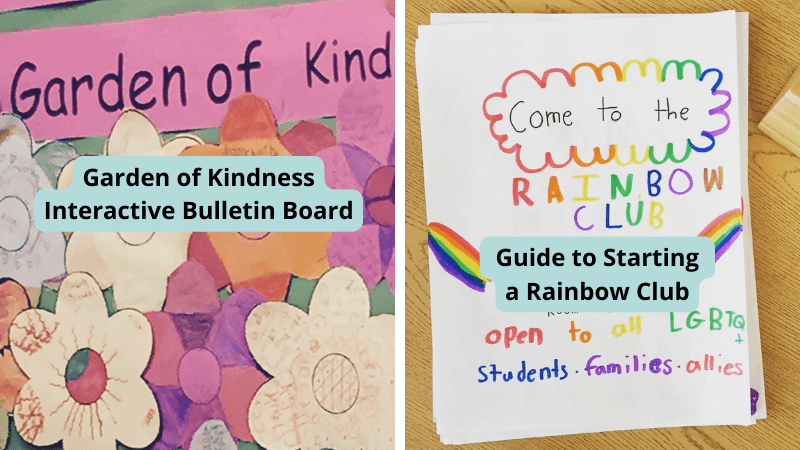
- Materials that smuggle political slogans into “age-appropriate” activities. Coloring books, picture books, and worksheets that include terms such as “queer affirming,” “transgender affirming,” “restorative justice,” or specific activist organizations’ tenets. These have been documented in some U.S. elementary classrooms as Black History or social-emotional lessons.
- Normalization. Presenting a particular viewpoint (on race, gender, climate, policing, or patriotism) as the default, non-political “kind” or “inclusive” position. Teachers wearing political apparel or using classroom language that treats dissent as morally suspect reinforces this.
- Teacher-selected materials with little oversight. Surveys have found that the large majority of elementary teachers use or create their own materials rather than strictly following a district-adopted curriculum. Sites that sell lesson plans contain large numbers of “privilege walks,” pronoun lessons, and identity-lens activities.
- Emotional framing over evidence. Lessons that ask young children to identify as victims or oppressors based on immutable traits, or that treat certain family or national traditions as inherently harmful, rely on feeling rather than argument.
- Suppression of alternatives. Skipping or sanitizing topics (Thanksgiving, certain Founders, biological sex) that do not fit the preferred narrative, or treating questions as evidence of “wrongthink.”
The same toolkit works in the opposite direction: patriotic education that omits slavery’s scale or complexity, or that treats national symbols as beyond criticism, can also function as indoctrination when it closes off inquiry. Authoritarian systems (Nazi Germany, Taliban Afghanistan, Ba’athist Syria, contemporary Russia) simply make the methods more explicit—mandatory political classes, rewritten textbooks, rituals, and punishment for deviation.
What distinguishes this from ordinary teaching
Education presents evidence, competing interpretations, and the tools to evaluate them. Indoctrination presents a conclusion first and treats contrary evidence as illegitimate or unmentionable. In primary school the line is easier to cross because the cognitive load is kept low (coloring, simple worksheets, teacher-led stories) and because young children rarely have the vocabulary or independence to notice the missing pieces.
Most teachers are not running a coordinated campaign. The effect often comes from education-school training that emphasizes “critical pedagogy,” from commercially available lesson plans, from district social-emotional or equity frameworks, and from the social environment of the school. Parents who want to see it usually look at homework language, assigned books, classroom posters, and whether the child starts repeating adult political slogans they did not hear at home.