
You are using an out of date browser. It may not display this or other websites correctly.
You should upgrade or use an alternative browser.
You should upgrade or use an alternative browser.
Billionaires abound in California. Why not tax their wealth?
- Thread starter Hume
- Start date


QP!
Verified User
You can certainly cut taxes your way to make a country in debt and poor if you cut incoming revenue beyond your baseline expenditures.True then. True now. You cannot tax your way out of debt.
QP!
Verified User
As i have pointed out to you prior, if i live in butt fuck nowhere and make millions per year as the only big business owner and pay 5% tax, the total amount of tax i pay could be substantial more than my employees and all others in the town, who earn low wages and pay ~25% of their income per year. So while i pay more in TOTAL they pay more proportionally and the latter IS MORE IMPORTANT as they are carrying the burden more.The rich pay far more in taxes than any other group.
The top 1% of earners across the U.S. earn an average of 19.5% of all income – sometimes garnering criticism from pundits and politicians – but pay 37% of total income taxes.
What the Top 1% Pays in Taxes Across the U.S. – 2025 Study
SmartAsset examined the latest IRS data to determine where the top 1% of earners contribute the most – and least – in taxes.smartasset.com
Current IRS percentile data for tax year 2023 shows that the top 1% of tax returns paid 38.4% of all federal individual income taxes. That group included about 1.53 million returns, with adjusted gross income of at least $675,602.

Who Pays the Most Taxes in America? Breakdown by Income Level [2026 Update] - North American Community Hub
IRS data shows who pays the most federal income taxes in America, and how the top 1 percent compares with the bottom half.nchstats.com

Who Pays Income Taxes?
(PDF) updated April 2026 In 2025, Congress locked in key provisions of the Tax Cuts and Jobs Act through the One Big Beautiful Bill Act. Yet, debates over the tax code rage on. Calls for new wealth taxes and higher rates on top earners have intensified, as the federal government continues to...www.ntu.org
The top 1% represents the highest earners in the country, and their contribution is significant:
This means the top 1% pays nearly double their share of income in taxes—an important indicator of how progressive the system is.
- They earn about 20.6% of total income
- They pay approximately 38.4% of all federal income taxes

Who’s Really Paying Federal Income Taxes? A Clear Look at the Top 1% and Top 5% | Stordahl Capital Management
The higher you earn, the more the system relies on you. Here’s why the top 5% should be thinking differently about taxes.www.stordahlcap.com
This is a point you seem incapable of understanding as you repeat this mistake over and over.
-------------
Ai Summary.
Direct Comparison: What is missed or not understood in that forum post.
| Tax Metric | What the Poster's Data Shows | What the Full Financial Reality Shows |
|---|---|---|
| Primary Focus | Federal Income Tax only (where the system is most progressive). | All Taxes Combined (Income, Payroll, Corporate, State, and Sales). |
| How Money is Tracked | Adjusted Gross Income (AGI) (Wages and realized sales). | Total Economic Growth (Includes massive untaxed unrealized wealth). |
| Tax Rates | Implies the rich are taxed at near-double the rate of others. | Proves the ultra-wealthy benefit from a 20% capital gains tax cap and deductions. |
 The Verdict
The poster's figures are a classic example of using a true statistic to tell an incomplete story. The top 1% do fund the majority of the federal income tax revenue because they hold an overwhelming majority of the income. But that does not mean the ultra-rich are paying a proportional share of their actual wealth or total economic growth back into the system. [1, 2, 3, 4, 5]

T. A. Gardner
Serial Thread Killer
This is simply asinine. If you cut spending whether you cut taxes or not, you end up with a country that isn't in debt to its eyeballs and poor. Stripping the economy of its wealth to pay for profligate government spending that has no ROI, is how a nation goes broke.You can certainly cut taxes your way to make a country in debt and poor if you cut incoming revenue beyond your baseline expenditures.
T. A. Gardner
Serial Thread Killer
You've switched the argument.As i have pointed out to you prior, if i live in butt fuck nowhere and make millions per year as the only big business owner and pay 5% tax, the total amount of tax i pay could be substantial more than my employees and all others in the town, who earn low wages and pay ~25% of their income per year. So while i pay more in TOTAL they pay more proportionally and the latter IS MORE IMPORTANT as they are carrying the burden more.
This is a point you seem incapable of understanding as you repeat this mistake over and over.
-------------
Ai Summary.
Direct Comparison: What is missed or not understood in that forum post.
Tax Metric What the Poster's Data Shows What the Full Financial Reality Shows Primary Focus Federal Income Tax only (where the system is most progressive). All Taxes Combined (Income, Payroll, Corporate, State, and Sales). How Money is Tracked Adjusted Gross Income (AGI) (Wages and realized sales). Total Economic Growth (Includes massive untaxed unrealized wealth). Tax Rates Implies the rich are taxed at near-double the rate of others. Proves the ultra-wealthy benefit from a 20% capital gains tax cap and deductions.
The poster's figures are a classic example of using a true statistic to tell an incomplete story. The top 1% do fund the majority of the federal income tax revenue because they hold an overwhelming majority of the income. But that does not mean the ultra-rich are paying a proportional share of their actual wealth or total economic growth back into the system. [1, 2, 3, 4, 5]
I'm not particularly concerned if the wealthy are paying their "fair share" or not because that's debatable. What is their "fair share" is clearly subjective. I don't care if they could "pay more." What's their fair share to you may not be what I think is "fair" or what they think is "fair."
On the other hand, if you rapaciously grab their wealth and spend it on stuff that has little or no ROI, like say, California's high speed rail plan, that money does nothing to increase the wealth of the state or its tax base. Instead it is simply squandered away on short-term spending that has a negative long-term effect.
Your "AI summary" is irrelevant here.
It means that assets either have to generate a profit, or some of them must be sold to generate a profit. It forces profit generation, which can unjam an economy. If the profit is unrealizable, trying to sell some of the asset will quickly prove that. If it is just unrealized, it can be partly realized through sale, or dividends.Actually, a lot of their wealth is unrealized gains on things like capital. That is, they have a pile of stock that is worth far more than they paid for it. That isn't profit. That is unrealized profit. Until they sell it and take the cash, it is wealth only on an accounting spreadsheet, not in reality.
A common wealth tax is property tax. If someone owns a huge amount of real estate, and there is no property tax, he can just sit on it, hurting the economy. If there is property tax, he is forced to either generate a profit off the real estate, or sell some of it to cover the taxes. Either way, the real estate ends up better economically used.
It works less well with a startup. Many times a startup needs to be owned by someone for years to guide it. It might not generate a profit for those years. Taking money from it hurts it, and the economy in general... Or so the arguments go.
There is a danger that companies will become stale monopolies, and stifle innovation, with no fluidity in ownership.
That is a hypothesis, but certainly not a proven fact. Some spending encourages economic growth, therefore cutting it would cut the economy and taxes, and become a death spiral. Let's say you stopped supporting roads. Without roads, good and people could not move around in the economy. Income would drop, as would taxes. We would end up poorer, and with more debt.If you cut spending whether you cut taxes or not, you end up with a country that isn't in debt to its eyeballs and poor.
T. A. Gardner
Serial Thread Killer
It means that assets either have to generate a profit, or some of them must be sold to generate a profit. It forces profit generation, which can unjam an economy. If the profit is unrealizable, trying to sell some of the asset will quickly prove that. If it is just unrealized, it can be partly realized through sale, or dividends.
Sell off the asset to whom? That could mean most of the money ends up out-of-state and if sold at a loss then the seller is likely to write it off on their taxes as such to reduce what they owe. That means the state loses either way.
A common wealth tax is property tax. If someone owns a huge amount of real estate, and there is no property tax, he can just sit on it, hurting the economy. If there is property tax, he is forced to either generate a profit off the real estate, or sell some of it to cover the taxes. Either way, the real estate ends up better economically used.
Property tax is NOT a wealth tax. It is a means for government to cover the cost of infrastructure where that property is located like roads, schools, and such. There is some indirect ROI on that that benefits the property owner.
If someone owns a huge amount of real estate and there is no property tax, that is revenue neutral to the government and owner. It doesn't hurt or help the economy. So, you are just wrong here.
It works less well with a startup. Many times a startup needs to be owned by someone for years to guide it. It might not generate a profit for those years. Taking money from it hurts it, and the economy in general... Or so the arguments go.
So why demand a cut of the business when it finally does become successful. That is what a wealth tax does. It isn't taxes against profit. A wealth tax is taking a percentage of the business itself as taxes. For a business owner, that might mean that their profits and investment take a loss to pay for the wealth tax resulting in the business not expanding or even being forced to close to cover it. Now the state got its proverbial 'pound of flesh' but killed the person paying it in the process.
A wealth tax is nothing but a tax on envy of the wealthy. It will fail to produce the result the Left thinks it will.
Wrong. This has nothing to do with monopolies. It has everything to do with looting business to pay for the stupidity of politicians.There is a danger that companies will become stale monopolies, and stifle innovation, with no fluidity in ownership.
ANNOYING!Sell off the asset to whom? That could mean most of the money ends up out-of-state and if sold at a loss then the seller is likely to write it off on their taxes as such to reduce what they owe. That means the state loses either way.
Property tax is NOT a wealth tax. It is a means for government to cover the cost of infrastructure where that property is located like roads, schools, and such. There is some indirect ROI on that that benefits the property owner.
If someone owns a huge amount of real estate and there is no property tax, that is revenue neutral to the government and owner. It doesn't hurt or help the economy. So, you are just wrong here.
So why demand a cut of the business when it finally does become successful. That is what a wealth tax does. It isn't taxes against profit. A wealth tax is taking a percentage of the business itself as taxes. For a business owner, that might mean that their profits and investment take a loss to pay for the wealth tax resulting in the business not expanding or even being forced to close to cover it. Now the state got its proverbial 'pound of flesh' but killed the person paying it in the process.
A wealth tax is nothing but a tax on envy of the wealthy. It will fail to produce the result the Left thinks it will.
Wrong. This has nothing to do with monopolies. It has everything to do with looting business to pay for the stupidity of politicians.
T. A. Gardner
Serial Thread Killer
Prior to roughly the 1890's roads were almost entirely a privately developed thing. Even up through the 1930's roads were often privately developed. For example, the first transcontinental road, the Lincoln Highway, was a private venture seen as a good investment by those promoting it.That is a hypothesis, but certainly not a proven fact. Some spending encourages economic growth, therefore cutting it would cut the economy and taxes, and become a death spiral. Let's say you stopped supporting roads. Without roads, good and people could not move around in the economy. Income would drop, as would taxes. We would end up poorer, and with more debt.
Lincoln Highway Association
Let's say you know nothing about roads... Wait! You do know nothing about roads.
If no one is willing to buy, then it does not have value, and therefore is not wealth to pay taxes on. The reality is that usually there are eager buyers.Sell off the asset to whom?
Property taxes are a wealth tax on a narrow set of assets. That is just reality.Property tax is NOT a wealth tax.
As are all taxes.It is a means for government to cover the cost of infrastructure where that property is located like roads, schools, and such. There is some indirect ROI on that that benefits the property owner.
If I own all the land in a county, and refuse to allow anything productive on that land, how big will the economy of that county be? Zero? Or if I own all the land in a county, and demand everyone living on my land only grow the crops I say, and pay me extortionate rents for the privilege...If someone owns a huge amount of real estate and there is no property tax, that is revenue neutral to the government and owner. It doesn't hurt or help the economy. So, you are just wrong here.
We would have a dark age like economy. Henry VIII had 80% of the land owned by nobles paying little taxes, and 20% owned by the church paying no taxes. By expropriating through wealth taxes all the church land, and some of the nobles' land, and selling it to ordinary people, he raised up a huge segment of the English population into the middle class, and allowed capitalism to thrive.
Monopoly is the enemy of capitalism, and that means sometimes government is needed to breakup monopolies.
QP!
Verified User
No you are just ignorant of history.This is simply asinine. If you cut spending whether you cut taxes or not, you end up with a country that isn't in debt to its eyeballs and poor. Stripping the economy of its wealth to pay for profligate government spending that has no ROI, is how a nation goes broke.
Everything that makes America great, infrastructure and security wise for business is a result of gov't taking in tax revenue.
You could not, as you suggest, have 'cut spending and not taken in the taxes' post WW2 and simply 'not spent and accumulated debt' to make America the wealthy nation it is today.
Once again, as i just told you in the other thread, this is you failing to understand economic issues. Yes if the US never taxed anyone and never spent any money post WW2 (reconstruction, infrastructure, etc) you could have a debt free America today but what you would NOT have had was an environment for business to succeed.
Taxes taken and deployed as they were during reconstruction are an INVESTMENT that pay back to citizens more than they cost them over time via growth.
even republicans understand what you do not Terry and that is you can outgrow debt with growth, but republicans just use it as talking points as they put the money in the pet projects and to the Military complex instead of things like infrastructure that pay back.
You arguing America could have not had that tax revenue during reconstruction and 'saved their way to riches' is just your ignorance, once again, speaking.
PoliTalker
Diversity Makes Greatness
Tax The Rich.
QP!
Verified User
No.You've switched the argument.
I'm not particularly concerned if the wealthy are paying their "fair share" or not because that's debatable. What is their "fair share" is clearly subjective. I don't care if they could "pay more." What's their fair share to you may not be what I think is "fair" or what they think is "fair."
On the other hand, if you rapaciously grab their wealth and spend it on stuff that has little or no ROI, like say, California's high speed rail plan, that money does nothing to increase the wealth of the state or its tax base. Instead it is simply squandered away on short-term spending that has a negative long-term effect.
Your "AI summary" is irrelevant here.
I have focused the argument on what matters.
If Elon Musk makes Billions and Trillions as AI puts more and more people out of work, then taxing Elon, 20%, 15% and 5% and 1% of his earnings will FAR exceed what the masses of underemployed pay in taxes at ~25%+.
If you use that as a basis to argue 'Elon already pays the most in total taxes at 1% so do not raise his taxes' while the under employed pay a much higher share, that is because, once again Terry, you do not understand basic fundamental economics.
A FAIR system, the one you do not care about is one where people pay more based on how much more of the services the country provides to their wealth.
Elon Musk the trillionaire getting there on the back of AI and data centers and Space infrastructure can do almost none of that without the massive investments the gov't already made with tax payer money on water and electric grid systems and what Nasa has done in space, etc.
So if the under employed must pay 25% to taxes that is the absolute lowest baseline the uber rich like Elon should pay. They should not, as you argue, be able to pay 1% and say 'but that is more total money' as that argument is stupid.
QP!
Verified User
Holy fuck you are stupid.Prior to roughly the 1890's roads were almost entirely a privately developed thing. Even up through the 1930's roads were often privately developed. For example, the first transcontinental road, the Lincoln Highway, was a private venture seen as a good investment by those promoting it.
Lincoln Highway Association
lincolnhighwayassoc.org
Let's say you know nothing about roads... Wait! You do know nothing about roads.
As someone who studied history i often recoil at how stupid you are when it comes to history and how badly you recount and use it.
The Lincoln Highway is actually the perfect example of why private infrastructure doesn't work for a modern nation.
While it started as a private concept in 1912, it quickly ran out of money because private investors wouldn't fund it. It only became a reality because the federal government stepped in with the Federal Aid Highway Acts of 1916 and 1921, pouring taxpayer money into completing it.
Prior to the 1890s, relying on private roads kept America segmented into isolated regional hubs. Private companies only built roads where they could turn an immediate profit, leaving rural areas disconnected and interstate commerce crippled. A modern, unified economy requires a foundation that private capital alone has never been able to successfully build or maintain. NEVER. Not in any country, anywhere.
QP!
Verified User
People need to take note here as this is what @T. A. Gardner always does.
He posts something like the Lincoln Highway link above pretending it supports his argument when in fact it does the opposite and destroys his point. He does so either lying, thinking no one will read them, or out of ignorance and an inability to comprehend what he reads.
Then when called out he flees and does not reply but will pull this same article out to make this case again months later.
over and over Terry is called out for this as the articles he posts almost never (maybe never) actually support the argument he is making.
@Poor Richard Saunders probably calls Terry out for this more than i do.
T. A. Gardner
Serial Thread Killer
Take note here. QP and PRS both post up some similar thing as a counterpoint and claim instant victory. Unlike them I don't have to fight endlessly on some moot point because unlike them I don't have a fragile ego that can't accept not being totally correct.People need to take note here as this is what @T. A. Gardner always does.
He posts something like the Lincoln Highway link above pretending it supports his argument when in fact it does the opposite and destroys his point. He does so either lying, thinking no one will read them, or out of ignorance and an inability to comprehend what he reads.
Then when called out he flees and does not reply but will pull this same article out to make this case again months later.
over and over Terry is called out for this as the articles he posts almost never (maybe never) actually support the argument he is making.
@Poor Richard Saunders probably calls Terry out for this more than i do.
QP!
Verified User
What you did is posted the Lincoln Highway example saying it proved your point as to why gov't is NOT needed for big massive infracture.Take note here. QP and PRS both post up some similar thing as a counterpoint and claim instant victory. Unlike them I don't have to fight endlessly on some moot point because unlike them I don't have a fragile ego that can't accept not being totally correct.
You claimed that project proved it.
In fact the opposite is true, as that project failed required big gov't to jump and bail it out and finish the work.
The exact opposite of what you claimed. No you do not need to fight endlessly but you should certainly either defend your point or point out you made a mistake and are moving on. To simply make such a massively wrong point while claiming victory and then moving on is not what you should do.
Can you even admit the Lincoln Highway project proves you wrong and us correct? Are you capable of that?
T. A. Gardner
Serial Thread Killer
No you are just ignorant of history.
Everything that makes America great, infrastructure and security wise for business is a result of gov't taking in tax revenue.
This is utter bullshit. The railroads of the late 19th Century were privately built and owned. Where do you think Vanderbilt, the original "Robber Baron" go all of his wealth.
The US shipping industry was privately built and financed.
The US steel industry was privately built and financed (Carnagie)
The US oil industry was privately built and financed (Rockefeller)
Roads were no different into the early 20th Century.
Hell, even public transit was privately financed and owned until well into the 20th Century.
Government doesn't make any nation great. Private industry and individuals investing in it does.
You could not, as you suggest, have 'cut spending and not taken in the taxes' post WW2 and simply 'not spent and accumulated debt' to make America the wealthy nation it is today.
Except that is what happened. The US cut government spending massively when WW 2 ended. Taxes likewise came down. That created a boom in the civilian economy.
Once again, as i just told you in the other thread, this is you failing to understand economic issues. Yes if the US never taxed anyone and never spent any money post WW2 (reconstruction, infrastructure, etc) you could have a debt free America today but what you would NOT have had was an environment for business to succeed.
As if you are some economic prodigy. Taxes remove wealth from the economy. The government then spends that wealth usually on stuff with little or no ROI. Sometimes this is necessary in the case of projects too large or costly for any company or individual to undertake. Those can work if there is some ROI involved. On the other hand, social welfare spending is exactly that, spending. It has no real ROI.
Taxes taken and deployed as they were during reconstruction are an INVESTMENT that pay back to citizens more than they cost them over time via growth.
Most of the money spent during Reconstruction by FDR was squandered on nothing in particluar. It didn't work post Civil War either.
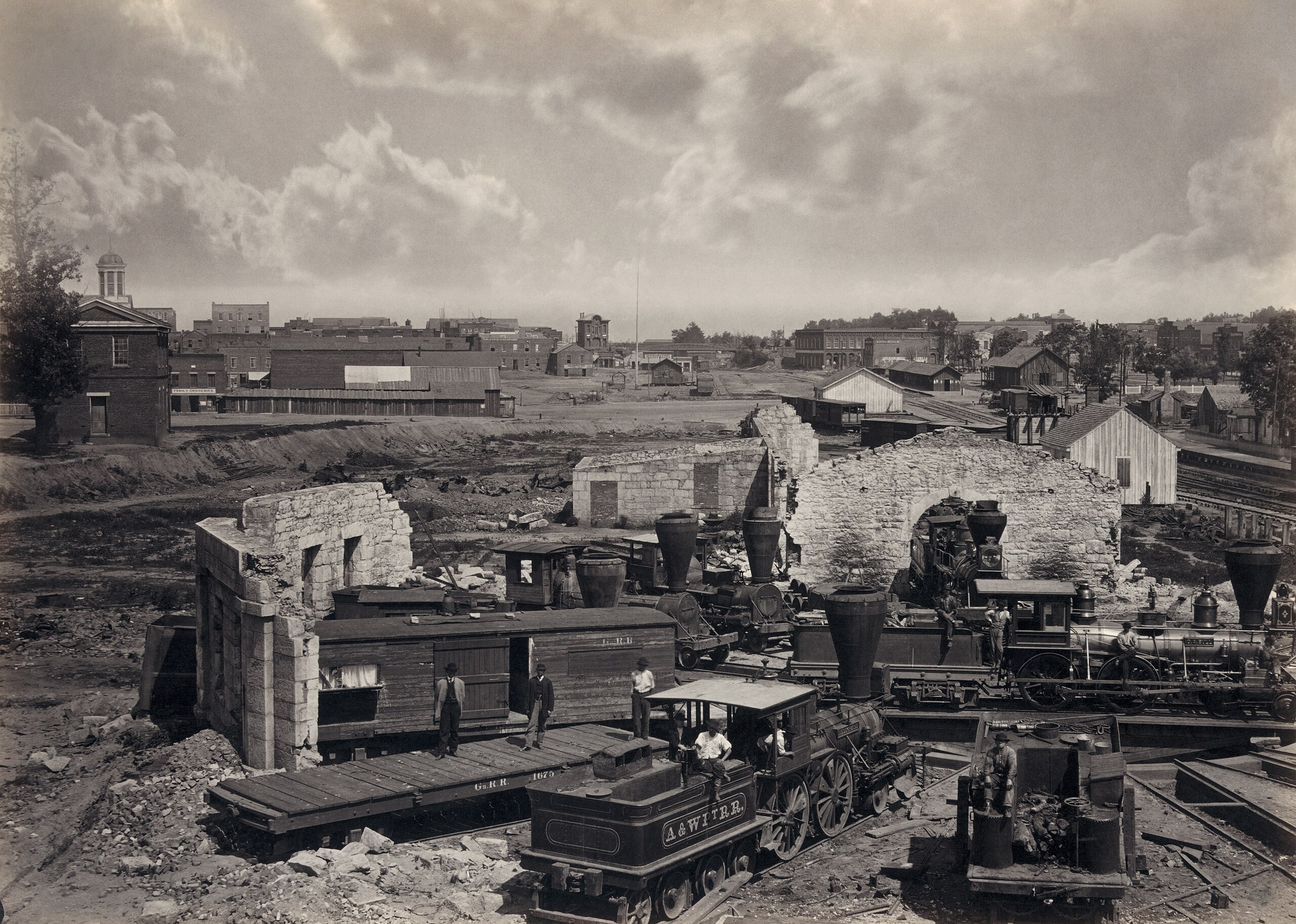
The Failure of the Reconstruction Era
Historical evidence suggests that no single cause doomed Reconstruction; rather, several interlocking factors undermined the effort to build a lasting…
 explaininghistory.org
What Factors Lead to the Failure of Reconstruction? – America Explained
The failure of Reconstruction was caused by resistance and violence by Confederate loyalists, disputes over labor contracts...
 americaexplained.org
The government simply dumping money into almost random projects (Obama and Biden did this too) expecting those to stimulate the economy more than momentarily is a fool's errand.
even republicans understand what you do not Terry and that is you can outgrow debt with growth, but republicans just use it as talking points as they put the money in the pet projects and to the Military complex instead of things like infrastructure that pay back.
What you fail to grasp is that politicians want to show they're doing something. What they usually do when they spend money on infrastructure randomly, like supposedly fixing "racist" highways is simply squander it on stupidity.
For most of America's history the federal government had very limited tax revenues.You arguing America could have not had that tax revenue during reconstruction and 'saved their way to riches' is just your ignorance, once again, speaking.
QP!
Verified User
Not one, NOT A SINGLE, private industry you mention there can do what they did without government subsidies and the security provided by the nation of AMerica. You are wrong on every single point.This is utter bullshit. The railroads of the late 19th Century were privately built and owned. Where do you think Vanderbilt, the original "Robber Baron" go all of his wealth.
The US shipping industry was privately built and financed.
The US steel industry was privately built and financed (Carnagie)
The US oil industry was privately built and financed (Rockefeller)
Roads were no different into the early 20th Century.
Hell, even public transit was privately financed and owned until well into the 20th Century.
Government doesn't make any nation great. Private industry and individuals investing in it does.
Except that is what happened. The US cut government spending massively when WW 2 ended. Taxes likewise came down. That created a boom in the civilian economy.
As if you are some economic prodigy. Taxes remove wealth from the economy. The government then spends that wealth usually on stuff with little or no ROI. Sometimes this is necessary in the case of projects too large or costly for any company or individual to undertake. Those can work if there is some ROI involved. On the other hand, social welfare spending is exactly that, spending. It has no real ROI.
Most of the money spent during Reconstruction by FDR was squandered on nothing in particluar. It didn't work post Civil War either.
The Failure of the Reconstruction Era
Historical evidence suggests that no single cause doomed Reconstruction; rather, several interlocking factors undermined the effort to build a lasting…
What Factors Lead to the Failure of Reconstruction? – America Explained
The failure of Reconstruction was caused by resistance and violence by Confederate loyalists, disputes over labor contracts...
The government simply dumping money into almost random projects (Obama and Biden did this too) expecting those to stimulate the economy more than momentarily is a fool's errand.
What you fail to grasp is that politicians want to show they're doing something. What they usually do when they spend money on infrastructure randomly, like supposedly fixing "racist" highways is simply squander it on stupidity.
For most of America's history the federal government had very limited tax revenues.