
You are using an out of date browser. It may not display this or other websites correctly.
You should upgrade or use an alternative browser.
You should upgrade or use an alternative browser.
Every Briton should stockpile water and food supplies, government advises
- Thread starter Guno צְבִי
- Start date

T. A. Gardner
Serial Thread Killer
Again you use fallacies you do not understand wrongly.
I am not arguing kilowatt day or kilowatt hour and you are engaged in a argument in your own head.
Well, you should be. Those are central to determining the cost of operating an electrical generation system.
I am simply relaying to what the top energy officials in Texas are reporting with data and facts.
In a cherry-picked example. That doesn't reflect the operation of the system day to day, month to month. California has a high degree of use of solar and wind and they have the highest per kwh cost for electricity of any state in the lower 48. In fact, they PAY Arizona and Nevada to take excess solar and wind production at a premium because they can't regulate output efficiently.

Why California’s electricity bills keep climbing
Flipping on the lights, plugging in a phone or turning on the air conditioner are everyday routines that most Californians rarely think twice about — until the monthly utility bill arrives. Over the past several years, electricity has become one of the fastest-growing household expenses across...

Why California’s Electricity Bills Keep Rising: The Hidden Cost of Rooftop Solar Subsidies
On Saturday, Nov. 11, a massive arson fire erupted underneath the 10 freeway in downtown Los Angeles. In the aftermath, this incident brought into focus how critical underinvestment in the state’s infrastructure could lead to a far worse outcome.
 www.latimes.com

Solar power glut boosts California electric bills. Other states reap the benefits
Solar power glut boosts California electric bills. Other states reap the benefits - Los Angeles Times on Newsreadeck
 newsreadeck.com
California's Solar Energy Overload
On 14 different days in March, California produced so much solar power that it needed to pay Arizona, Nevada and…
 www.instituteforenergyresearch.org
And it is not a "single unusual event" and is two significant events within a short period of time that made Texas see the massive cost in both dollars (productivity, damage, etc) and lives lost when the grid that does not have a built in redundancy fails.
Yes, it is. That sort of weather incident doesn't happen once a month. Hell, it doesn't happen once a year.
You refuse to read what is in those links and what Texas is reporting because it is NOT what you WANT to believe.
I've read them and dismissed them as irrelevant here, and they are.
Solar and wind are NOT "renewable" and they aren't 30% of the solution, let alone 100%. They are losers. The solution is more nuclear backed by renewable natural gas which actually IS renewable.Again the argument is NOT that the Renewable energy has to be 100% of the solution and thus your question of "show me how a PV solar array can supply 24 hours of energy". That is a stupid question by a stupid person. Just as an hybrid that has a battery and gasoline engine BOTH does not need to show you how it can run endlessly on the battery. It is the hybrid approach that allows it to run on fossil fuels when needed but also to run and be backed up with Renewables and battery when the other fails.

QP!
Verified User
Texas is the premier ENERGY State in the US so acting like it is not relevant to this discussion and ignoring their findings and data, as you do, is just stupid. Texas is finding RENEWABLES ARE DRIVING DOWN COST as well as providing vital redunancy.Well, you should be. Those are central to determining the cost of operating an electrical generation system.
In a cherry-picked example. That doesn't reflect the operation of the system day to day, month to month. California has a high degree of use of solar and wind and they have the highest per kwh cost for electricity of any state in the lower 48. In fact, they PAY Arizona and Nevada to take excess solar and wind production at a premium because they can't regulate output efficiently.
Why California’s electricity bills keep climbing
Flipping on the lights, plugging in a phone or turning on the air conditioner are everyday routines that most Californians rarely think twice about — until the monthly utility bill arrives. Over the past several years, electricity has become one of the fastest-growing household expenses across...ls.berkeley.edu
Why California’s Electricity Bills Keep Rising: The Hidden Cost of Rooftop Solar Subsidies
On Saturday, Nov. 11, a massive arson fire erupted underneath the 10 freeway in downtown Los Angeles. In the aftermath, this incident brought into focus how critical underinvestment in the state’s infrastructure could lead to a far worse outcome.
Solar power glut boosts California electric bills. Other states reap the benefits
Solar power glut boosts California electric bills. Other states reap the benefits - Los Angeles Times on Newsreadeck
California's Solar Energy Overload
On 14 different days in March, California produced so much solar power that it needed to pay Arizona, Nevada and…
Yes, it is. That sort of weather incident doesn't happen once a month. Hell, it doesn't happen once a year.
I've read them and dismissed them as irrelevant here, and they are.
Solar and wind are NOT "renewable" and they aren't 30% of the solution, let alone 100%. They are losers. The solution is more nuclear backed by renewable natural gas which actually IS renewable.
In comparing Texas to California your information is cherry picked and not up to date.
Both California and Texas. are demonstrating success models for Renewables integration into a grid but California is a parallel pioneer facing entirely different operational and structural constraints than Texas.
While the two states have taken radically different paths to integrating renewables, data shows that California's grid (CAISO) is successfully executing a massive clean energy transition.
Evaluating the core metrics reveals why California’s model is distinct and working:
1. The Battery Powerhouse of America
If Texas is a success story for rapid utility-scale wind deployment, California is the blueprint for battery storage integration.
- The Scale: California has built the largest battery energy storage market in the country, surpassing 21,000 MW of capacity.
- The "Duck Curve" Solution: For years, critics pointed to California’s "duck curve"—a severe drop in midday net electricity demand followed by a steep evening spike—as proof of failure. However, data from 2026 demonstrates that CAISO's battery fleet has flattened the duck. During evening peaks, California's batteries frequently discharge over 13 GW of power simultaneously, single-handedly covering over 40% of the state's total electricity demand. [1, 2, 3, 4]
2. Displacing Natural Gas with Solar
Data from the first half of 2026 reveals a fundamental shift in California's power mix:
- Utility-scale solar generated more electricity than natural gas on 82% of days during the spring months.
- Solar usage spiked 22% while natural gas reliance plummeted by 51% over a two-year tracking window.
- Clean energy successfully met the entirety of CAISO's demand portions on 92% of days in early 2026. [1, 2]
Structural Differences
| Attribute | Texas (ERCOT) | California (CAISO) |
|---|---|---|
| Grid Strategy | Energy-only market. Focuses on cheap, utility-scale generation built quickly in open spaces. | Reliability & Mandate-driven. Emphasized distributed (rooftop) solar paired with massive grid batteries. |
| Consumer Costs | Lower supply costs, but high volatility during extreme weather spikes. | Higher retail electricity rates due to legacy utility wildfire liabilities and grid upgrade costs. |
| Interconnection | Fast-tracked, market-driven permitting. | Strict environmental reviews (NEPA) and regulatory hurdles that slow down transmission projects. |

IBDaMann
Probably the worse human in the threads
Nope. Just look at the KJV.The Bible was written in Hebrew, Aramaic and Koine Greek.

Why? Jacobean English didn't exist back then.Nope. Just look at the KJV.
IBDaMann
Probably the worse human in the threads
English absolutely existed back when the KJV was first written.Why? Jacobean English didn't exist back then.
Are you being willfully obtuse?English absolutely existed back when the KJV was first written.
QP!
Verified User
And from my prior data and articles Terry chooses to not read or address is this support for the Texas Energy regulator findings also posted.
But... but ... Terry says renewables do not work, are not a good way to build redundancy into the grid and do not save consumers money. Terry says ignore what Texas Regulator and University of Texas says and just trust him instead.
Texas could absolutely end all Renewable production tomorrow and take direction from Trump to shut it all down. There is nothing stopping them in that State but they continue to lead the nation in building it out based on the data Terry denies exists.
3. Substantial Economic Savings for Consumers
According to data compiled by the University of Texas, the presence of zero-fuel-cost wind and solar in the market has saved Texas consumers over $30 billion since 2010 by driving down wholesale electricity prices. [1]
But... but ... Terry says renewables do not work, are not a good way to build redundancy into the grid and do not save consumers money. Terry says ignore what Texas Regulator and University of Texas says and just trust him instead.
Texas could absolutely end all Renewable production tomorrow and take direction from Trump to shut it all down. There is nothing stopping them in that State but they continue to lead the nation in building it out based on the data Terry denies exists.
T. A. Gardner
Serial Thread Killer
So, now you resort to Grok. Solar and wind, worldwide have proven highly problematic when used heavily in electrical generation to the grid. You keep trying to find the exception.Texas is the premier ENERGY State in the US so acting like it is not relevant to this discussion and ignoring their findings and data, as you do, is just stupid. Texas is finding RENEWABLES ARE DRIVING DOWN COST as well as providing vital redunancy.
In comparing Texas to California your information is cherry picked and not up to date.
Both California and Texas. are demonstrating success models for Renewables integration into a grid but California is a parallel pioneer facing entirely different operational and structural constraints than Texas.
While the two states have taken radically different paths to integrating renewables, data shows that California's grid (CAISO) is successfully executing a massive clean energy transition.
Evaluating the core metrics reveals why California’s model is distinct and working:
1. The Battery Powerhouse of America
If Texas is a success story for rapid utility-scale wind deployment, California is the blueprint for battery storage integration.
- The Scale: California has built the largest battery energy storage market in the country, surpassing 21,000 MW of capacity.
- The "Duck Curve" Solution: For years, critics pointed to California’s "duck curve"—a severe drop in midday net electricity demand followed by a steep evening spike—as proof of failure. However, data from 2026 demonstrates that CAISO's battery fleet has flattened the duck. During evening peaks, California's batteries frequently discharge over 13 GW of power simultaneously, single-handedly covering over 40% of the state's total electricity demand. [1, 2, 3, 4]
2. Displacing Natural Gas with Solar
Data from the first half of 2026 reveals a fundamental shift in California's power mix:
- Utility-scale solar generated more electricity than natural gas on 82% of days during the spring months.
- Solar usage spiked 22% while natural gas reliance plummeted by 51% over a two-year tracking window.
- Clean energy successfully met the entirety of CAISO's demand portions on 92% of days in early 2026. [1, 2]
Structural Differences
Ultimately, Texas utilized a deregulated market to scale quickly and cheaply, while California pioneered the technology to balance a deeply decarbonized grid using advanced storage. Both models are now showing data that prove an integrated market adding in Renewables reduces both grid risk and costs[1, 2]
Attribute Texas (ERCOT) California (CAISO) Grid Strategy Energy-only market. Focuses on cheap, utility-scale generation built quickly in open spaces. Reliability & Mandate-driven. Emphasized distributed (rooftop) solar paired with massive grid batteries. Consumer Costs Lower supply costs, but high volatility during extreme weather spikes. Higher retail electricity rates due to legacy utility wildfire liabilities and grid upgrade costs. Interconnection Fast-tracked, market-driven permitting. Strict environmental reviews (NEPA) and regulatory hurdles that slow down transmission projects.

In Germany, The Green Energy Transition Is Only Getting Worse
Germany is running faster and faster to stay in place. In the meantime, it is destroying its economy.
 climatechangedispatch.com

Germany's Energy Disaster 20 Years Later
When it comes to energy policy, legislators in Minnesota often cite Germany as an example of a shining star on a hill. This fondness for Germany probably stems from the taxpayer-funded trips that lawmakers take to experience the German Energiewende, or “Energy Transition.” The ironic thing about...
 www.americanexperiment.org

Germany’s green energy dream turns into a NIGHTMARE: economic collapse, environmental failures and geopolitical tensions
Germany’s over reliance on intermittent renewable energy sources like wind and solar has led to an energy crisis, exacerbated by the phenomenon of Dunkelflaute (periods of no wind or sunlight). Electricity prices in Germany are the highest in Europe, reaching €900/MWh during crises, compared to...
 climate.news

Australia just suffered its worst wind and solar "drought" in four years - but needed less gas backup
What happens when the wind don't blow and the sun don't shine? Australia got a sneak peak on Monday in the worst wind and solar drought in four years.
 reneweconomy.com.au
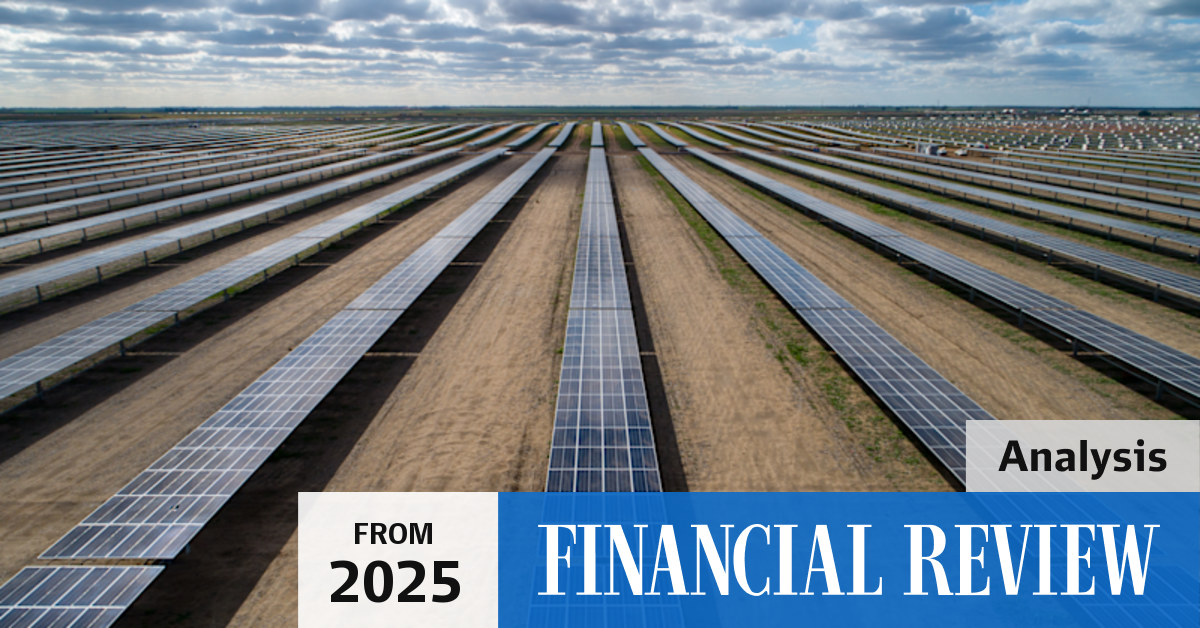
Distressed wind and solar assets a sign of grid’s growing pains
With billions of dollars worth of renewables assets for sale, it’s a buyers’ market for investors willing to take the long view.
Large-scale wind and solar wasting record amounts of power
Australia’s big wind and solar farms are generating more power than ever, but not all of it can be used, raising concerns about investment in renewables.

Yes, Solar And Wind Really Do Increase Electricity Prices -- And For Inherently Physical Reasons
Renewables require the use of vastly more land, longer and less-utilized transmission lines, and large amounts of storage whether from lithium batteries, new dams, compressed air caverns.
 www.forbes.com
Here's the simple scenario I use that proves I am 100% correct:
To get a reliable kilowatt-day of electrical power (24 hours at 1 kw) out of a solar plant you need about (round numbers) 5 kw of installed solar panels and 14 to 16 kwh of installed battery. You can put whatever dollar value you want on that, but the storage makes it grotesquely unaffordable.
"Smart grid?" Unaffordable too. Germany proved that spending nearly a trillion USD trying to make theirs work and it still fails.
The alternative is you run the solar plant while the sun shines and build something like a natural gas plant to run when it doesn't.
Either way, it's cheaper, and to the point that the fuel for the natural gas plant over 20 years is cheaper, to just build the natural gas plant and forget solar.
The ONLY reason to go solar is that you--idiotically--believe that doing so will somehow "Save the planet" from Gorebal Warming or something. It won't, but that's a different issue.
Solar is a total loser. Wind is bad, but not quite as bad as solar.
QP!
Verified User
Private Investors are dumping in money, the State of Texas, its Energy Regulator and the University of Texas and other studies all show significant cost savings, significant more reliability and redundancy, and significant capacity growth to fuel the future (data centers, etc).
Terry replies, ignore all of them and trust me, none of it works.

Cite
Terry replies, ignore all of them and trust me, none of it works.
Cite
QP!
Verified User
inb4 Terry complains about using google to pull in data as if he is not using a search engine to cherry pick his. Inb4 Terry wrongly labels Texas data and the University study as fallacies
Terry this is America and i have shown you it is working in BOTH Texas and California.
Go thru the above post highlights and explain point by point how they are wrong in what they are finding?
Terry this is America and i have shown you it is working in BOTH Texas and California.
Go thru the above post highlights and explain point by point how they are wrong in what they are finding?
IBDaMann
Probably the worse human in the threads
Are you allergic to valid points?Are you being willfully obtuse?
Are you allergic to what is meant by "back then"?Are you allergic to valid points?

You've lost the thread, Larry.You can't blame your illiteracy on anybody else, Stooge.
IBDaMann
Probably the worse human in the threads
You stupidly asserted that Britons spoke Aramaic "back then" when the KJV was written. How much bandwidth are you planning on wasting on this?Are you allergic to what is meant by "back then"?
Did I?You stupidly asserted that Britons spoke Aramaic "back then" when the KJV was written. How much bandwidth are you planning on wasting on this?
Besides who translated the Bible into KJV?
T. A. Gardner
Serial Thread Killer
You have no idea what you're reading.Private Investors are dumping in money, the State of Texas, its Energy Regulator and the University of Texas and other studies all show significant cost savings, significant more reliability and redundancy, and significant capacity growth to fuel the future (data centers, etc).
Terry replies, ignore all of them and trust me, none of it works.
Cite
Battery storage on a scale necessary to make solar and wind base loading reliable is unaffordable.
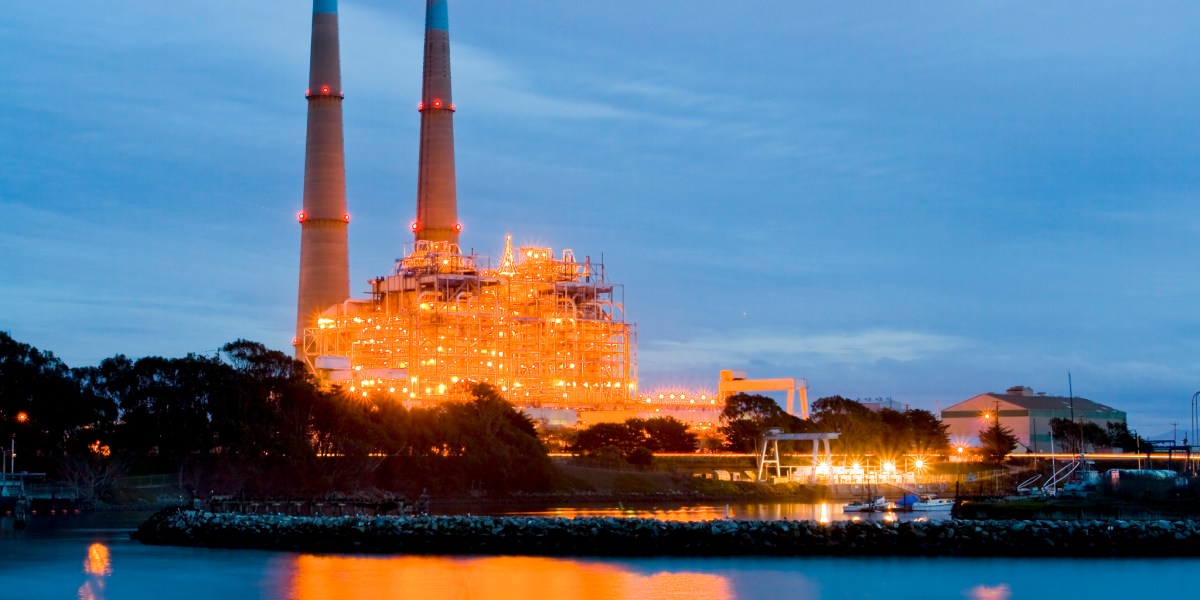
The $2.5 trillion reason we can’t rely on batteries to clean up the grid
Fluctuating solar and wind power require lots of energy storage, and lithium-ion batteries seem like the obvious choice—but they are far too expensive to play a major role.
 www.technologyreview.com

Guno צְבִי
We fight, We win, Am Yisrael Chai
Why don't you take your special needs kid to the NYSE they may let him ring the bell againGuano, there are a few things more puzzling than a moron who claims to be a Jew, then votes and posts against his own best interest.
You, my friend, are one of the dumbest motherfuckers on this forum.

QP!
Verified User
No it is you who have no idea what you are reading while pulling up old data and ignoring the new CHANGED DATA.You have no idea what you're reading.
Battery storage on a scale necessary to make solar and wind base loading reliable is unaffordable.
The $2.5 trillion reason we can’t rely on batteries to clean up the grid
Fluctuating solar and wind power require lots of energy storage, and lithium-ion batteries seem like the obvious choice—but they are far too expensive to play a major role.
Everything you say is out of date and wrong.
Data from both ERCOT (Texas) and CAISO (California) directly refutes the idea that battery storage is "unaffordable" at scale.
In fact, grid operators are building batteries precisely because they are the most cost-effective solution to maintain reliability and lower system-wide energy costs.
1. Battery Costs Have Plummeted by 90%
The argument that batteries are too expensive relies on outdated pricing data.
- The Reality: According to the U.S. National Renewable Energy Laboratory (NREL) and BloombergNEF, utility-scale lithium-ion battery pack prices have plummeted by nearly 90% over the last decade.
- The Result: This massive cost reduction is exactly why private developers are flooding the Texas and California grids with storage—not because of government mandates, but because batteries are highly profitable.
2. California Proves Scale is Already Happening Affordably
The poster claims large-scale storage is a fantasy, but California has already built it.
- The Reality: California’s battery fleet routinely exceeds 21,000 MW of capacity.
- The Data: During the evening peak hours, these batteries don't just help—they handle over 40% of the state's total electricity demand. Batteries are successfully functioning as a reliable, massive bridge when the sun goes down, completely displacing the need to build expensive new gas "peaker" plants.
3. Texas Data Shows Batteries Lower Wholesales Costs
The Reality: In the deregulated Texas market, batteries make money through arbitrage—buying cheap electricity when solar/wind are abundant and selling it back when demand spikes.
- The Data: An analysis by the University of Texas determined that the combination of renewables and batteries saved Texas consumers over $30 billion by suppressing extreme wholesale price spikes. Without batteries, ERCOT would have to pay fossil-fuel plants exorbitant scarcity prices ($5,000/MWh) to stay online, which is far more expensive for consumers than battery storage.
4. Re-framing "Baseload"
It is an old 20th-century concept of "baseload" (coal/nuclear plants running 24/7). Modern grid operators do not look for a single baseload source; they look for dispatchability.
- Gas and coal plants frequently fail or trip offline during extreme weather (as seen during Winter Storm Uri in Texas).
- Batteries respond to grid stress in milliseconds, a level of speed and reliability that thermal power plants physically cannot match.