Citing middle-school level skills, UC faculty want to restore math, science testing for applicants

The removal of the SAT/ACT tests was heavily tied to equity arguments. Now they're arguing that's caused a different kind of inequality.

Basically students are arriving severely underprepared, especially in STEM, then they struggle/drop out once enrolled and professors are teaching at a remedial level instead of college level.


Citing middle-school level skills, UC faculty want to restore math, science testing for applicants

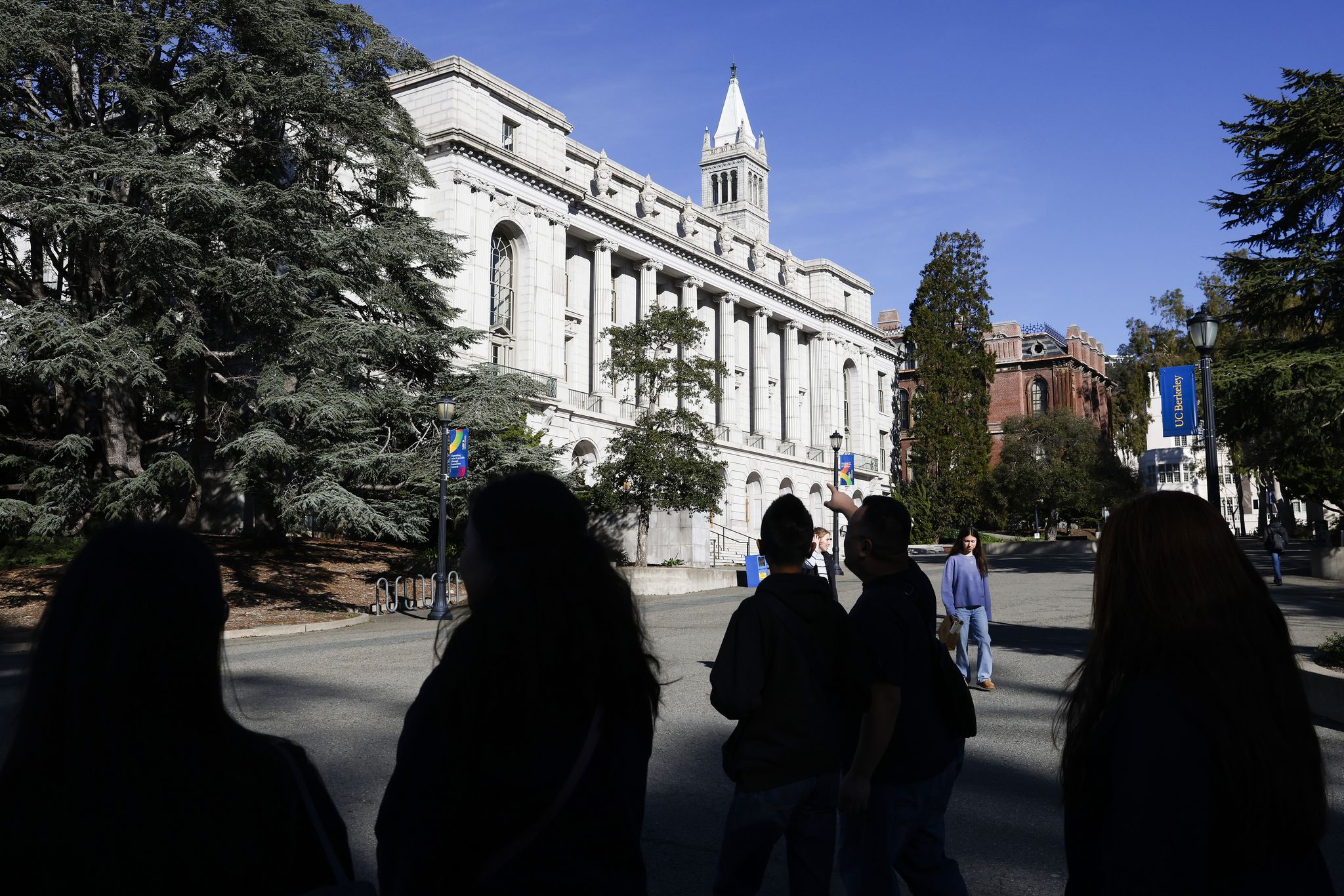
Hundreds of University of California faculty members signed an open letter this week calling for the return of standardized testing requirements for applicants to math and science majors by next year.

The UC system disbanded the decades-old standardized testing requirement in 2020, under a legal challenge from students who argued that the metric gave students who could afford test prep services and travel to exam sites an advantage. The system’s nine undergraduate campuses were among hundreds of colleges nationwide that made the test optional during the COVID-19 pandemic.

But more than five years later, a coalition led by UC Berkeley math professors argues the drop in students’ math levels is “severe.”

“We now observe preparation gaps so severe that instructors must reteach middle-school mathematics while simultaneously teaching the material students need for sciences, engineering, economics, and other quantitatively demanding fields,” read the letter, which was signed by more than 600 professors from faculty across STEM disciplines.

The letter cites a November report from UC San Diego’s Senate-Administration Workgroup on Admissions, which concluded that the number of students whose mathematical abilities were below the typical high school level had increased thirty-fold in the past five years.

Of those students, 70% were found to fall below middle-school math levels, according to the report — roughly one in 12 students entering the UC system.

“The SAT/ACT mathematics requirement is not an obstacle to equity; rather, it is a prerequisite for it,” professors wrote in the letter. “Failing to measure preparation gaps does not remove barriers; it moves them into the classroom, where they become harder to overcome.”
Advertisement

The UC system received a record number of applications the year the standardized testing requirement was dropped, admitting what was then its largest and most diverse class. But the faculty signatories argued that without the testing requirement, a disparity persists “between underprepared and well-prepared students.”

The faculty members who signed the letter frame standardized tests as an external check of students’ preparation for college-level coursework. They warn that “severe grade inflation and AI-assisted application essays” at the high school level make other application metrics less reliable, calling for score requirements to be reinstated as early as the 2027 application cycle.

Ahmet Palazoglu, the chair of the UC Academic Senate, said in a statement that faculty on the the UC system’s Board of Admissions and Relations with Schools would work to “address timely topics tied to students’ college readiness and UC’s admission process” in light of the signatories’ concerns.

“BOARS is in the process of proposing a roadmap of policy work and partnership building with other state and K-12 education leaders in the next academic year and beyond,” Palazoglu said.

UC spokesperson Rachel Zaentz pointed to the “national challenge” of early math preparation, which she said had been exacerbated by periods of remote instruction during the pandemic.

She added that the UC system would “continue to focus on strengthening instruction, collaboration and support” in partnership with both K-12 and higher education institutions.

I am not against a fair and honest test to determine skill and education level. I am against the SAT.

I just went through this with my child. I saw first hand how less intelligent children of wealthy families who hired SAT Prep tutors for HUGE money got significantly better scores than clearly better educated and more equipped children. The Schools want wealthy families over qualified students, its a scam. The SAT perpetuates that.

My daughter got very high scores without the prep, but was clearly better at math and writing than some who spent tens of thousands on learning tricks for the SAT than than kids who were not very good at writing or math.

Develop a test that is not full of tricks and pitfalls for those who are not tutored on gaming the test, a test that is based on real skill and Id support it 100%.
 
TBH if i were president my first priority would be to have someone like Dave Ramsey/ Caleb Hammer design a financial literacy/life skill course. You learn about finances of course but also cooking at home with minimal tools buying food from a grocery instead of door dashing etc. I think it will have a higher QOL impact than anything else.
 
When I went to High School in NYC in the 60's there were 3 tracts and diploma's , Regents- for people planning on college, Commercial- bookkeeping, steno and retail industry, and General for people who planned going into the work force - basic math, science English and shop
It reminds me of when I went to get into collage , I didn't take algebra in high school , because I was bored with it I had been doing my older sisters home work in algebra since I was in 4th grade, So I made a deal with the head of the collage I wanted to go to that if I took a test he made up and passed it he would let me in well He agreed and I took it and got everything right , so I got in but I had to take an advanced math class just to have something on record .
It was easy and I now not only have a 4 year degree but three more 2 year degrees , one in electrical engineering.
 
Science and engineering hands on education is far more dangerous than trade school training, and yet is done all the time. You are just making stuff up.

Not to mention that there are a number of trade schools that are also high schools, or in high schools.
Wrong! You have no idea what you're talking about. Auto mechanics? Disposal of used oil, tires, and other chemicals = Major problem with lots of documentation. Workplace safety regulations mean you spend half a semester just training students how to be safe on the job. Then there's a need for constant monitoring. Paint and body work? Not a chance. The regulations on spray painting alone are like six inches thick and getting everything legal and certified to do that is a nightmare. If you were in a state like California, it's even worse. Control of VOC emissions alone is damn near a full time job.

Woodshop? Dust removal. Big deal. Forget about most painting and finishing. The regulations will bury you. Welding? Even worse.

Safety requirements are massive and continuous. A public school system is considered a big company by number of employees, that means they have to meet the same standards as say, Boeing or GM.

With students getting an hour or so per day of time on this subject, it is incredibly difficult to meet all those standards. By the time you set up and start you have to stop, clean up, and send everyone to their next class.

If there is even a minor injury you only need a Karen parent to sue the school.
 
I am not against a fair and honest test to determine skill and education level. I am against the SAT.

I just went through this with my child. I saw first hand how less intelligent children of wealthy families who hired SAT Prep tutors for HUGE money got significantly better scores than clearly better educated and more equipped children. The Schools want wealthy families over qualified students, its a scam. The SAT perpetuates that.

My daughter got very high scores without the prep, but was clearly better at math and writing than some who spent tens of thousands on learning tricks for the SAT than than kids who were not very good at writing or math.

Develop a test that is not full of tricks and pitfalls for those who are not tutored on gaming the test, a test that is based on real skill and Id support it 100%.
1) There is no test that measures academic ability, can't be gamed, isn't influenced by money, that you can stop people from preparing for and accurately predicts college success. The SAT certainly isn't perfect, no test is, but what you're describing is an idealized version of a test.

2) You didn't address the Professors concerns:

We now observe preparation gaps so severe that instructors must reteach middle-school mathematics while simultaneously teaching the material students need for sciences, engineering, economics, and other quantitatively demanding fields,” read the letter, which was signed by more than 600 professors from faculty across STEM disciplines.

The professors aren't saying the SAT is perfect either. But what they are saying is the removal of standard testing has made the gaps so severe that they are reteaching middle school math at some of the best Universities in the country.

For the sake of our country, that's no bueno to me.
 
The removal of the SAT/ACT tests was heavily tied to equity arguments. Now they're arguing that's caused a different kind of inequality.

Basically students are arriving severely underprepared, especially in STEM, then they struggle/drop out once enrolled and professors are teaching at a remedial level instead of college level.


Citing middle-school level skills, UC faculty want to restore math, science testing for applicants

Hundreds of University of California faculty members signed an open letter this week calling for the return of standardized testing requirements for applicants to math and science majors by next year.

The UC system disbanded the decades-old standardized testing requirement in 2020, under a legal challenge from students who argued that the metric gave students who could afford test prep services and travel to exam sites an advantage. The system’s nine undergraduate campuses were among hundreds of colleges nationwide that made the test optional during the COVID-19 pandemic.

But more than five years later, a coalition led by UC Berkeley math professors argues the drop in students’ math levels is “severe.”

“We now observe preparation gaps so severe that instructors must reteach middle-school mathematics while simultaneously teaching the material students need for sciences, engineering, economics, and other quantitatively demanding fields,” read the letter, which was signed by more than 600 professors from faculty across STEM disciplines.

The letter cites a November report from UC San Diego’s Senate-Administration Workgroup on Admissions, which concluded that the number of students whose mathematical abilities were below the typical high school level had increased thirty-fold in the past five years.

Of those students, 70% were found to fall below middle-school math levels, according to the report — roughly one in 12 students entering the UC system.

“The SAT/ACT mathematics requirement is not an obstacle to equity; rather, it is a prerequisite for it,” professors wrote in the letter. “Failing to measure preparation gaps does not remove barriers; it moves them into the classroom, where they become harder to overcome.”
Advertisement

The UC system received a record number of applications the year the standardized testing requirement was dropped, admitting what was then its largest and most diverse class. But the faculty signatories argued that without the testing requirement, a disparity persists “between underprepared and well-prepared students.”

The faculty members who signed the letter frame standardized tests as an external check of students’ preparation for college-level coursework. They warn that “severe grade inflation and AI-assisted application essays” at the high school level make other application metrics less reliable, calling for score requirements to be reinstated as early as the 2027 application cycle.

Ahmet Palazoglu, the chair of the UC Academic Senate, said in a statement that faculty on the the UC system’s Board of Admissions and Relations with Schools would work to “address timely topics tied to students’ college readiness and UC’s admission process” in light of the signatories’ concerns.

“BOARS is in the process of proposing a roadmap of policy work and partnership building with other state and K-12 education leaders in the next academic year and beyond,” Palazoglu said.

UC spokesperson Rachel Zaentz pointed to the “national challenge” of early math preparation, which she said had been exacerbated by periods of remote instruction during the pandemic.

She added that the UC system would “continue to focus on strengthening instruction, collaboration and support” in partnership with both K-12 and higher education institutions.


So students that can't pass entrance testing get in without testing. Then they can't do college level work. So now the college wants to start testing again. I'm shocked. :laugh:
 
You're giving me the reasons for why they chose to no longer use the SAT/ACT tests, which is fine but this is about the professors reaction to those results.

You have to take the US News & World Report rankings with a large grain of salt but if we use them, there are 5 or 6 UC's in the top 50 schools in the country. And your recommendation is they set up new remedial programs.

Well they already have those at community colleges. Plenty of kids start there and then transfer to UC's. The UC"s are struggling enough with money as it is, trying to fund raise for new remedial programs is going to be a tough sell.

The other variable, you aren't doing kids any favors by putting them in positions where they aren't prepared to succeed which is what these professors are saying.
So you are laying it all on the primary and secondary school teachers?

America needs to evolve out of Mann’s factory model education system. Not all kids are at the same cognitive level at designed age groups. How, I don’t know

And how can UC be struggling with money? Is it not funded by the State?
 
TBH if i were president my first priority would be to have someone like Dave Ramsey/ Caleb Hammer design a financial literacy/life skill course. You learn about finances of course but also cooking at home with minimal tools buying food from a grocery instead of door dashing etc. I think it will have a higher QOL impact than anything else.


Then you'd have an informed citizenry.
 
So you are laying it all on the primary and secondary school teachers?

America needs to evolve out of Mann’s factory model education system. Not all kids are at the same cognitive level at designed age groups. How, I don’t know

And how can UC be struggling with money? Is it not funded by the State?
Those are interesting discussion topics for sure, but that's not what this is about.

The UC's decided to no longer require SAT/ACT testing based on equity.

600 UC's professors stated this (which is the basis for the article):

We now observe preparation gaps so severe that instructors must reteach middle-school mathematics while simultaneously teaching the material students need for sciences, engineering, economics, and other quantitatively demanding fields,” read the letter, which was signed by more than 600 professors from faculty across STEM disciplines.

You spoke before about late bloomers. Yes, late bloomers do exist. But these professors aren't talking about a handful of late bloomers. They're talking about a widespread preparedness problem.
 
Wrong! You have no idea what you're talking about. Auto mechanics? Disposal of used oil, tires, and other chemicals = Major problem with lots of documentation. Workplace safety regulations mean you spend half a semester just training students how to be safe on the job. Then there's a need for constant monitoring. Paint and body work? Not a chance. The regulations on spray painting alone are like six inches thick and getting everything legal and certified to do that is a nightmare. If you were in a state like California, it's even worse. Control of VOC emissions alone is damn near a full time job.

Woodshop? Dust removal. Big deal. Forget about most painting and finishing. The regulations will bury you. Welding? Even worse.

Safety requirements are massive and continuous. A public school system is considered a big company by number of employees, that means they have to meet the same standards as say, Boeing or GM.

With students getting an hour or so per day of time on this subject, it is incredibly difficult to meet all those standards. By the time you set up and start you have to stop, clean up, and send everyone to their next class.

If there is even a minor injury you only need a Karen parent to sue the school.


OSHA, the EPA, and liability concerns (from injury attorneys and lawsuits) do impose strict safety, compliance, and risk-management requirements on school vocational programs. These make hands-on training more expensive, regulated, and cautious than in the past, and they have contributed to a decline in some traditional "shop classes." However, they do not preclude such training in K-12 or regular high schools. Schools actively manage these factors and provide meaningful, practical trade skills in areas like welding, auto repair, construction, HVAC, and more.

OSHA primarily regulates employers, not students. Students in high school CTE/shop classes are not classified as "employees," so OSHA standards don't apply to them the same way they do in private workplaces. However, school districts (as employers) must follow OSHA rules for staff, equipment, and facilities. States and CTE guidelines often adopt OSHA standards (e.g., 1910 or 1926 series) as the minimum for program approval, equipment, PPE, hazard communication, and lab/shop safety.

Many high schools voluntarily integrate OSHA training into CTE curricula. Students commonly complete OSHA 10-hour (Construction or General Industry) courses and earn official cards. Examples include Kodiak High School's welding program and programs in Texas, Georgia, and elsewhere. This prepares students for real jobs while meeting safety goals.

Dedicated safety guides from NIOSH/CDC, states (e.g., Pennsylvania, Minnesota, Utah, Washington), and organizations like ACTE exist specifically for CTE labs/shops. These cover auto repair, welding, construction trades, tool safety, etc., and emphasize prevention to avoid injuries.

OSHA does not ban hands-on activities in high schools—it provides a framework that schools follow successfully.

The EPA's involvement is narrower and mostly limited to specific hazards (e.g., lead-based paint abatement training, hazardous chemicals in labs, or refrigerant handling under Section 608 for HVAC). It doesn't broadly prohibit trade training. EPA rules are incorporated into CTE standards where relevant (e.g., via career cluster knowledge/skills), but schools handle this through proper materials, ventilation, and waste disposal—just as they do for science labs.

Schools and teachers can face negligence lawsuits if a student is injured due to poor supervision, faulty equipment, lack of training, or failure to enforce safety rules. Shop/auto classes have seen documented injuries, and districts worry about product liability (e.g., if a student repair fails). Safety manuals explicitly address this to reduce litigation risk.

Schools mitigate it with insurance, parental waivers/releases (where allowed), strict rules (e.g., no unsupervised shop time, mandatory PPE/eye protection, teacher certification requirements), and documented safety training. Liability concerns have made some districts more risk-averse, but they haven't eliminated programs.

CTE programs are common and "real." High schools nationwide offer hands-on vocational training through comprehensive high schools, area CTE centers, or magnet programs. Examples: welding with actual shop time, auto mechanics (including student vehicle repairs), construction trades, plumbing/electrical basics, and more. Students use industry tools, earn certifications, and gain job-ready skills. Pennsylvania has 80+ CTE centers; states like New Jersey, Ohio, Virginia, and Texas have active programs.

These aren't limited to "specialized post-high school trade schools" (e.g., community colleges or for-profit trade institutes). Many are embedded in regular public high schools or serve high school students directly. Federal and state policies actively promote CTE for workforce development.

There has been a decline in traditional shop classes since the 1980s–2010s (due to No Child Left Behind emphasis on testing/college prep, budget cuts, and liability fears), but a resurgence is underway due to skilled trades shortages.

In short, OSHA and EPA set safety floors that CTE programs meet (often exceeding them), and liability adds caution and cost—but these factors have not "precluded" real hands-on training. Thousands of high schools do it every day. Post-secondary trade programs may go deeper (e.g., full licensing pathways), but high school-level CTE provides genuine, practical experience. If anything, the bigger limits are often funding, teacher shortages, and shifting priorities rather than outright regulatory bans.
 
1) There is no test that measures academic ability, can't be gamed, isn't influenced by money, that you can stop people from preparing for and accurately predicts college success. The SAT certainly isn't perfect, no test is, but what you're describing is an idealized version of a test.

2) You didn't address the Professors concerns:

We now observe preparation gaps so severe that instructors must reteach middle-school mathematics while simultaneously teaching the material students need for sciences, engineering, economics, and other quantitatively demanding fields,” read the letter, which was signed by more than 600 professors from faculty across STEM disciplines.

The professors aren't saying the SAT is perfect either. But what they are saying is the removal of standard testing has made the gaps so severe that they are reteaching middle school math at some of the best Universities in the country.

For the sake of our country, that's no bueno to me.
I am all for a straightforward skills test.

The SAT is set up in a way that kids who have parents with the will and resources to pay someone to teach them how to "game" the test get better scores. I personally believe that is intentional.

I am proud my kids did what they have done without me paying to game the system.


The valedictorian of my daughters class (an incredibly bright and well educated person) scored below what is required to get into the University of Florida on the first try. After the tutoring she scored WELL above the mark. That is just ONE example.
 
I am all for a straightforward skills test.

The SAT is set up in a way that kids who have parents with the will and resources to pay someone to teach them how to "game" the test get better scores. I personally believe that is intentional.

I am proud my kids did what they have done without me paying to game the system.


The valedictorian of my daughters class (an incredibly bright and well educated person) scored below what is required to get into the University of Florida on the first try. After the tutoring she scored WELL above the mark. That is just ONE example.
Even with its imperfections, Universities have used the SAT for decades because it correlated with college readiness, their college GPA and likelihood of graduation. You are free to argue its unfair, but that's why they used it.

What you aren't addressing is what the professors are saying. They're saying after the removal of these tests, outcomes have gotten much worse.

If its just coincidence that this is occurring post removal of the SAT/ACT as they claim, what is the real reason?
 
Even with its imperfections, Universities have used the SAT for decades because it correlated with college readiness, their college GPA and likelihood of graduation. You are free to argue its unfair, but that's why they used it.

What you aren't addressing is what the professors are saying. They're saying after the removal of these tests, outcomes have gotten much worse.

If its just coincidence that this is occurring post removal of the SAT/ACT as they claim, what is the real reason?
Then create a test that tests these subjects and only these subjects, a test that cannot be gamed by paying someone who has studied the test. The SAT score is greatly improved not by new knowledge of the subjects, but by learning the built in tricks. I do not believe that is an accident.
 
Then create a test that tests these subjects and only these subjects, a test that cannot be gamed by paying someone who has studied the test. The SAT score is greatly improved not by new knowledge of the subjects, but by learning the built in tricks. I do not believe that is an accident.
I don't think there are any issues but since tone can sometimes be difficult to deduce here, I want to be clear I enjoy conversation and am having this in good faith and not trying to attack you.

I'm trying to understand why you haven't addressed what the professors are saying about the number of students coming in unprepared, and some of the top Universities in our country having to teach middle school level math to kids.
 
Then create a test that tests these subjects and only these subjects, a test that cannot be gamed by paying someone who has studied the test.


Like what?

Several alternatives and complementary approaches already better measure specific skills or reduce coaching advantages, depending on what you want to assess.

  • Standardized alternatives: ACT, CLT — similar format to SAT but different emphases; still coachable.
  • Curriculum‑aligned exams: AP, IB — test mastery of subject coursework and signal classroom learning; less about test‑taking tricks.
  • Performance‑based assessments: portfolios, capstone projects, research papers, presentations — measure applied skills, creativity, sustained work, and critical thinking; hard to “game” with short coaching.
  • Competency exams & microcredentials: industry or college competency tests (coding assessments, math placement exams) — directly assess practical skills.
  • Situational judgment and work‑sample tests: simulate real tasks (writing under time, problem sets, lab tasks) to evaluate decision‑making and applied skills.
  • Holistic admissions bundles: combine grades, teacher recommendations, interviews, extracurriculars, and assessments to dilute single-test advantages.
Which is “better” depends on goals

  • If you want fairness and reduced coachability: use portfolios, course‑based exams (AP/IB), or multiple measures.
  • If you need quick, comparable metrics for mass admissions: ACT/CLT are alternatives but still vulnerable to prep.
  • If you want job‑oriented skills: use work‑samples, coding tests, or competency assessments.
  • Replace or supplement a single high‑stakes test with a mix: curriculum‑aligned exams + performance assessments + contextual information (grades, recommendations). This reduces coaching payoff and better captures real skills.
 
Those are interesting discussion topics for sure, but that's not what this is about.

The UC's decided to no longer require SAT/ACT testing based on equity.

600 UC's professors stated this (which is the basis for the article):

We now observe preparation gaps so severe that instructors must reteach middle-school mathematics while simultaneously teaching the material students need for sciences, engineering, economics, and other quantitatively demanding fields,” read the letter, which was signed by more than 600 professors from faculty across STEM disciplines.

You spoke before about late bloomers. Yes, late bloomers do exist. But these professors aren't talking about a handful of late bloomers. They're talking about a widespread preparedness problem.
Those are interesting discussion topics for sure, but that's not what this is about.

The UC's decided to no longer require SAT/ACT testing based on equity.

600 UC's professors stated this (which is the basis for the article):

We now observe preparation gaps so severe that instructors must reteach middle-school mathematics while simultaneously teaching the material students need for sciences, engineering, economics, and other quantitatively demanding fields,” read the letter, which was signed by more than 600 professors from faculty across STEM disciplines.

You spoke before about late bloomers. Yes, late bloomers do exist. But these professors aren't talking about a handful of late bloomers. They're talking about a widespread preparedness problem.
Well, as we always say to our friend a high school administrator who laments the same, teach them

The opportunity cost of reverting to the SATs is tracking students partially based upon cultural advantages
 
OSHA, the EPA, and liability concerns (from injury attorneys and lawsuits) do impose strict safety, compliance, and risk-management requirements on school vocational programs. These make hands-on training more expensive, regulated, and cautious than in the past, and they have contributed to a decline in some traditional "shop classes." However, they do not preclude such training in K-12 or regular high schools. Schools actively manage these factors and provide meaningful, practical trade skills in areas like welding, auto repair, construction, HVAC, and more.

OSHA primarily regulates employers, not students. Students in high school CTE/shop classes are not classified as "employees," so OSHA standards don't apply to them the same way they do in private workplaces. However, school districts (as employers) must follow OSHA rules for staff, equipment, and facilities. States and CTE guidelines often adopt OSHA standards (e.g., 1910 or 1926 series) as the minimum for program approval, equipment, PPE, hazard communication, and lab/shop safety.

Many high schools voluntarily integrate OSHA training into CTE curricula. Students commonly complete OSHA 10-hour (Construction or General Industry) courses and earn official cards. Examples include Kodiak High School's welding program and programs in Texas, Georgia, and elsewhere. This prepares students for real jobs while meeting safety goals.

Dedicated safety guides from NIOSH/CDC, states (e.g., Pennsylvania, Minnesota, Utah, Washington), and organizations like ACTE exist specifically for CTE labs/shops. These cover auto repair, welding, construction trades, tool safety, etc., and emphasize prevention to avoid injuries.

OSHA does not ban hands-on activities in high schools—it provides a framework that schools follow successfully.

The EPA's involvement is narrower and mostly limited to specific hazards (e.g., lead-based paint abatement training, hazardous chemicals in labs, or refrigerant handling under Section 608 for HVAC). It doesn't broadly prohibit trade training. EPA rules are incorporated into CTE standards where relevant (e.g., via career cluster knowledge/skills), but schools handle this through proper materials, ventilation, and waste disposal—just as they do for science labs.

Schools and teachers can face negligence lawsuits if a student is injured due to poor supervision, faulty equipment, lack of training, or failure to enforce safety rules. Shop/auto classes have seen documented injuries, and districts worry about product liability (e.g., if a student repair fails). Safety manuals explicitly address this to reduce litigation risk.

Schools mitigate it with insurance, parental waivers/releases (where allowed), strict rules (e.g., no unsupervised shop time, mandatory PPE/eye protection, teacher certification requirements), and documented safety training. Liability concerns have made some districts more risk-averse, but they haven't eliminated programs.

CTE programs are common and "real." High schools nationwide offer hands-on vocational training through comprehensive high schools, area CTE centers, or magnet programs. Examples: welding with actual shop time, auto mechanics (including student vehicle repairs), construction trades, plumbing/electrical basics, and more. Students use industry tools, earn certifications, and gain job-ready skills. Pennsylvania has 80+ CTE centers; states like New Jersey, Ohio, Virginia, and Texas have active programs.

These aren't limited to "specialized post-high school trade schools" (e.g., community colleges or for-profit trade institutes). Many are embedded in regular public high schools or serve high school students directly. Federal and state policies actively promote CTE for workforce development.

There has been a decline in traditional shop classes since the 1980s–2010s (due to No Child Left Behind emphasis on testing/college prep, budget cuts, and liability fears), but a resurgence is underway due to skilled trades shortages.

In short, OSHA and EPA set safety floors that CTE programs meet (often exceeding them), and liability adds caution and cost—but these factors have not "precluded" real hands-on training. Thousands of high schools do it every day. Post-secondary trade programs may go deeper (e.g., full licensing pathways), but high school-level CTE provides genuine, practical experience. If anything, the bigger limits are often funding, teacher shortages, and shifting priorities rather than outright regulatory bans.
The bottom line to all of that is those programs cost lots of money and many, most, school districts simply don't have it to spend. Add in the general mindset in US education that the focus should be on making every student college ready and you have the perfect storm for trades classes getting kicked to the curb.

What the US really needs is a two track high school system. One is for students who will be going to college and have the grades, background, and drive to do that. The other would be for students who are capable of learning advanced trade skills and won't be going to college--or at least looking to get a full Batchelor's or higher degree. For them, high school should be about learning trade math, learning trade skills, and getting technical training hands on.

Many countries in Europe already do this. Many partner with companies and corporations to turn out needed trade workers with skills that make them journeymen or even masters of a trade. Students with little prospect of going to a university would benefit greatly from such programs.

But in the US, the Progressive / Leftist mindset that permeates education today sees all that as unfair and unequal. They see the trades as something to avoid. They would prefer everyone gets a liberal arts indoctrination in some DEI field with a minor in violent protesting.
 
The bottom line to all of that is those programs cost lots of money and many, most, school districts simply don't have it to spend. Add in the general mindset in US education that the focus should be on making every student college ready and you have the perfect storm for trades classes getting kicked to the curb.

Why didn't you say that earlier instead of what you posted - which turned out to be largely erroneous?

What the US really needs is a two track high school system. One is for students who will be going to college and have the grades, background, and drive to do that. The other would be for students who are capable of learning advanced trade skills and won't be going to college--or at least looking to get a full Batchelor's or higher degree. For them, high school should be about learning trade math, learning trade skills, and getting technical training hands on.

I concur.

Many countries in Europe already do this.

Do they? Which ones, specifically?

Many partner with companies and corporations to turn out needed trade workers with skills that make them journeymen or even masters of a trade.

Is that right? Got any data?

Students with little prospect of going to a university would benefit greatly from such programs.

Perhaps; but maybe there's a societal stigma attached to being a "tradesman".

But in the US, the Progressive / Leftist mindset that permeates education today sees all that as unfair and unequal. They see the trades as something to avoid. They would prefer everyone gets a liberal arts indoctrination in some DEI field with a minor in violent protesting.

Not everything is a leftist conspiracy, is it?
 
Well, as we always say to our friend a high school administrator who laments the same, teach them

The opportunity cost of reverting to the SATs is tracking students partially based upon cultural advantages
Take Berkely, arguably the best public University in the country. Multiple Nobel prize winners etc. And the argument is these elite professors teaching STEM classes should focus more on teaching middle school level math to college students? Instead of say these kids going to Junior College for two years then transferring to UC Berkeley?

Is the cultural argument for GPA any different than the SAT?
 
Back
Top