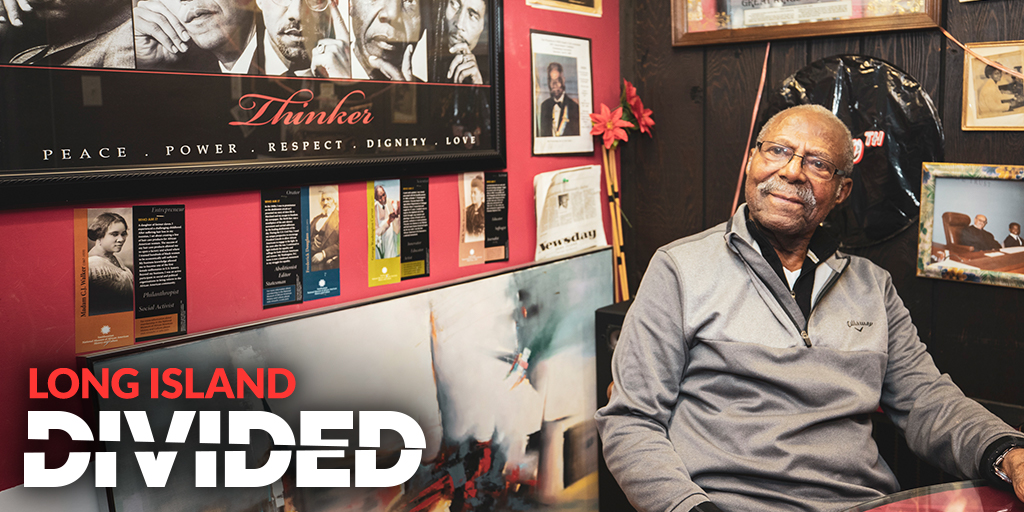
A little education for our Maga/Alt-Right friends.

Such an intellect Matt! everyone's is in awe , you must have been a big hit in the prison yard with your superior knowledge
Oh, I've done some big hits alright.
I got a helluva wallop, boy. A lot more than the average man.
You could have a huge dude punch you softer than me. I'll smash your shit face in!
It's genetic. I know, because a little 4'11" woman walloped my ass like that a couple times.
Omg. I heard her niece gettin' disrespectful with her sister and what she said?
Was sleeping on a Sunday afternoon..oh I knew I had to wake up and stop what I knew was coming.
Well, I didn't make it, and there was a huge whop and a surprised face by the time I made it over there.
Yeah. I caught me a couple of them in the past. It ain't fun. And then her sister's like "See whatcha get?" to the niece,
when it's the little one that whooped that ass.
:rofl2:
I heard a "You don't talk that way to my sister" through clenched teeth. Know the voice, know what's coming.
Somebody done stepped over a line, and somebody else ain't playin' games.
 
Last edited:
But leave us not forget (again):


But hope springs eternal


Bottom line. Its going to take a LONG time to undo the damage done to black folk via the discriminatory actions of the GI Bill and decades of red lining/bias zoning laws. Case in point Levittown is SLOWLY integrating.
For the sake of discussion let me ask this (and being on the West Coast I had to look this up because I'm not familiar with Long Island).

I saw Levittown today is 63% white, 19% LatinX, 11% Asian and the remainder black and bi-racial. My understanding is America is around 58% white, so a representation basis whites are slightly over represented but not by much.

I'm speculating here but this is my guess. Many of these LatinX and Asian families are newer (a couple of generations) to America or not originally from New York. Basically they weren't here when Levittown was created and didn't feel the effects of the discrimination.

Black folks who couldn't live in Levittown ended up living in other suburbs and setting up roots there. So while black people are no longer banned from living in Levittown, they choose to move to other suburbs where black families have either longer histories or a larger population.

Is there a percent of Levittown that would need to be black to represent progress?
 
JPP has been host to a plethora of folk who have their own versions of America's congenital racism .... mostly denial if not out right attempts at justification.

Well, I came across this on FaceBook, and just couldn't resist throwing some HISTORICAL FACTS into the conversation (facts being akin to sunlight to a vampire for the aforementioned folks). The reactions are going to range from predictable to the absurd, but (God forgive me) I just couldn't resist. Enjoy! ;)


View: https://youtu.be/ETR9qrVS17g?si=IJtWjWcNbA_h-0Ul
Here's another one. Like the article says, Mill Valley is a well educated economically successful progressive City that is almost all white. These are the type of people that would likely give a thumbs up to your OP.

At the same time, look at their actions. I suppose one can credit their creativity with this new form of NIMBYism, but it's still NIMBYism.

Not a rhetorical or gotcha question, what are you thoughts when you see this? (i guess this board has a limit on words in a thread so I can't post the full article)


The whitest town in the Bay Area proposed affordable housing. Then some neighbors blocked it as segregation​


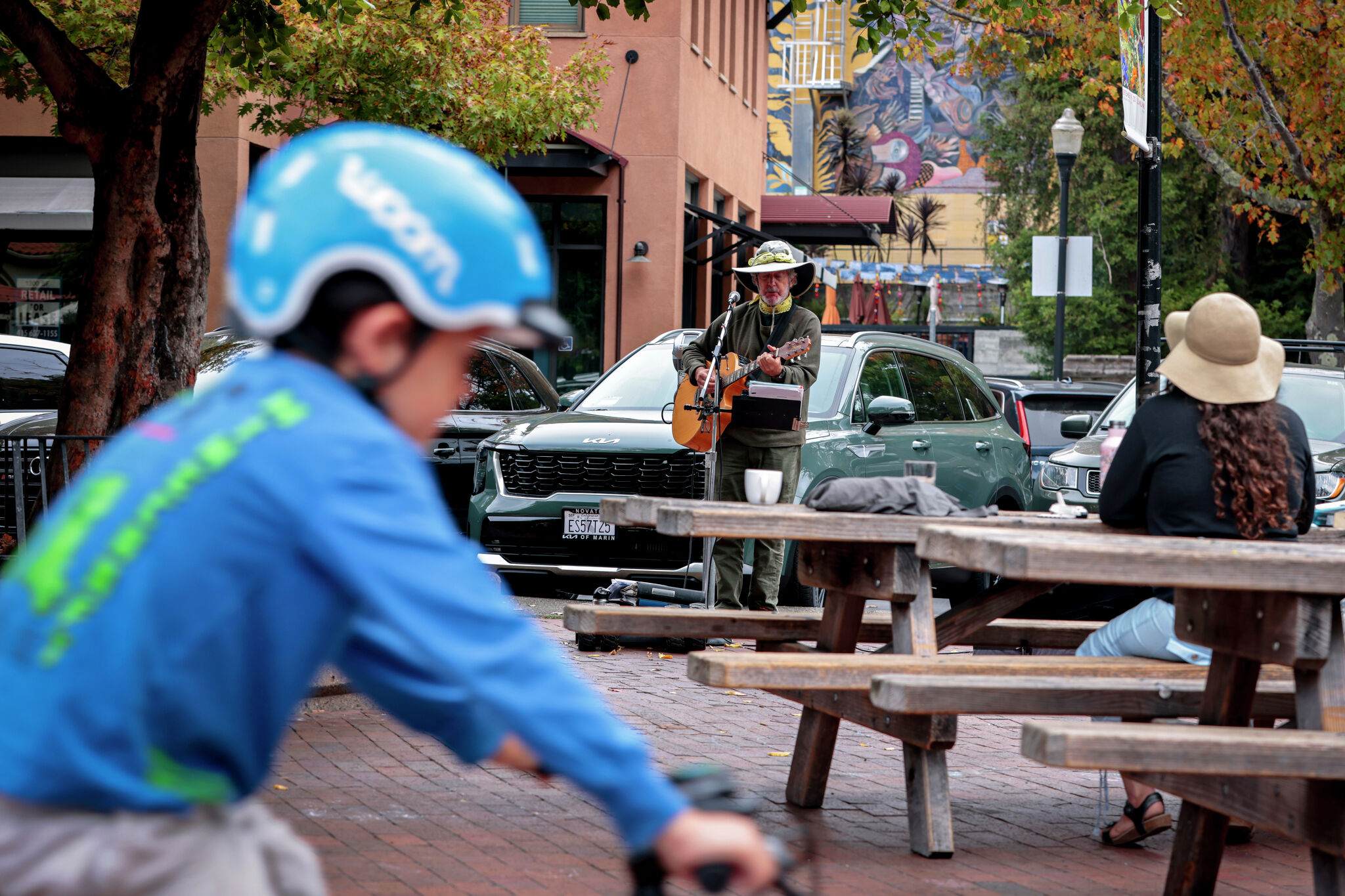
Ten miles north of the Golden Gate Bridge, Mill Valley has long offered wealthy liberals a redwood-shaded haven. It’s a place where pro-democracy stickers adorn Tesla bumpers, natural food stores cater to health-conscious shoppers and the verdant trails of Mount Tamalpais beckon weekend explorers.

But behind the lush scenery and bohemian vibe is an uncomfortable paradox. Despite its progressive politics, this Marin County enclave is strikingly homogeneous: About 80% of its roughly 14,000 residents are non-Hispanic white, making Mill Valley the whitest town its size in the Bay Area. As of the 2020 census, it was also the region’s third-most segregated municipality, a pattern rooted in exclusionary housing practices that trace back to the early 20th century.

In recent years, city officials have tried to confront this fraught legacy by promoting diversity initiatives and planning the town’s first fully affordable housing development in three decades. Proposed on a city-owned parking lot serving a popular park, Bayfront Terrace would be a 45-unit apartment building for families earning roughly $40,000 to $140,000 a year, depending on household size.

Though Mill Valley’s City Council unanimously approved the project in January, lawsuits filed by a neighborhood group have left the development in legal limbo. Friends of Hauke Park argues that building Bayfront Terrace in one of the town’s more racially diverse — and less affluent — neighborhoods would perpetuate the very segregation officials say they want to dismantle.

The debate is about far more than three stories of income-restricted homes that would help Mill Valley meet its state housing targets. Initially envisioned as a way to make this historically exclusive haven more economically and racially diverse, Bayfront Terrace has raised a harder question: What should inclusion look like in a place where affordable housing is already concentrated on one side of town?

“This feels like an extremely important moment,” said Urban Carmel, a City Council member who has been closely involved in planning the project. “If this complex isn’t built, we won’t just struggle to meet the state’s housing requirements. Our yearslong effort to become a more diverse community will take a huge, huge hit.”

Friends of Hauke Park contends that affordable housing should be spread more widely across Mill Valley. City officials considered several locations west of Camino Alto, in wealthier parts of town, before proposing Bayfront Terrace for 1.6 acres of city-owned land just east of the road.

The site of the proposed Bayfront Terrace apartment building lies east of Camino Alto, a major roadway indicated by the red line on the map below — as do all six current income-restricted housing developments in Mill Valley. Tap or hover over dots for more information.

Opponents call the unofficial area East Mill Valley. It is home to all six of the city’s existing income-restricted developments. Though less wealthy and white than Mill Valley’s west-side neighborhoods, it remains affluent by regional standards, with a median household income of about $147,000, a median home price of about $1.5 million and a non-Hispanic white population share of about 65%.

“We are in favor of affordable housing,” said Gary Batroff, president of Friends of Hauke Park, which includes hundreds of members, many of whom live in the Enchanted Knolls neighborhood that overlooks the proposed site. “But if the point is to be inclusive, where do you want to include people? Do you want to include them on the edge of a park, on the edge of town? Or do you want to put them on a main street?”

City officials counter that the proposed site’s surrounding neighborhoods are not as economically or racially distinct from the rest of Mill Valley as Friends of Hauke Park suggests. Mill Valley’s own assessment describes the “entire city” as “a segregated community based on its low percentage of non-white populations,” not just the area around Hauke Park.

The longer the lawsuits drag on, the harder it might be to build any affordable housing in the city. City Attorney Inder Khalsa fears that prolonged delays make it harder for developers to secure funding for these types of projects.

Under its state-mandated housing plan, this small city nestled along Richardson Bay is supposed to accommodate 865 additional homes by 2031, about half of them affordable for very low- and low-income households. If Bayfront Terrace fails, it might embolden other neighborhood groups to block future affordable housing proposals with lawsuits.

City officials acknowledge they would be hard-pressed to find another project as ready-made as this one. Since Bayfront Terrace is proposed for city-owned land, its developer, San Rafael-based EAH Housing, could focus on financing the apartments.

Despite the litigation, the project has drawn considerable support. Mill Valley committed $1 million in local and state funds to the proposal and agreed to lease the property to EAH for 99 years.

“We really do feel that, outside of that one group, everyone in town believes in this project,” Mayor Max Perrey said.

The question of who gets to live in some of the Bay Area’s most affluent communities extends far beyond one project — or one town. According to the latest census data, six of the region’s seven whitest cities were in Marin County, where Black residents make up 2.9% of the population.
The county’s history of exclusionary zoning helped shape its current racial makeup, and decades of limited housing construction have kept middle-class families from many of Marin’s communities. Few are more expensive than Mill Valley, where modest bungalows can sell for more than $2 million, and average one-bedroom rents approach $3,000 a month.

It’s not hard to understand why people pay a premium for the community’s highly regarded schools, temperate climate and small-town charm. Just steps from the boutiques and galleries of Throckmorton Avenue, Cascade Creek tumbles past the old mill that gave the town its name. Narrow pedestrian paths wind between hillside homes. The Dipsea Trail climbs through redwoods to Stinson Beach.

Carmela Davis grew up imagining she would raise a family in her picturesque hometown. But after leaving for college eight years ago, she gradually abandoned that dream as she followed one housing battle after another across Marin.

Despite its liberal reputation, the county has become a symbol of NIMBY intransigence. Marin consistently ranks at or near the bottom among Bay Area counties in meeting state-mandated housing production goals. In November, opposition to a 243-unit apartment complex in Fairfax helped prompt a recall election targeting two elected officials, whom opponents accused of surrendering local control to state officials.

Davis, 25, now works remotely from her Portland, Ore., apartment. As a housing specialist for a San Rafael-based nonprofit, she advocates for affordable housing in the county she cannot afford to call home.

“Marin is a place that really does represent progressive ideals,” Davis said. “It’s a sad reality that, when it comes to building low-income homes in their community, some people immediately change their tune.”

As many cops, teachers and firefighters have been priced out, more workers commute into Mill Valley each morning, adding to traffic on Highway 101. With cars still the main means of transit, officials now estimate that around 15,000 vehicles enter Mill Valley daily. On East Blithedale Avenue, one of the town’s main arteries, afternoon commute times rose by about 40% over the past decade.

Along the way, Mill Valley’s housing shortage has become a more pressing policy issue.

A turning point came in 2013 when voters elected two vocal housing advocates, John McCauley and Jessica Jackson, to the City Council. They championed an affordable housing fund, helped revise zoning to allow in-law units and established a housing advisory committee.

Still, the city had not made any significant headway on new fully affordable housing by 2020. That year, then-Mayor Sashi McEntee’s viral response to a public-meeting question about Black Lives Matter — that the issue was not of “immediate local importance” — brought renewed scrutiny to Mill Valley’s lack of diversity and previous racist incidents at Tamalpais High School.

“It can be hard for people to be truly welcoming to other backgrounds and cultures when they haven’t ever really been exposed to them,” said longtime resident David Levin, a vocal supporter of Bayfront Terrace. “It’s been clear for a while that something needs to change.”

In September 2020, two weeks after the mayor’s dismissive remark, the council approved a DEI Task Force that recommended identifying public land for affordable housing. Within months, Mill Valley officials had short-listed four sites: three west of Camino Alto, on the town’s wealthier and less racially diverse side, and just one east of it, the Hauke Park location, which they ultimately chose.

They said it offered a relatively flat building area outside mapped flood zones, while still being within walking distance of schools, shops and public transit.


Here's the complete text our intellectually dishonest Canadian maga edited out:
Maga isn't a person, Libby.
Someone explain to gumby here that TRYING TO CHANGE THE TOPIC OF DISCUSSION TO AVOID HIS INABILITY TO DISPROVE MY DECONSTRUCION OF HIS PREVIOUS EVIDENCE AND SCREEDS FOOLS NO ONE BUT THE CLOWN HE SEES IN THE MIRROR .... and his equally intellectually impotent brethren.

Inversion fallacy. It is YOU whining.
The OP stands, as does my explanations and rebuttals.
Assumption of victory fallacy. Argument of the Stone fallacy.
For the objective reader, here's the chronology of the posts that puts this Canadian clown in his place:

Posts #254 (where he picks up the gauntlet for Cawacko), #258, 267, 276 and 285.


This Canadian clown (if he is indeed Canadian) is a carbon copy of our resident maga mooks and alt-right reprehensible. He just :hearnoevil::seenoevil: to all critical analysis and basic historical facts that contradict his beliefs. Add to that his insipid stubbornness that blinds him to his preposterous self congratulatory stance is pretty much par for the course. I said before that this clown would do as I predicted, and he hasn't let me down. Good times. :cof1:
Mantra 1a. Lame.
So you haven't logically or factually "proved" anything, gumby.
Go learn what 'logic' means, Libby.
Go learn what 'fact' means.

Argument of the Stone fallacy.
You just reject any fact-based analysis that counteracts your beliefs and supportive evidence.
There is no such thing as 'fact-based'. Go learn what 'fact' means. Buzzword fallacy.
The chronology of the posts shows that, your denial irrelevant.
Strawman fallacy. Argument of the Stone fallacy.
As I stated earlier, since you cannot win the ORIGINAL topic of the debate,
Assumption of victory fallacy. Buzzword fallacy. There are no debates here. Just conversations.
you throw in the kitchen sink and try to literally change the subject, thinking you'll find a "got'cha" moment that somehow validates your original points on another topic.
Cliche fallacy.
Inversion fallacy.
Sorry gumby, but that BS only plays to the grinning clown you see in the mirror and other failed right wing racist and clowns on this site.
Inversion fallacy.
All you've got is repetition, denial, blowing smoke with self-aggrandizing BS the posts just don't support to the objective reader. You're done and I'm done slapping you around.
Inversion fallacy. Assumption of victory fallacy.
 
Yep. Right on schedule and regurgitating the SOS as previously said in our earlier exchanges ... as I predicted.

When I reduce these maga/alt-right clods to this level of blathering , I just put them on the ignore list, as it clears my threads and leaves them to sputtering and fuming.

Take off, my little Canadian 🤡 .
Argument of the Stone fallacy.
Bulverism fallacy.
 
Here's the thing: congress will NEVER pass a reparations bill in our life time. The best to hope for are individual state rulings were individual families who can prove slave lineage to current day corporations and large businesses. There are already cases of this being done.

What annoys me is when people try to minimize or equate or even dismiss the added burden of racist policies to just business as usual for everyone in the real estate market. That's just knee jerk defense that flies in the face of historical reality.
You are advocating for theft again.
 
Man, what is your problem?!? WTF are you on about now? I AGREE with you on a point and you try to turn it into some BS confrontation.

GROW THE FUCK UP, ZYMURGY. You can't refute, debunk or disprove the OP and my subsquent rebuttals to your like minded brethren, so instead you mischaracterize my response to you on a side issue. And that is the problem with the maga/alt-right cult .... they act as if there is no mutual agreement or common ground on any level with people who oppose most of their political/social outlook.
Maga isn't a person.
Maga isn't a religion or cult.
There is no such thing as 'alt-right'. Buzzword fallacy.
There is a common ground: socialism and the tyranny that goes with it.
I'm a true progressive/liberal and registered Independent voter. So I don't necessarily lock step with the a group nor ignore common ground or take BS from either side. After all these years, you should have at least surmised that. If not, I can't help you.
So you are a Democrat. You are in lock step with the Democrats. You can't help anyone.
So, anything of worth to further add regarding the OP?
RQAA
 
Baloney! The bottom line is folk with your mindset have no problem with federal laws and regulations so long as it suits your ideology and personal wants ...
No, Libby. I have no problem with federal laws and regulations that conform to the Constitution of the United States; a document that you despise.
I have no problem with State laws and regulations that conform to the constitution of that State and the Constitution of the United States. Two documents that you despise.
the latest example being the rescinding Roe v. Wade and the subsequent draconian laws enacted by some states.
The federal government has no responsibility to condone murder.
States have passed laws prohibiting this type of murder for convenience.
Draco has nothing to do with either.

Hell, the federal laws that allowed my parents to send me to any school they chose
No such federal law.
and could afford is just 4 years older than me.
No such federal law.
The law that reaffirmed my civil rights just 4 years younger.
Laws do not affirm or reaffirm rights. Rights are inherent.
The OP video schools those who are in denial of just one aspect of "white privilege" and debunks the BS they tell themselves. Historical facts, especially when documented by reputable sources can be denied but not disproved. That's the point of the OP and my subsequent posts.
So...back to your racism.
 
Newsflash: FEDERAL laws can and do at times override state law in a variety of ways
So?
for the common good (auto standards,
Fascism.
food quality,
Fascism.
5 day, 8 hour work week,
Fascism.
socisl security,
Communism.
All imposed by DEMOCRATS.
What YOU are doing is saying that its okay for one state to puposely enact heinous or substandard medical care for whatever reason.
No State is enacting 'heinous' or 'substandard medical care', Libby.
Kind of antithetical to that bit in the Constitution about " ... general welfare of the people" and all, n'cest pas?
The General Welfare clause is not a power or authority of the federal government. It does not overrule any part of the Constitution. DON'T TRY TO HIDE BEHIND THE CONSTITUTION YOU DESPISE!
You have no argument other than some insipidly stubborn and failed attempts to bridge to the nonsense of Reaganomics and ignore the concluded reality of the OP. Carry on.
Go learn what 'reality' means.
Bulverism fallacy.

Capitalism works, Libby. Socialism doesn't, since it is based on theft of wealth.
Only capitalism creates wealth.
 
You can't revise history to hide the underlying intent of your responses.
Inversion fallacy.
Roe v. Wade gave ALL Americans the right of choice and confidentiality between patient, doctor and spouse (if any) as opposed to a minority that could afford such a procedure through wealth and/or connections. Prior to that, what you see in a few states today was national law.
Why do you want to murder children?
And while the WW2 internment camps were a disgrace, the New Deal did opened the door further for the lifestyle you and I enjoy right now.
It did nothing of the sort. Most of it was thrown out by the courts.
You seem to enjoy never ending inflation.

You keep trying to bypass or rewrite the lesson of the OP and my posts ... that at one point in American history state government enacted racist laws with the federal government either indirectly or directly assisting or turning a blind legal eye to. Even with the government legally rectifying such later, the legacy of the racist laws still exist today, as successful lawsuits by the ACLU, NAACP and such will attest to.
...such as...?
You can't have it both ways, which is why the deregulation agenda since Reagan has resulted in the nonsense we deal with today. You can deny it, but the historicsl fscts debunk your views and declarations.
Democrat violence and hatred is not caused by Reagan.
Your advocating theft is not caused by Reagan.

You cannot blame Reagan for your problems. Inversion fallacy.
 
I'm a real estate guy so I love these discussions. And politically, there really is no 'if you're a Republican you believe this about housing and zoning' and 'if you're a Democrat you believe this about housing and zoning'. It just doesn't work that way.

And the analogy I like to use is one person can have an I Love Trump sign in their yard and the next door neighbor can have an I Hate Trump sign, but they will metaphorically walk hand in hand to a planning commission meeting to fight together against new development in their neighborhood.

For many people their home is the largest asset they own. Therefore political partisanship and ideology often gets tossed out the window when it comes to their neighborhood/city and new development.

Race clearly played a role in the history of housing and zoning in this country. And those effects haven't disappeared today. That said, there's also very much a class element at play now. Someone being black doesn't necessarily mean they support inclusive zoning if they move to a nice single family suburb for example.

You're right, this is JPP not some housing think tank. I'm just sharing why I participate in this conversation.
I respect your logical presentations.

Growing up in a large city, I saw plenty of racial discrimination. Cities tried to construct low-income project housing. These units were totally destroyed by the tenants within a few years. That scared the white population even more. As the suburban population expanded, blacks had a reputation to overcome before they were accepted.


Lyndon Johnson, with his War on Poverty, set race relations back even further, and cities' attempts to integrate blacks with school busing made things worse.

Just as that was slowly improving, we get George Floyd, and the worst of everyone comes out.

Today, we are faced with tens of thousands of East African immigrants who are accepted by neither blacks nor whites, and a whole new set of dynamics are at play. For the most part, there could not be a greater culture clash.

In many cities, liberal city councils will only allow new apartment construction if it integrates low-income units along with far more expensive rental units in the same building.
Few people want to pay $5000/mo rent beside someone who is being subsidized by the government. The old story is that everyone moves to the lowest common denominator.

I don't see a clean way out of the current situation.
 
Back
Top