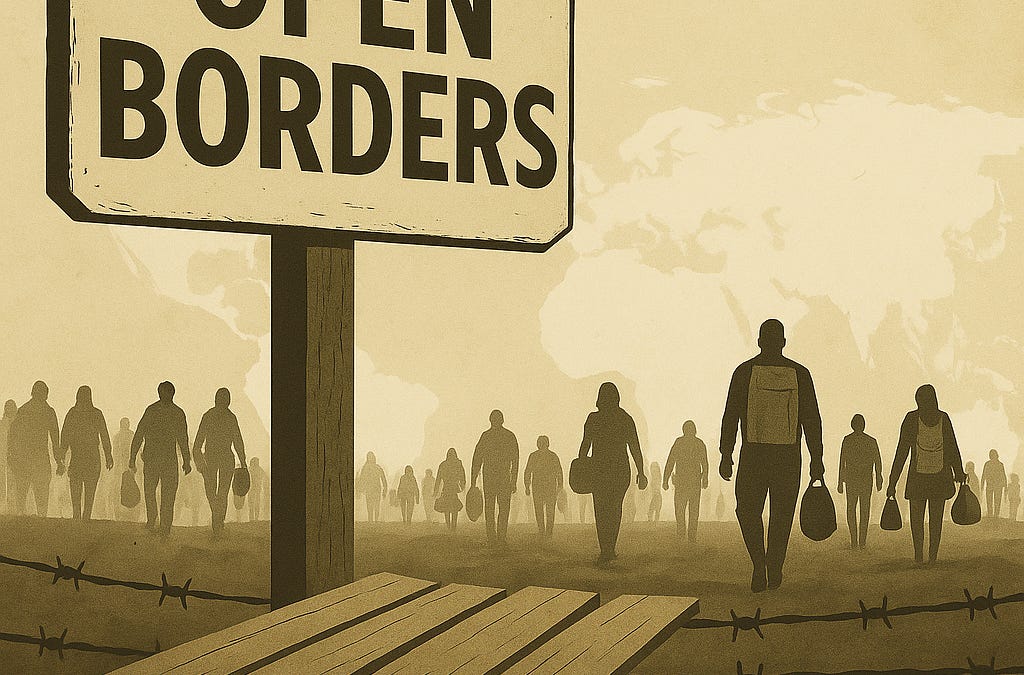
Name a lefty who has advocated for open borders. Who is pushing one world govt? You have 370 million people to pick from. Then show us how those dishonest claims are the policy of the Democratic Party.You lie like Trump.
Nordberg's challenge (post #149 in the thread) is essentially: "Name a lefty who has advocated for open borders. Who is pushing one world govt? ... show us how those dishonest claims are the policy of the Democratic Party."
This is a common rhetorical pushback in immigration debates. While the
Democrat Party platform does not officially endorse "open borders" (they support managed immigration with pathways to citizenship, asylum reforms, and border security measures), there
are prominent voices on the left, activists, organizations, and some elected officials who have pushed policies or rhetoric that critics reasonably describe as open-borders adjacent or ideologically favoring very high/less restricted immigration. "One world government" is more fringe/conspiracy-tinged, but globalist or cosmopolitan ideas exist in some circles.
Examples on Open Borders / Lax Immigration Views:
- Democratic Socialists of America (DSA): Explicitly calls for ending many deportations, defunding aspects of enforcement, and advancing policies that treat migration more freely. Their statements emphasize solidarity with migrants and criticize border enforcement as rooted in imperialism/capitalism. This influences some progressive Democrats.
- Activists and writers: John Washington (The Case for Open Borders) has been platformed in left-leaning outlets like The Intercept and The Nation. Some academic/activist left arguments frame open borders as a moral/human rights imperative or tied to anti-capitalism.
- Politicians and rhetoric: Figures like Rep. Alexandria Ocasio-Cortez and members of the "Squad" have criticized ICE, called for abolishing or drastically reforming it, supported decriminalizing border crossings, and pushed expansive sanctuary policies. During the Biden years, progressive pressure contributed to policies that led to record encounters (critics called it de facto open borders; defenders called it humanitarian/backlog issues). Sam Harris has highlighted internal Democratic critiques of "open borders ideology" capturing parts of the party.
- Historical/ideological: Some left internationalists (e.g., certain Marxist or global justice strains) view strong national borders as tools of exclusion/oppression.
Mainstream Democrats (Biden, Harris, Schumer, etc.) have repeatedly said they oppose open borders and support "secure borders" + legal pathways + reform. The party platform emphasizes fixing the system, not eliminating controls. However, enforcement lapses, catch-and-release, parole expansions, and resistance to stricter measures fuel the perception that elements of the party prioritize other goals.
On "One World Government":
This is rarer and usually exaggerated. It's more common to see:
- Strong support for global institutions (UN, WHO, Paris Agreement, international law overriding national sovereignty in some areas).
- Cosmopolitanism among elites/academics: Ideas that national identity is outdated, open migration benefits everyone economically/morally, or supranational governance on climate/trade.
- Clinton/Obama-era globalism rhetoric, or figures like George Soros funding open-society NGOs (often cited critically).
No major Democrat leader openly calls for dissolving the U.S. into a world government. It's typically a strawman for "globalist" foreign policy or anti-nationalist views.
Broader Context on the SCOTUS Ruling (Trump v. Barbara, June 30, 2026):
The 6-3 decision (Roberts + liberals + Barrett; Kavanaugh concurred in judgment but was narrower) struck down Trump's EO trying to limit birthright citizenship via executive action. It reaffirmed
Wong Kim Ark precedent: broad
jus soli for those born on U.S. soil (with narrow exceptions like diplomats). Majority saw "subject to the jurisdiction" as covering undocumented/temporary visitors. Dissenters (Thomas et al.) wanted more room for limits.
This entrenches the constitutional status quo. Changes would need Congress (statute, per some like Kavanaugh) or a full amendment (prevailing view for core restrictions). Executive workarounds like pregnancy screening at borders face massive legal hurdles (4th/5th/14th Amendment issues, discrimination). Congress could tighten visas, asylum, chain migration, or public benefits—but birthright itself is sticky.
Nordberg's challenge highlights real tensions: public polling often shows majority opposition to "anchor baby" incentives and unchecked illegal immigration, yet legal/precedent/elite opinion makes major reform hard. Both sides have valid points on incentives, rule of law, demographics, and humanitarianism. The debate isn't settled by labeling claims "lies."
Nordberg has issued a challenge: https://www.justplainpolitics.com/threads/birthright-decision-trump

grok.com