

Guno צְבִי
We fight, We win, Am Yisrael Chai
To be misquoted is an occupational hazard of political leadership; for this reason I should like to clarify my position in regard to the Palestinian issue. I have been charged with being rigidly insensitive to the question of the Palestinian Arabs. In evidence of this I am supposed to have said, “There are no Palestinians.” My actual words were: “There is no Palestinian people. There are Palestinian refugees.” The distinction is not semantic. My statement was based on a lifetime of debates with Arab nationalists who vehemently excluded a separatist Palestinian Arab nationalism from their formulations.
When in 1921 I came to Palestine – until the end of World War I a barren, sparsely inhabited Turkish province – we, the Jewish pioneers, were the avowed Palestinians. So we were named in the world. Arab nationalists, on the other hand, stridently rejected the designation. Arab spokesmen continued to insist that the land we had cherished for centuries was, like Lebanon, merely a fragment of Syria. On the grounds that it dismembered an ideal unitary Arab state, they fought before the Anglo-American Committee of Inquiry and at the United Nations.
When the Arab historian Philip K. Hitti informed the Anglo-American Committee of Inquiry that “there is no such thing as Palestine in history,” it was left to David Ben-Gurion to stress the central role of Palestine in Jewish, if not Arab, history.
As late as May 1956, Ahmed Shukairy, subsequently head of the Palestine Liberation Organization, declared to the United Nations Security Council, “It is common knowledge that Palestine is nothing but southern Syria.” In view of this, I believe I may be forgiven if I took Arab spokesmen at their word.
Until the 1960’s, attention was focused on the Arab refugees for whose plight the Arab states would allow no solution though many constructive and far-reaching proposals were made by Israel and the world community.
I repeatedly expressed my sympathy for the needless sufferings of refugees whose abnormal situation was created and exploited by the Arab states as a tactic in their campaign against Israel. However, refugee status could not indefinitely be maintained for the original 550,000 Arabs who in 1948 joined the exodus from the battle areas during the Arab attack on the new state of Israel.
When the refugee card began to wear thin, the Palestinian terrorist appeared on the scene flourishing not the arguable claims of displaced refugees but of a ghoulish nationalism that could only be sated on the corpse of Israel.
I repeat again. We dispossessed no Arabs. Our toil in the deserts and marshes of Palestine created more habitable living space for both Arab and Jew. Until 1948 the Arabs of Palestine multiplied and flourished as the direct result of Zionist settlement. Whatever subsequent ills befell the Arabs were the inevitable result of the Arab design to drive us into the sea. Had Israel not repelled her would-be destroyers there would have been no Jewish refugees alive in the Middle East to concern the world.
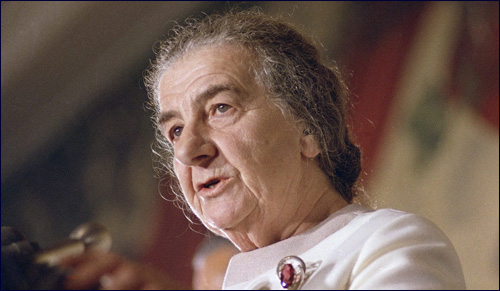
 aish.com
When in 1921 I came to Palestine – until the end of World War I a barren, sparsely inhabited Turkish province – we, the Jewish pioneers, were the avowed Palestinians. So we were named in the world. Arab nationalists, on the other hand, stridently rejected the designation. Arab spokesmen continued to insist that the land we had cherished for centuries was, like Lebanon, merely a fragment of Syria. On the grounds that it dismembered an ideal unitary Arab state, they fought before the Anglo-American Committee of Inquiry and at the United Nations.
When the Arab historian Philip K. Hitti informed the Anglo-American Committee of Inquiry that “there is no such thing as Palestine in history,” it was left to David Ben-Gurion to stress the central role of Palestine in Jewish, if not Arab, history.
As late as May 1956, Ahmed Shukairy, subsequently head of the Palestine Liberation Organization, declared to the United Nations Security Council, “It is common knowledge that Palestine is nothing but southern Syria.” In view of this, I believe I may be forgiven if I took Arab spokesmen at their word.
Until the 1960’s, attention was focused on the Arab refugees for whose plight the Arab states would allow no solution though many constructive and far-reaching proposals were made by Israel and the world community.
I repeatedly expressed my sympathy for the needless sufferings of refugees whose abnormal situation was created and exploited by the Arab states as a tactic in their campaign against Israel. However, refugee status could not indefinitely be maintained for the original 550,000 Arabs who in 1948 joined the exodus from the battle areas during the Arab attack on the new state of Israel.
When the refugee card began to wear thin, the Palestinian terrorist appeared on the scene flourishing not the arguable claims of displaced refugees but of a ghoulish nationalism that could only be sated on the corpse of Israel.
I repeat again. We dispossessed no Arabs. Our toil in the deserts and marshes of Palestine created more habitable living space for both Arab and Jew. Until 1948 the Arabs of Palestine multiplied and flourished as the direct result of Zionist settlement. Whatever subsequent ills befell the Arabs were the inevitable result of the Arab design to drive us into the sea. Had Israel not repelled her would-be destroyers there would have been no Jewish refugees alive in the Middle East to concern the world.
Golda Meir On the Palestinians: New York Times 1976 | Aish
Read Golda Meir’s original op-ed in the New York Times from January 14, 1976. The former Israeli Prime Minister explains her position on Palestinian Arabs.
aish.com