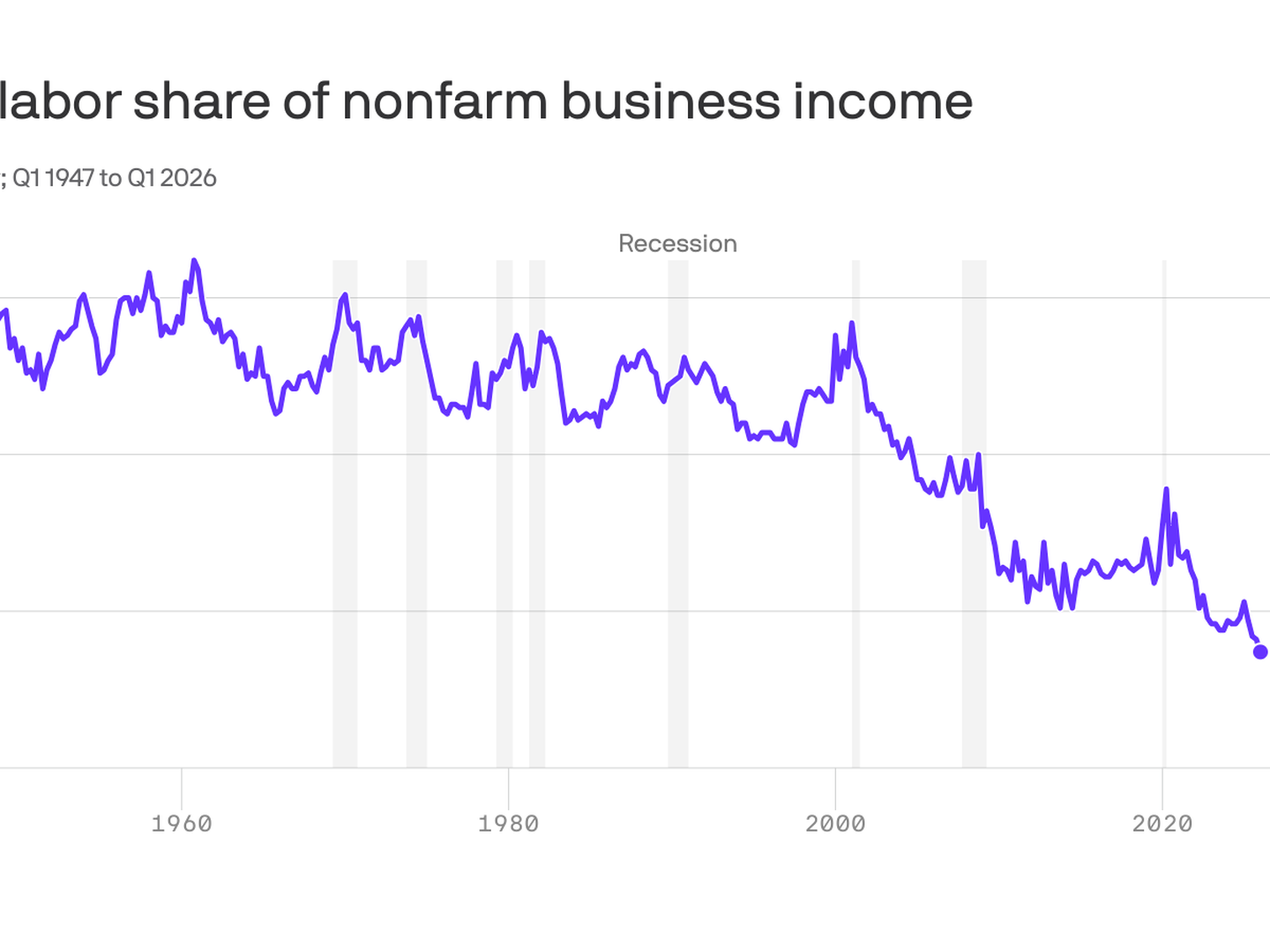
You keep treating that chart like it says “workers lost 10% and billionaires stole it.” It doesn’t.it does not undermine my conclusion.

There simply is no case you can make that if you adjust the 'workers share' up to 65% instead of the 53% it has fallen to since 1945 that the wealth accrual that would have been made by the working class as that wealth was shifted from the elite class, would see them better off and more able to deal with challenges today.
So even in your argument that the systemic issues still exist, that DOES NOT change the FACT that the working class is better off in dealing with them.
there is no instance where a much poorer working class is better off dealing addressing or dealing with the systemic issues you want to highlight.
I created an thread and OP to discuss :
- the growing wealth disparity over the last few decades as outlined in the national income
That is true and factual and exists.
You do not want to discuss that and instead what the thread to be about :
- the much broader systemic issues that have created this situation
Which again can be true but in NO WAY make my premise or thread incorrect.
It says labor compensation fell as a share of total economic output. That is an interesting problem worth discussing. It does not prove your preferred explanation for why it happened, and it certainly doesn’t prove that simply moving the percentage back to 65% fixes the underlying problems.
That’s exactly why I keep bringing up the causes you don’t want to discuss.
If housing, healthcare, energy and government keep getting more expensive; we’re buried in debt; we reduce labor-force participation; and we pursue policies that weaken wage competition, then artificially changing who gets what “share” does not make those problems disappear.
You keep pointing at the thermometer and insisting the discussion must be limited to “the temperature is high.”
I’m asking why the house is on fire.