In 2010, Rosatom, a state-controlled agency that runs all aspects of Russian nuclear power, purchased a controlling interest in a Canadian mining company named Uranium One. This firm then owned, and still owns, uranium mining rights in the United States.
At the time, the US Nuclear Regulatory Commission noted that amount of American uranium involved equaled about 20 percent of the “in-situ recovery production capacity” in the country. Since then, the opening of new capacity by other firms has reduced that figure to about 10 percent, according to a lengthy investigation of Uranium One assets by The Washington Post. And the US is far from the Saudi Arabia of uranium – in 2016, the US accounted for about 2 percent of world uranium extraction.
Due to the sensitivity of Rosatom’s investment in Uranium One, the deal had to be approved by the Committee on Foreign Investments in the United States. This body consists of nine senior US officials, including the secretaries of State, Defense, Treasury, Homeland Security, Commerce, and Energy, the attorney general, and two White House representatives. They unanimously OK’d the transaction in 2010.
Under the Treasury Department regulations that established the Committee on Foreign Investments, it can either approve a deal or recommend that it be blocked. The power to actually stop a sale rests in the Oval Office, according to the regulations. Only the president – in this case, President Obama – has the authority to suspend or prohibit a covered transaction.
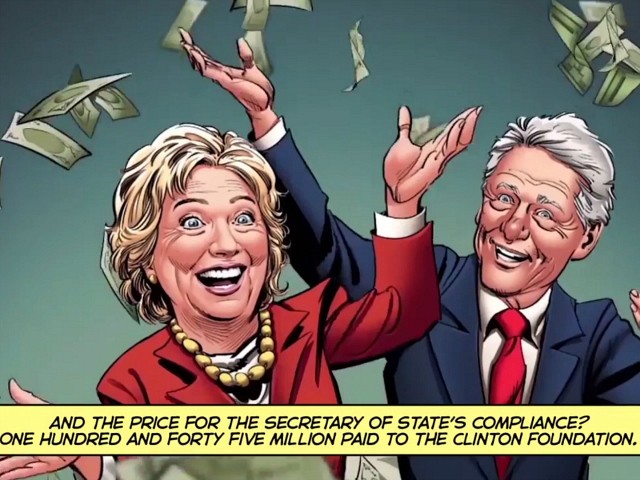
The Clinton Foundation received $145 million in pledges and donations from original investors in Uranium One, prior to its sale to Rosatom. Furthermore, these donations were not disclosed at the time they were made, according to the New York Times. Former President Bill Clinton also received $500,000 for speaking at a Moscow conference organized by a Russian investment bank after the Rosatom-Uranium One deal was announced, but before it passed muster with the US Committee on Foreign Investments. Most of the $145 million in Clinton Foundation donations came from one person, a major Uranium One investor named Frank Giustra.
In addition, the Senate Judiciary Committee has launched an investigation into the case, after The Hill published stories about Russian nuclear officials engaging in fraudulent behavior in the US around 2009.
According to The Hill, the FBI did not inform the Committee on Foreign Investments of its scrutiny of this behavior prior to the Uranium One decision. Right now there’s no evidence it was linked to the Rosatom deal, however. And perpetrators have already been prosecuted: in 2015, the Russian nuclear industry’s point man in the US, a director of a subsidiary of Russia’s State Atomic Energy Corporation named Vadim Mikerin, was sentenced to 48 months in prison for money laundering.
https://www.csmonitor.com/USA/Politics/2017/1114/What-s-the-real-story-behind-Hillary-Clinton-Russia-and-uranium