Spencer Pratt

I think a lot of moderate Dems will vote for him. And I think a lot of Republicans will show up to vote.
Anecdotal but my best friend lives in L.A. He's not a #MAGA guy but he's not a liberal either. He knows Rick Caruso and was a big supporter of his last election. And he does not like Bass and he regularly texts about her lack of leadership as well as how awful the progressive/democratic socialists are on the city council.

He texted me this weekend and said "OMG, I voted for Bass". I thought he was kidding, but he wasn't.

I don't mean to be a debbie downer but I go back to the Texas analogy and how liberals think moderate Republicans are going to vote for a Dem, and it doesn't happen.
 
Anecdotal but my best friend lives in L.A. He's not a #MAGA guy but he's not a liberal either. He knows Rick Caruso and was a big supporter of his last election. And he does not like Bass and he regularly texts about her lack of leadership as well as how awful the progressive/democratic socialists are on the city council.

He texted me this weekend and said "OMG, I voted for Bass". I thought he was kidding, but he wasn't.

I don't mean to be a debbie downer but I go back to the Texas analogy and how liberals think moderate Republicans are going to vote for a Dem, and it doesn't happen.
If the Dems would run some moderate candidates in Texas they might get some Republican votes. Tell your friend he deserves who he voted for and her screw ups. Remind him that the definition of insanity to to do something repeatedly and expecting a different outcome.
 
Wall Street is starting to crumble. It will take time but other major finical hubs will taking large parts of Wall St. business.


Yes, Dallas is rapidly emerging as a major national financial hub often dubbed "Y'all Street," aimed at becoming a serious alternative to New York's Wall Street by 2026. Driven by low taxes and a business-friendly environment, Dallas is attracting significant capital, with the Texas Stock Exchange (TXSE) set to begin trading in early 2026 and NYSE launching a regional branch
Ahh, but as always the devil is in the details:

 
Wall Street is starting to crumble. It will take time but other major finical hubs will taking large parts of Wall St. business.

Yes, Dallas is rapidly emerging as a major national financial hub often dubbed "Y'all Street," aimed at becoming a serious alternative to New York's Wall Street by 2026. Driven by low taxes and a business-friendly environment, Dallas is attracting significant capital, with the Texas Stock Exchange (TXSE) set to begin trading in early 2026 and NYSE launching a regional branch.
I read Dallas has the second most financial jobs in the country after New York.

To think it went from "equities in Dallas" (Liar's Poker back in the '80's) to this massive financial hub is quite the journey.
 
Has anyone suggested that? It's a virtual world, BTW, in case you hadn't noticed. Wealthy people need not live in any particular state (or nation) in order for businesses to exist.


How did you arrive at that conclusion?

Hundreds of businesses have relocated their headquarters (HQ) out of California in the past decade (roughly 2016–2026), including dozens of major or high-profile ones, though the total represents a small share of the state’s overall companies and the trend involves both large and small firms.

Comprehensive data is most detailed through 2021, with public announcements and high-profile cases filling in later years. Key findings from nonpartisan and research sources:

All companies (broad definition): The Public Policy Institute of California (PPIC, using Dun & Bradstreet data) found 147–213 headquarters relocated out of California each year from 2011 to 2021, with an upward trend after 2017 (reaching over 200 in 2021). This resulted in a net loss of 789 headquarters (1.9% of the state’s ~47,000 at the start of the period). Larger companies were more likely to leave proportionally than smaller ones.

A Hoover Institution analysis (tracking announcements, state filings, and other sources) documented 352 companies moving their HQ out of California from 2018 to 2021 alone. The pace accelerated sharply: 153 in 2021 (more than double 2020 levels). This count understates smaller moves that receive little media attention.

Publicly announced / notable relocations (more aligned with "major companies"): CBRE’s tracking of 725 U.S. headquarters relocations (2018–2025) showed California metros as the biggest net losers. The San Francisco Bay Area had a net loss of 163 headquarters; Los Angeles/Irvine also saw substantial outflows (around 50–106 in earlier subsets of the period). Texas metros (especially Dallas-Fort Worth and Austin) captured the most gains nationwide.

Fortune 500 / Fortune 1000 level ("major" large public companies): Hoover identified 11 Fortune 1000 companies leaving in 2018–2021. CBRE data showed California losing 8 Fortune 500 headquarters from 2018–2023 (many to Texas). Media roundups consistently highlight 14–20 prominent examples across the decade.

Notable high-profile moves (examples from lists covering the past decade, often to Texas or other lower-tax/lower-regulation states) include:
  • Tesla (Palo Alto → Austin, 2021)
  • Chevron (San Ramon → Houston, 2024)
  • Oracle (Redwood City → Austin, 2020; later partial moves)
  • Charles Schwab (San Francisco → Westlake, TX, 2019)
  • Hewlett Packard Enterprise (HPE) (San Jose → Spring, TX, 2020)
  • McKesson (San Francisco area → Irving, TX, 2019)
  • CBRE (Los Angeles → Dallas, 2020)
  • Palantir (Palo Alto → Denver, 2020)
  • SpaceX (Hawthorne → Starbase, TX, 2024)
  • Others: AECOM, FICO, Realtor.com, Neutrogena (part of Kenvue), Playboy, and more.


    These outflows are real and accelerating (driven by taxes, regulations, housing costs, and business climate), but PPIC and others emphasize they affect a small percentage of California’s total businesses. In short, hundreds overall (with annual rates of 150–200+ in recent years studied), and at least 20–30+ major/high-profile corporations by common definitions. The exact figure for “major companies” depends on thresholds, but the pattern of notable exits is well-documented and ongoing.
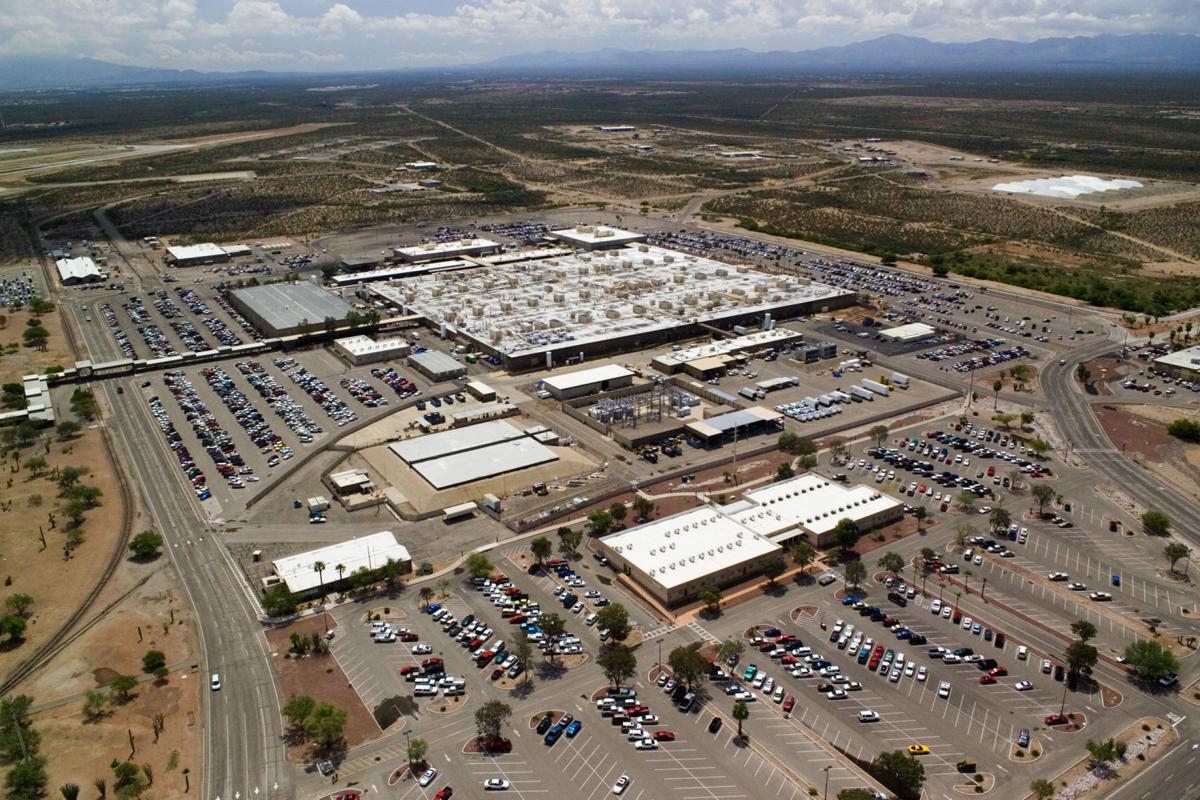
There's a reason these:

TSMC_Arizona.jpg


Intel%20Fab%2042%20plant%20in%20Chandler.jpg.jpg.jpg


5cd5ea1503e33.image.jpg


Are in Arizona and NOT in California.
 
Has anyone suggested that? It's a virtual world, BTW, in case you hadn't noticed. Wealthy people need not live in any particular state (or nation) in order for businesses to exist.


How did you arrive at that conclusion?

Hundreds of businesses have relocated their headquarters (HQ) out of California in the past decade (roughly 2016–2026), including dozens of major or high-profile ones, though the total represents a small share of the state’s overall companies and the trend involves both large and small firms.

Comprehensive data is most detailed through 2021, with public announcements and high-profile cases filling in later years. Key findings from nonpartisan and research sources:

All companies (broad definition): The Public Policy Institute of California (PPIC, using Dun & Bradstreet data) found 147–213 headquarters relocated out of California each year from 2011 to 2021, with an upward trend after 2017 (reaching over 200 in 2021). This resulted in a net loss of 789 headquarters (1.9% of the state’s ~47,000 at the start of the period). Larger companies were more likely to leave proportionally than smaller ones.

A Hoover Institution analysis (tracking announcements, state filings, and other sources) documented 352 companies moving their HQ out of California from 2018 to 2021 alone. The pace accelerated sharply: 153 in 2021 (more than double 2020 levels). This count understates smaller moves that receive little media attention.

Publicly announced / notable relocations (more aligned with "major companies"): CBRE’s tracking of 725 U.S. headquarters relocations (2018–2025) showed California metros as the biggest net losers. The San Francisco Bay Area had a net loss of 163 headquarters; Los Angeles/Irvine also saw substantial outflows (around 50–106 in earlier subsets of the period). Texas metros (especially Dallas-Fort Worth and Austin) captured the most gains nationwide.

Fortune 500 / Fortune 1000 level ("major" large public companies): Hoover identified 11 Fortune 1000 companies leaving in 2018–2021. CBRE data showed California losing 8 Fortune 500 headquarters from 2018–2023 (many to Texas). Media roundups consistently highlight 14–20 prominent examples across the decade.

Notable high-profile moves (examples from lists covering the past decade, often to Texas or other lower-tax/lower-regulation states) include:
  • Tesla (Palo Alto → Austin, 2021)
  • Chevron (San Ramon → Houston, 2024)
  • Oracle (Redwood City → Austin, 2020; later partial moves)
  • Charles Schwab (San Francisco → Westlake, TX, 2019)
  • Hewlett Packard Enterprise (HPE) (San Jose → Spring, TX, 2020)
  • McKesson (San Francisco area → Irving, TX, 2019)
  • CBRE (Los Angeles → Dallas, 2020)
  • Palantir (Palo Alto → Denver, 2020)
  • SpaceX (Hawthorne → Starbase, TX, 2024)
  • Others: AECOM, FICO, Realtor.com, Neutrogena (part of Kenvue), Playboy, and more.


    These outflows are real and accelerating (driven by taxes, regulations, housing costs, and business climate), but PPIC and others emphasize they affect a small percentage of California’s total businesses. In short, hundreds overall (with annual rates of 150–200+ in recent years studied), and at least 20–30+ major/high-profile corporations by common definitions. The exact figure for “major companies” depends on thresholds, but the pattern of notable exits is well-documented and ongoing.
Man that was a load which doesn’t address the reality that you're either willfully or genuinely ignorant of;


As I previously said, Parts of businesses are relocating. The majority of wealthy business owners and their core offices are NOT fleeing NYC because zmMamdani raised taxes on their residences where they don't live in the vast majority of the time. Deal with it.
 
Man that was a load which doesn’t address the reality that you're either willfully or genuinely ignorant of;


As I previously said, Parts of businesses are relocating. The majority of wealthy business owners and their core offices are NOT fleeing NYC because zmMamdani raised taxes on their residences where they don't live in the vast majority of the time. Deal with it.


We weren't discussing NYC, were we?
 
Leaving aside the fact that the cost of moving is negligible to the decisions made with the wealth of the people we are talking about, you don't have to sell your California home to set up legal residence in another state.

These folks often own multiple homes around the country and globe.

You're choosing not to address the article I posted showing the people doing this.
So I am to believe since there are some people doing it, it is a massive trend? The cost of moving is huge.If he is keeping the house in California, then he isn't moving, is he?
 
So I am to believe since there are some people doing it, it is a massive trend? The cost of moving is huge.If he is keeping the house in California, then he isn't moving, is he?
Let's go back and look at what I've said:

Now if this were to pass not every billionaire is going to leave the state of course. But California relies heavily on income tax from the rich, thus even a small number of wealthy people leaving has a material impact on the state's budget.

And this bears repeating. Not every billionaire is going to leave if it passes. But the state relies heavily on taxing high earners. It doesn't take many to leave to have a serious financial impact on the state's budget. That's just reality. And that's why there's such pushback.


Can you show me where I said it will be a massive trend?

Many billionaires own multiple homes. They don't have to sell their home in California to make another home in a different state their primary residence.

Remember your claim? You do not go through the time and trouble of moving to another state for 5 percent tax.

California’s Tax-Weary Billionaires Seek Refuge on Lake Tahoe’s Nevada Shore​

The proposed wealth tax has the superwealthy paying a premium for homes across the state line

Lately, however, the Tahoe divide has intensified as the impact of California’s proposed wealth tax plays out on its shores.

As wealthy Californians flee the state, deep-pocketed buyers are taking refuge in Nevada, which is starting to rival Florida as a tax haven for the elite. Amid surging demand for prime Tahoe property in Nevada, a recent string of megadeals reflects the premium buyers are willing to pay for a lower tax bill—and the widening price gap between the two sides of the lake.

California’s proposed wealth tax effectively “sprinkled rocket fuel” on the ultraluxury market on the Nevada side of Lake Tahoe, said Bill Dietz of Tahoe Luxury Properties.

https://www.wsj.com/real-estate/luxury-homes/lake-tahoe-nevada-luxury-housing-market-1854e30f
 
What's hilarious here is that Karen Bass and the Left created Spencer Pratt. They have so ineptly handled the Palisades fire recovery that Pratt was moved to run against them. It should never take 18 months to build a house, and certainly not 18 months of trying to get a permit to even start construction. They made Pratt, and now they're on the verge of being kicked out of office for it.
 
Back
Top