Name one purely capitalist Country?

No Russia on that list?
I didn't see one. But you're right for once, for Russia is indeed on that list. Tell me, are
you hoping in the future that the Dems take control of the Senate, the House and the Presidency
all at the same time, say in 2029? If so, and if the dems do take control of all 3 branches, then
I'LL--WE will have to add another to that list of 6 Communist nations, and that of course would be
America.
 
Okay...

So, which of these national highways, some of which were transcontinental, and all of which were privately funded, ended up "going bankrupt before (completion)" and then needing a "government... bail out?"

Lincoln highway
Jefferson highway
Old Spanish Trail
Dixie highway

No, it doesn't take "Socialism" to build roads. It takes a need for roads. For most of the US' s history, roads were privately built and existed, like wagon trails, without government assistance.
None of these four highways were built exclusively with private funds, and they did not prove that the private sector could build a national road network without government assistance. NOT A SINGLE ONE!

---------

The fact and the history of these "auto trails" proves the exact opposite: private industry tried to fund them, realized it was impossible, and actively lobbied local, state, and federal governments to pay for the actual construction and maintenance. [1, 2]

The four roads mentioned—the Lincoln Highway, Jefferson Highway, Old Spanish Trail, and Dixie Highway—were part of the "Good Roads Movement" in the 1910s and 1920s. [1, 2]

Here is how the funding and construction actually worked:

1. The Role of Private Associations (Promotion, Not Paving)
The private entities involved (like the Lincoln Highway Association) were primarily promotional, mapping, and lobbying organizations, not construction companies. [1, 2]
  • Their founders—often automotive businessmen like Carl G. Fisher (who backed both the Lincoln and Dixie Highways)—wanted to encourage car ownership and tourism. [1, 2]
  • They mapped out routes using existing local dirt roads, came up with catchy names, and painted colored markers on telephone poles so drivers wouldn't get lost. [1, 2, 3]
  • When they did spend private money on construction, it was usually only for short "seedling miles" (sample strips of concrete or brick) designed to show local communities what a good road looked like so those communities would vote for tax bonds to pave the rest. [1]

2. The Early Pivot to Government Funding
The private sector abandoned the idea of self-funding these highways almost immediately because the costs were vastly underestimated. For instance, Carl Fisher initially estimated the Lincoln Highway would cost $10 million, but car magnates like Henry Ford refused to donate, arguing that funding public infrastructure was a fundamental role of government, not private business. [1, 2, 3]
As a result, the private trail associations shifted their main focus to lobbying state and local governments to construct and maintain the roads: [1, 2]
  • Local & County Taxes: Early sections were funded by county and state matching funds, often through voter-approved infrastructure bonds.
  • The Federal Government: Realizing local funding wasn't enough to connect the country, these associations heavily lobbied for the Federal Aid Road Act of 1916 and the Federal Highway Act of 1921, which pumped millions of dollars of federal taxpayer money into these specific routes. [1, 2, 3]

3. The Real Breakdown of the Roads

HighwayConceivedHow It Was Actually Paid For
Lincoln Highway1912The association gave up on private funding early. The vast majority of the road was built using local, state, and federal matching funds. It later became US 30, US 40, and US 50.
Jefferson Highway1915Formed by the Jefferson Highway Association, the project relied heavily on county bonds and state highway departments to improve the individual links. It was later absorbed into US 65, US 69, and US 71.
Dixie Highway1915Funded by a fragile coalition of individuals, businesses, local governments, and states, with the federal government providing massive funding in the 1920s. It eventually became US 25, US 31, and US 41.
Old Spanish Trail1915Initial funding was provided entirely by the states and counties through which the trail passed. Out of the roughly $80 million it cost to complete by 1929, the vast majority was government money. It was later replaced by US 90 and Interstate 10.

 
Okay...
...
No, it doesn't take "Socialism" to build roads. It takes a need for roads. For most of the US' s history, roads were privately built and existed, like wagon trails, without government assistance.
And yet you have been unable to post a SINGLE one, not bailed out or largely subsidized by the public. NOT ONE despite your claims and the ones you cite proving the opposite.

But then you duck the post and come back again the next time the topic comes up to make the same disproved claim.
 
Count down before Terry again posts example of big highway project started by private Capitol as his proof that government socialism is not needed.

Until I post how that highway project ended up being a massive failure going bankrupt before it completed requiring government cash to bail it out and complete it.

Yes Terry government socialism where they take money from the masses and give it back in terms of goods and services is required for many of those.

Your argument that basic social services such as roads are "socialism" is infantile. I suspect you do know what socialism is, but thought you could "score points" by being less than honest.

Per Wikipedia;

{
Public roads, police, fire protection, basic education, libraries, and similar services are government-provided goods or services funded by taxation. They exist in every modern mixed economy (including the United States, most of Europe, Japan, South Korea, etc.), which are predominantly capitalist: private ownership of businesses, markets for most goods and services, and profit motives dominate. These services address classic “public goods” or externality problems—things that are hard to exclude people from using, or that generate broad benefits (or costs) beyond individual users, so pure private markets may under-provide them. Classical liberals and free-market thinkers (including Adam Smith and later figures like Hayek) generally accepted some role for government in basic infrastructure and defense for these reasons.
}
 
And yet you have been unable to post a SINGLE one, not bailed out or largely subsidized by the public. NOT ONE despite your claims and the ones you cite proving the opposite.

But then you duck the post and come back again the next time the topic comes up to make the same disproved claim.

A: History time, class — and its interesting stuff.

The 91 Express Lanes opened in 1995, built by a private group, the California Private Transportation Co. because public funding wasn’t available, for $135 million with the 10-mile tollway rolling along inside the 91 Freeway in Orange County to the Riverside County line. There are two lanes each way.


In January 2003, the Orange County Transportation Authority bought the system for $207.5 million, using cash and bonds, bringing it into public ownership. Years later, the Riverside County Transportation Commission extended it into its turf.

Strictly private tollways are extremely rare and none are local. So Honk focused on the 91 Express Lanes’ finances for the Orange County section.


Sorry, you were saying?
 
None of these four highways were built exclusively with private funds, and they did not prove that the private sector could build a national road network without government assistance. NOT A SINGLE ONE!

---------

The fact and the history of these "auto trails" proves the exact opposite: private industry tried to fund them, realized it was impossible, and actively lobbied local, state, and federal governments to pay for the actual construction and maintenance. [1, 2]

The four roads mentioned—the Lincoln Highway, Jefferson Highway, Old Spanish Trail, and Dixie Highway—were part of the "Good Roads Movement" in the 1910s and 1920s. [1, 2]

Here is how the funding and construction actually worked:

1. The Role of Private Associations (Promotion, Not Paving)
The private entities involved (like the Lincoln Highway Association) were primarily promotional, mapping, and lobbying organizations, not construction companies. [1, 2]
  • Their founders—often automotive businessmen like Carl G. Fisher (who backed both the Lincoln and Dixie Highways)—wanted to encourage car ownership and tourism. [1, 2]
  • They mapped out routes using existing local dirt roads, came up with catchy names, and painted colored markers on telephone poles so drivers wouldn't get lost. [1, 2, 3]
  • When they did spend private money on construction, it was usually only for short "seedling miles" (sample strips of concrete or brick) designed to show local communities what a good road looked like so those communities would vote for tax bonds to pave the rest. [1]

2. The Early Pivot to Government Funding
The private sector abandoned the idea of self-funding these highways almost immediately because the costs were vastly underestimated. For instance, Carl Fisher initially estimated the Lincoln Highway would cost $10 million, but car magnates like Henry Ford refused to donate, arguing that funding public infrastructure was a fundamental role of government, not private business. [1, 2, 3]
As a result, the private trail associations shifted their main focus to lobbying state and local governments to construct and maintain the roads: [1, 2]
  • Local & County Taxes: Early sections were funded by county and state matching funds, often through voter-approved infrastructure bonds.
  • The Federal Government: Realizing local funding wasn't enough to connect the country, these associations heavily lobbied for the Federal Aid Road Act of 1916 and the Federal Highway Act of 1921, which pumped millions of dollars of federal taxpayer money into these specific routes. [1, 2, 3]

3. The Real Breakdown of the Roads

HighwayConceivedHow It Was Actually Paid For
Lincoln Highway1912The association gave up on private funding early. The vast majority of the road was built using local, state, and federal matching funds. It later became US 30, US 40, and US 50.
Jefferson Highway1915Formed by the Jefferson Highway Association, the project relied heavily on county bonds and state highway departments to improve the individual links. It was later absorbed into US 65, US 69, and US 71.
Dixie Highway1915Funded by a fragile coalition of individuals, businesses, local governments, and states, with the federal government providing massive funding in the 1920s. It eventually became US 25, US 31, and US 41.
Old Spanish Trail1915Initial funding was provided entirely by the states and counties through which the trail passed. Out of the roughly $80 million it cost to complete by 1929, the vast majority was government money. It was later replaced by US 90 and Interstate 10.

Yes, later after they were initially built and being used, they were upgraded in the 1930's under the first federal highway acts when the government recognized--all of a sudden--that a national system of highways was needed along with standardization.

So, you are wrong. The govenment did NOT build those highways as they first existed. The government stepped in later after they were built and improved and took them over.

The government was NOT necessary to build highways. The government took this on to get a standardized set of highways across the entire nation.
Once again not one thing, NOT ONE, you say is fully accurate or true.

Your give false and misstated timelines and your definition of what it means to "build" a road are historically inaccurate.

The first federal highway acts were not passed in the 1930s. The Federal Aid Road Act was passed in 1916, and the Federal Highway Act was passed in 1921—right at the very birth of these routes.

By 1926, the federal government had already completely taken over and standardized the routes into the U.S. Numbered Highway System. [1, 2, 3]

Second, the private sector did not build these highways "as they first existed."

In the early 1910s, the private associations didn't clear land or pour concrete; they simply took pre-existing local county dirt roads and old wagon trails, stitched them together on a map, and painted logos on telephone poles. Motorists crossing them were routinely stranded in deep mud, rutted ditches, and broken axles because they weren't actual highways. [1, 2, 3]

Whenever actual construction, widening, and paving occurred to turn those dirt paths into functional, all-weather highways, it was paid for by public tax dollars via local county bonds, state highway departments, and federal matching funds. [1, 2, 3]

Finally, the history of these roads proves the government was absolutely necessary.

The private organizers explicitly tried to raise private capital to build them and failed completely. For example, the founders of the Lincoln Highway couldn't even raise a fraction of their funding goal from private industry because auto giants like Henry Ford flatly refused, arguing that infrastructure was a fundamental role of government. The private sector didn't hand over a completed highway system; they abandoned their self-funding model early on and spent years aggressively lobbying the government to step in and pay for the actual construction. [1, 2, 3]
 
Once again not one thing, NOT ONE, you say is fully accurate or true.

Your give false and misstated timelines and your definition of what it means to "build" a road are historically inaccurate.

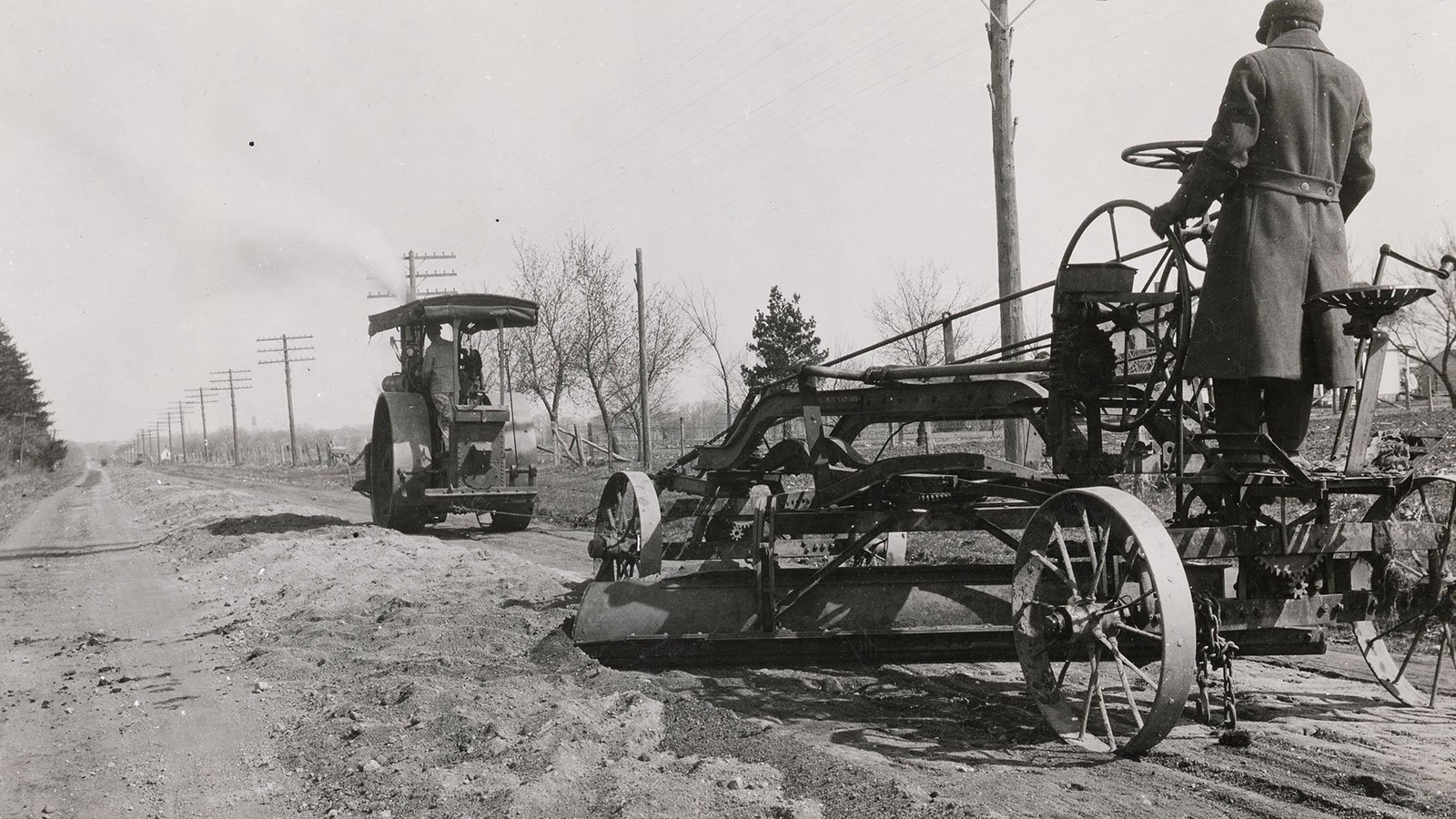
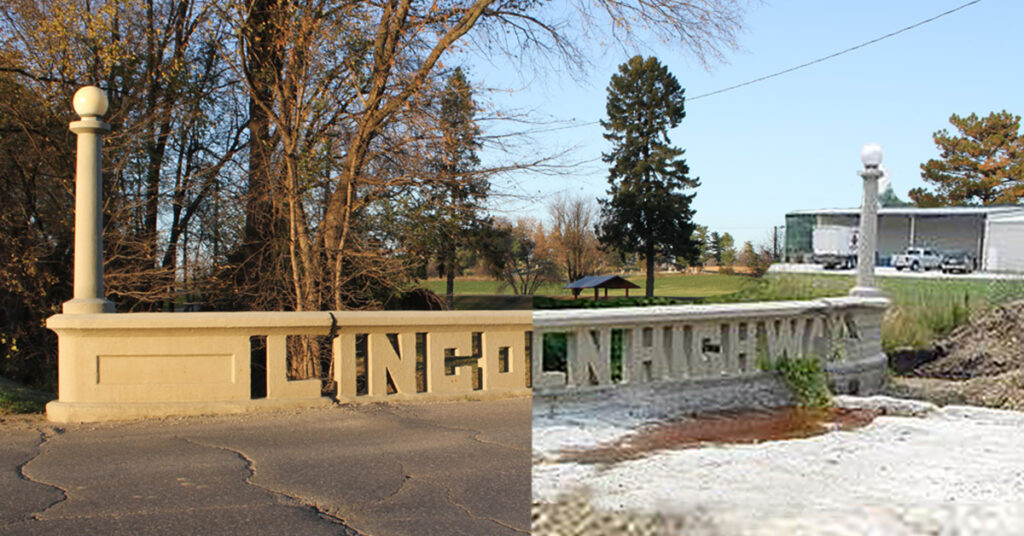
Didn't pour concrete?

Lincoln%2BHW%2BConstruction.jpg


OIP.x3bATrOrB99mbe-kgwiHvQHaEK


Tama-LIncoln-Highway-Bridge-Then-and-Now-1024x536.jpg


While not all of these were paved, considerable portions were. Bridges were built, road markers installed, and all by private subscription.
 
Didn't pour concrete?

Lincoln%2BHW%2BConstruction.jpg


OIP.x3bATrOrB99mbe-kgwiHvQHaEK


Tama-LIncoln-Highway-Bridge-Then-and-Now-1024x536.jpg


While not all of these were paved, considerable portions were. Bridges were built, road markers installed, and all by private subscription.
Yes exactly, each and every one started but could not finish ANYTHING and most went bankrupt and required government bailout and cash to finish as cited above.
 
Didn't pour concrete?

Lincoln%2BHW%2BConstruction.jpg


OIP.x3bATrOrB99mbe-kgwiHvQHaEK


Tama-LIncoln-Highway-Bridge-Then-and-Now-1024x536.jpg


While not all of these were paved, considerable portions were. Bridges were built, road markers installed, and all by private subscription.

The Real Breakdown of the Roads

HighwayConceivedHow It Was Actually Paid For
Lincoln Highway1912The association gave up on private funding early. The vast majority of the road was built using local, state, and federal matching funds. It later became US 30, US 40, and US 50.
Jefferson Highway1915Formed by the Jefferson Highway Association, the project relied heavily on county bonds and state highway departments to improve the individual links. It was later absorbed into US 65, US 69, and US 71.
Dixie Highway1915Funded by a fragile coalition of individuals, businesses, local governments, and states


, with the federal government providing massive funding in the 1920s. It eventually became US 25, US 31, and US 41.
Old Spanish Trail1915Initial funding was provided entirely by the states and counties through which the trail passed. Out of the roughly $80 million it cost to complete by 1929, the vast majority was government money. It was later replaced by US 90 and Interstate 10.
 
Yes exactly, each and every one started but could not finish ANYTHING and most went bankrupt and required government bailout and cash to finish as cited above.
They finished what they could afford, unlike the government who can simply rob and spend at will. Oh, that also doesn't make it "socialism."
 
They finished what they could afford, unlike the government who can simply rob and spend at will. Oh, that also doesn't make it "socialism."
Which were NOT functional roads or highways and REQUIRED gov't bailout and then more money to finsih.

That is like you saying you can build High rise condo's because you can spend money to start them but you CANNOT finish them but you want credit when someone else bails out your project and finishes it.

It is stupid.

Private money, as you cite it is PROVEN can only start project they CANNOT finish and then gov't HAS to step in to finish them and yet you keep claiming gov't is not needed.
 
We, The People, in order to Promote The General Welfare,

Do establish This Constitution.

Article I, Section 8:

Congress shall have the power to collect taxes to establish Post Offices and Post Roads.

That ain't capitalism.
 
democrats however, are not.
Most are.

People who were born on the American continent are Americans.

The United States is just one nation on the American continent.

Now here is where I agree with you.

Conservatives and Trump love the United States. They want to conserve the Constitution of the United States of America. They support capitalism. They support law enforcement.

Democrats hate the United States. They want to destroy it and turn it into an oligarchy or dictatorship. The support all three forms of socialism: fascism, communism, and slavery. The despise law enforcement. They are rioters, looters, vandals, arsonists, drug pushers, support organized crime, support harboring illegal aliens, and murderers and assassins. They push their sexual perversions as "normal".

They are sick, illiterate, selfish and narcissistic fucks.
 
Back
Top