Name one purely capitalist Country?

None of these four highways were built exclusively with private funds, and they did not prove that the private sector could build a national road network without government assistance. NOT A SINGLE ONE!
Roads and trails existed long before there was a government, Kewpie.
---------

The fact and the history of these "auto trails" proves the exact opposite: private industry tried to fund them, realized it was impossible, and actively lobbied local, state, and federal governments to pay for the actual construction and maintenance. [1, 2]

The four roads mentioned—the Lincoln Highway, Jefferson Highway, Old Spanish Trail, and Dixie Highway—were part of the "Good Roads Movement" in the 1910s and 1920s. [1, 2]
...deleted word game...

All freeways and highways are built with capitalism, Kewpie. I've already explained why.
 
Which were NOT functional roads or highways and REQUIRED gov't bailout and then more money to finsih.

That is like you saying you can build High rise condo's because you can spend money to start them but you CANNOT finish them but you want credit when someone else bails out your project and finishes it.

It is stupid.

Private money, as you cite it is PROVEN can only start project they CANNOT finish and then gov't HAS to step in to finish them and yet you keep claiming gov't is not needed.
All of these roads were built by private companies, Kewpie.
 
We, The People, in order to Promote The General Welfare,

Do establish This Constitution.

Article I, Section 8:

Congress shall have the power to collect taxes to establish Post Offices and Post Roads.

That ain't capitalism.
Oddly enough, it is.

All of those post offices and post roads were built by private companies.
 
Which were NOT functional roads or highways and REQUIRED gov't bailout and then more money to finsih.

That is like you saying you can build High rise condo's because you can spend money to start them but you CANNOT finish them but you want credit when someone else bails out your project and finishes it.

It is stupid.

Private money, as you cite it is PROVEN can only start project they CANNOT finish and then gov't HAS to step in to finish them and yet you keep claiming gov't is not needed.
Irrelevance fallacy.

All post roads, highways, freeways, airports, etc. and built by private companies, Kewpie.
 
Which were NOT functional roads or highways and REQUIRED gov't bailout and then more money to finsih.

That is like you saying you can build High rise condo's because you can spend money to start them but you CANNOT finish them but you want credit when someone else bails out your project and finishes it.

It is stupid.

Private money, as you cite it is PROVEN can only start project they CANNOT finish and then gov't HAS to step in to finish them and yet you keep claiming gov't is not needed.
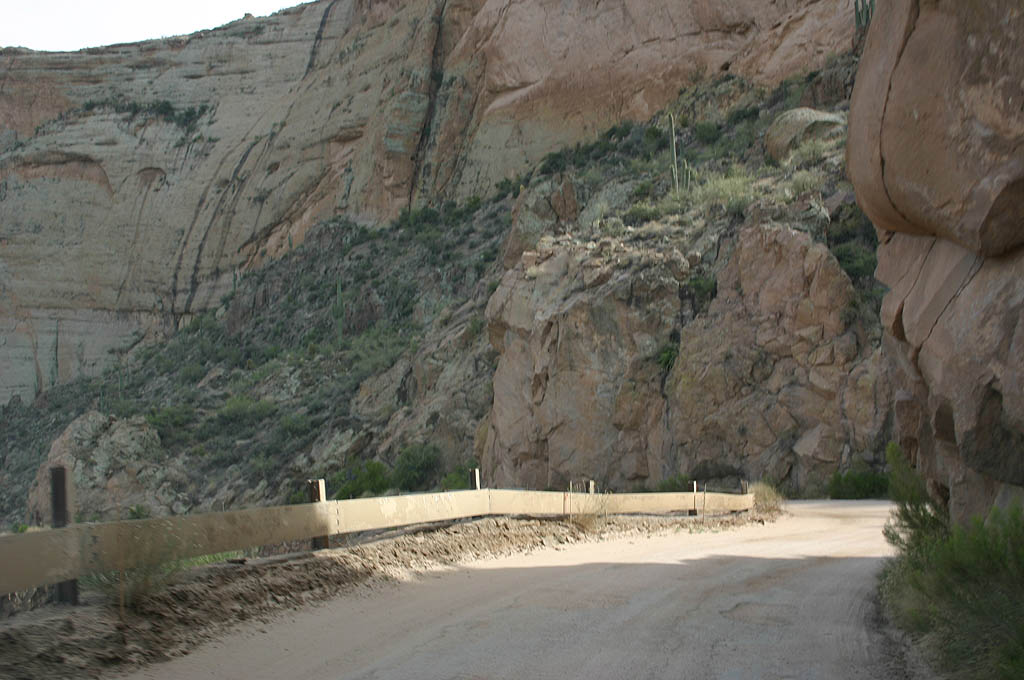
Is this a "functional road?"

e09edef3f5137bd51b6f302e0c0f3e02.jpeg


How about this highway? Is it functional?

az-088_e_seq_090.jpg
 
These are pretty clear:


The Ten Commandments​


  1. I am the Lord thy God. Thou shall not have strange gods before Me.
  2. Thou shall not take the name of the Lord thy God in vain.
  3. Remember to keep holy the Lord's day.
  4. Honor thy father and mother.
  5. Thou shall not kill.
  6. Thou shall not commit adultery.
  7. Thou shall not steal.
  8. Thou shall not bear false witness against thy neighbor.
  9. Thou shall not covet thy neighbor's wife.
  10. Thou shall not covet thy neighbor's goods.
 
Is this a "functional road?"

e09edef3f5137bd51b6f302e0c0f3e02.jpeg


How about this highway? Is it functional?

az-088_e_seq_090.jpg
Hard to say. It is not pavement that makes a highway functional of not. It is its usability and connection. Can people reliably use it. Is it connected such that it actually goes somewhere?
 
Once again not one thing, NOT ONE, you say is fully accurate or true.

Your give false and misstated timelines and your definition of what it means to "build" a road are historically inaccurate.

The first federal highway acts were not passed in the 1930s. The Federal Aid Road Act was passed in 1916, and the Federal Highway Act was passed in 1921—right at the very birth of these routes.

By 1926, the federal government had already completely taken over and standardized the routes into the U.S. Numbered Highway System. [1, 2, 3]

Second, the private sector did not build these highways "as they first existed."

In the early 1910s, the private associations didn't clear land or pour concrete; they simply took pre-existing local county dirt roads and old wagon trails, stitched them together on a map, and painted logos on telephone poles. Motorists crossing them were routinely stranded in deep mud, rutted ditches, and broken axles because they weren't actual highways. [1, 2, 3]

Whenever actual construction, widening, and paving occurred to turn those dirt paths into functional, all-weather highways, it was paid for by public tax dollars via local county bonds, state highway departments, and federal matching funds. [1, 2, 3]

Finally, the history of these roads proves the government was absolutely necessary.

The private organizers explicitly tried to raise private capital to build them and failed completely. For example, the founders of the Lincoln Highway couldn't even raise a fraction of their funding goal from private industry because auto giants like Henry Ford flatly refused, arguing that infrastructure was a fundamental role of government. The private sector didn't hand over a completed highway system; they abandoned their self-funding model early on and spent years aggressively lobbying the government to step in and pay for the actual construction. [1, 2, 3]

I already showed you a 100% private highway built with no public funds that turned a profit and eventually sold to the state for a HUGE profit. Oh, and ALSO created the transponder technology virtually every state uses now for collecting tolls.

Yet you continue to pretend otherwise.
 
Hard to say. It is not pavement that makes a highway functional of not. It is its usability and connection. Can people reliably use it. Is it connected such that it actually goes somewhere?
Well, all those early highways were functional by that standard, before the government finally decided to step in and start building them. Building highways does not require government. Government doing it is simply an alternative to private construction. And, as I stated, this is not a form of "Socialism."

As for the earlier pictures, the first is of the Black Hills Country Byway connecting Clifton and Safford Arizona built circa 1918 by prison labor and includes this rather impressive bridge for the time over the Gila River. At the time, it connected the mines at Clifton to Safford and then the rest of the state making it an important route. It isn't so much needed today.

OIP.wnRqDIZHxf0fTIZ9kvKOpAHaEq


It is still, today, drivable and pretty much like it was in 1918.

The second is a shot of Arizona state route 88, a designated highway between Globe and Apache Junction Arizona. Yes, that is an actual "highway."
 
Well, all those early highways were functional by that standard, before the government finally decided to step in and start building them.
You have lied about EVERY SINGLE highway you posted prior so you will have to name them, so i can research them before anyone should take your claim your seriously.

EVERY SINGLE ONE you named prior was debunked as a lie.


Building highways does not require government.
It does until you demonstrate otherwise as i have cited with unrefuted facts and data countering your PROVEN LIES that all fail to stand up the claims you make otherwise.

Government doing it is simply an alternative to private construction.
FALSE and LIE. Private Construction cannot build successfully build operable interconnected highway and road systems. You have been debunked on that claim you keep lying to repeat.

And, as I stated, this is not a form of "Socialism."
It is "socialism" as the right uses it to label anything the left tries to do with government as "Socialism".

If you want to use a proper definition of socialism then stick to JUST that and stop calling Mamdani's grocery stores and Bidens program to give tax credits to upgrade low efficiency appliances as "zomg ... Socialism".

YOu cannot have it both ways.
 
...

As for the earlier pictures, the first is of the Black Hills Country Byway connecting Clifton and Safford Arizona built circa 1918 by prison labor and includes this rather impressive bridge for the time over the Gila River. At the time, it connected the mines at Clifton to Safford and then the rest of the state making it an important route. It isn't so much needed today.

OIP.wnRqDIZHxf0fTIZ9kvKOpAHaEq


It is still, today, drivable and pretty much like it was in 1918.

The second is a shot of Arizona state route 88, a designated highway between Globe and Apache Junction Arizona. Yes, that is an actual "highway."
Ok so lets fact check Terry's newest two examples of PROOF OF HOW GOVERNMENT MONEY IS NOT REQUIRED FOR MAJOR ROAD PROJECTS since his prior 4 examples he cited failed miserable only completed due to bailout and tax money.


------------

The claim that these two routes prove private industry built America's interconnected road network without government dollars is completely backwards. It is difficult to see how any person knowing these projects could make claims that are so unfounded.

Both of these examples are explicitly public projects built, owned, and funded by government agencies.

1. Black Hills Back Country Byway, Arizona
    • Who pays for it? It is funded by taxpayers and receives infrastructure grants directly via the USDOT Federal Highway Administration (FHWA) National Scenic Byways Program. [1]
    • Is it a major interconnected highway? No. It is a primitive, unpaved backcountry trail with a 20-foot vehicle restriction that doesn't even have potable water. It is a recreational route, not a commercial thoroughfare. [1, 2]

2. Arizona’s Apache Trail (State Route 88)
    • Who built it? The Apache Trail (originally the Tonto Wagon Road) was built in 1903 explicitly as a public infrastructure project. Local valley communities used public municipal bonding plans to fund its initial $551,000 cost so workers could haul construction materials to build the government's Theodore Roosevelt Dam. [1, 2, 3, 4]
    • Who pays for its repairs? When massive floods washed parts of it out, it required millions in public funding to recover. ADOT and the Federal Highway Administration (FHWA) stepped in with $8.5 million in Federal Lands Access and Emergency Relief funds, followed by another $4 million public investment approved by the State Transportation Board. ADOT estimates it will take over $33 million in taxpayer dollars for a full long-term restoration. [1, 2, 3, 4]

The Reality of American Infrastructure
Citing a USFS (U.S. Forest Service) Scenic Byway or a BLM Backcountry Byway to prove that 'government isn't needed for roads' completely undermines the person's point. These roads are structurally dependent on the federal government. If you want to prove private industry can build a continent-spanning, heavy-freight highway system without public money, you cannot cite federal public lands and state-maintained routes." [1, 2]
 
For anyone not reading the long posts the Google fact check of Terry's post is now asking the following question...

"...It is difficult to see how any person knowing these projects could make claims that are so unfounded...."

:rofl2: :rofl2: :rofl2: :rofl2: :rofl2: :rofl2: :rofl2: :rofl2: :rofl2:

Meaning it is struggling to understand how a person could get his facts and data so wrong.

I know that answer. It is Terry is stupid and does not understand what he reads. He does this constantly. He posts things he believes make his point but actually say the exact opposite.
 
These are pretty clear:


The Ten Commandments​


  1. I am the Lord thy God. Thou shall not have strange gods before Me.
  2. Thou shall not take the name of the Lord thy God in vain.
  3. Remember to keep holy the Lord's day.
  4. Honor thy father and mother.
  5. Thou shall not kill.
  6. Thou shall not commit adultery.
  7. Thou shall not steal.
  8. Thou shall not bear false witness against thy neighbor.
  9. Thou shall not covet thy neighbor's wife.
  10. Thou shall not covet thy neighbor's goods.
You christ stains changed the original, it was only given to the Jewish people

images
 
At the Episcopal Church I was taught, kill, not murder.
And yet the original given on Mount Sinai says murder , killing allowed in Torah for self defense or in defence of others

Laws for non Jews which are universal to all humanity

images
 
Last edited:
Ok so lets fact check Terry's newest two examples of PROOF OF HOW GOVERNMENT MONEY IS NOT REQUIRED FOR MAJOR ROAD PROJECTS since his prior 4 examples he cited failed miserable only completed due to bailout and tax money.


------------

The claim that these two routes prove private industry built America's interconnected road network without government dollars is completely backwards. It is difficult to see how any person knowing these projects could make claims that are so unfounded.

Both of these examples are explicitly public projects built, owned, and funded by government agencies.

1. Black Hills Back Country Byway, Arizona
    • Who owns and manages it? It is a 21-mile dirt track located entirely on public lands managed by the federal Bureau of Land Management (BLM) Safford Field Office. [1, 2]
    • Who pays for it? It is funded by taxpayers and receives infrastructure grants directly via the USDOT Federal Highway Administration (FHWA) National Scenic Byways Program. [1]
    • Is it a major interconnected highway? No. It is a primitive, unpaved backcountry trail with a 20-foot vehicle restriction that doesn't even have potable water. It is a recreational route, not a commercial thoroughfare. [1, 2]

2. Arizona’s Apache Trail (State Route 88)
    • Who built it? The Apache Trail (originally the Tonto Wagon Road) was built in 1903 explicitly as a public infrastructure project. Local valley communities used public municipal bonding plans to fund its initial $551,000 cost so workers could haul construction materials to build the government's Theodore Roosevelt Dam. [1, 2, 3, 4]
    • Who maintains it now? It is classified as State Route 88 and is heavily managed by the Arizona Department of Transportation (ADOT) and the U.S. Forest Service. [1, 2]
    • Who pays for its repairs? When massive floods washed parts of it out, it required millions in public funding to recover. ADOT and the Federal Highway Administration (FHWA) stepped in with $8.5 million in Federal Lands Access and Emergency Relief funds, followed by another $4 million public investment approved by the State Transportation Board. ADOT estimates it will take over $33 million in taxpayer dollars for a full long-term restoration. [1, 2, 3, 4]

The Reality of American Infrastructure
Citing a USFS (U.S. Forest Service) Scenic Byway or a BLM Backcountry Byway to prove that 'government isn't needed for roads' completely undermines the person's point. These roads are structurally dependent on the federal government. If you want to prove private industry can build a continent-spanning, heavy-freight highway system without public money, you cannot cite federal public lands and state-maintained routes." [1, 2]
Terry? Do you have any examples that actually do not have government funding and bailouts attched as all the examples he has cited so far do.

@T. A. Gardner
 
Terry? Do you have any examples that actually do not have government funding and bailouts attched as all the examples he has cited so far do.

@T. A. Gardner
QP is wrong. The government didn't "bailout" the private sector. The government decided, seeing the success of privately funded highways, and that these could be considered "post roads" and that these were a federal function allowed by the Constitution (Article I, Section 8, Clause 7) that they should institute a standardized set of national highways and took over the privately funded efforts.

The Lincoln Highway and the others I listed were successful but could be improved on. They varied in funding by state, locality, and enthusiasm for it. For example, the route was marked by approximately 3000 concrete posts spaced about a mile apart.

The "Ideal Section" of the highway was funded by Goodyear as a demonstration project for $130,000.


The government did not lead on this, they followed. One thing it wasn't was some "Socialist" program.
 
Last edited:
Back
Top