Did any JPP leftist complain when Obama's 34 million project was finished?

From 2012:

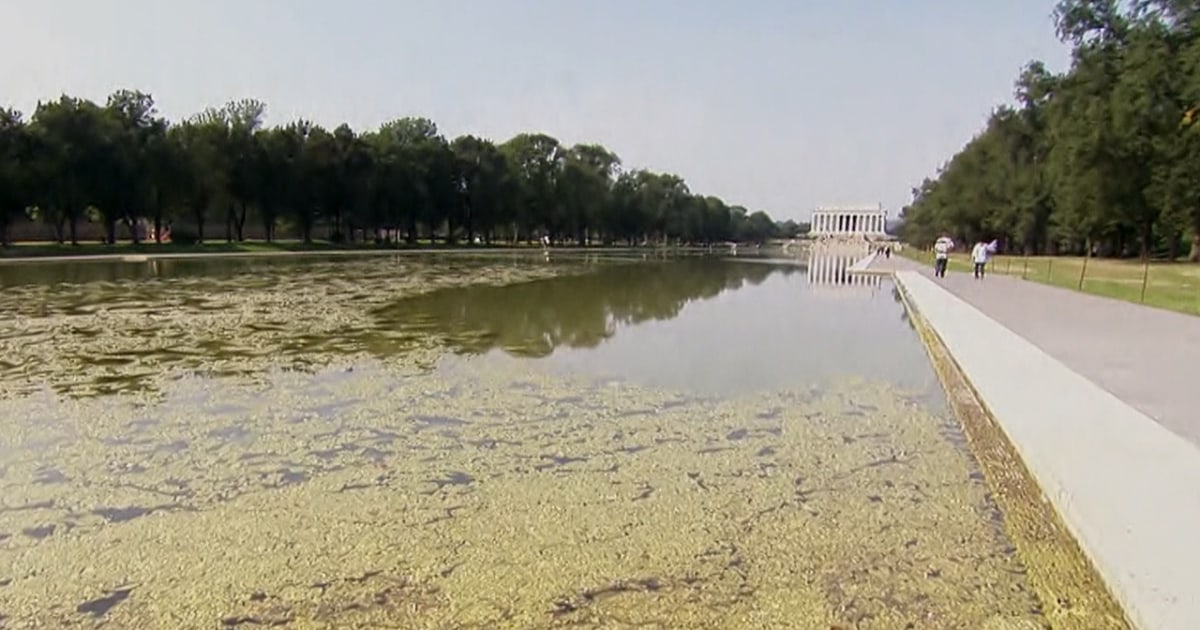
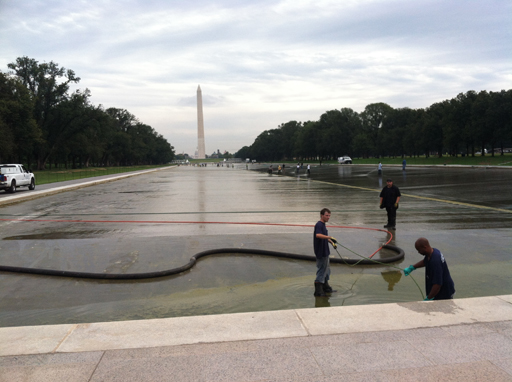
The Post reports that algae has quickly bloomed in the new Reflecting Pool—some on the surface, some on the bottom—making it look like pea soup in some areas. The algae is blamed on a change in the source of the water—it’s being drawn from the Tidal Basin instead of from D.C. water reservoirs—a shallower pool that allows algae to bloom more quickly and some fine-tuning that has to be done on the amount of ozone in the water:


However I am told that city water was used this time.
 
Re the claim that the dark paint makes the water warmer and thus algae grows better the first thing to look at is whether the water is running warmer than it used to.

If we only had journalists.
 

Lincoln Memorial infested with green algae​


Less than a month after the memorial’s extensive renovations, the shallow reflecting pool has been inundated with algae . NBC’s Savannah Guthrie reports.


The guy is right and wrong all at once. What needs to happen to fix this is circulation of the water at a reasonable and steady rate along with aeration.

Might work, at that. Problem is, they want it to reflect the Washington Monument. Moving water might not be the way to go. Maybe fill the pool with a thin sheet of Mylar instead of water. :rofl2:

Maybe add a few autonomous cleaning robots that collect all the muck that gets on the bottom.

DC has plenty of inmates that would suffice.
 
Might work, at that. Problem is, they want it to reflect the Washington Monument. Moving water might not be the way to go. Maybe fill the pool with a thin sheet of Mylar instead of water. :rofl2:


DC has plenty of inmates that would suffice.
That's why you run the system for say, like 6 to 8 hours at night, from say midnight to 6 or 8 in the morning.
 
That's why you run the system for say, like 6 to 8 hours at night, from say midnight to 6 or 8 in the morning.

Hmm.

Grok:

Nighttime aeration could be a partial or supplementary help for algae control in the Lincoln Memorial Reflecting Pool, but it is unlikely to be a complete or primary long-term solution on its own. Here's a breakdown based on the pool's characteristics and general pond/lake management practices:


Why It Could Help (in Theory)​


  • Oxygenation: Aeration increases dissolved oxygen, which benefits aerobic bacteria that compete with algae for nutrients and can help break down organic matter. Low oxygen at night (from plant/algae respiration) can exacerbate issues.
  • Nighttime-specific: Running aerators at night minimizes surface disturbance during daylight hours when reflections are most important for visitors. It could also slightly reduce water temperature buildup compared to daytime operation in hot summers. Some pond owners use this strategy seasonally.
  • The pool already has some aeration elements (e.g., nanobubblers mentioned in recent treatments), and crews have pushed algae toward central aeration zones.

Major Limitations for This Pool​


  • Shallow & Large Surface Area: The Reflecting Pool is very shallow (typically 1–3 feet deep in places) and enormous (~2,000 feet long). Algae thrives here due to sunlight penetration to the bottom, warmth (especially with the dark blue coating absorbing heat), and nutrient inputs (bird droppings, runoff). Aeration helps circulation but doesn't block light or remove nutrients effectively in such a setup.
  • Aesthetic/Functional Conflict: Strong aeration during the day would create bubbles, ripples, and turbidity, destroying the famous mirror-like reflections. Night-only helps, but the system would need to be powerful enough to mix the entire volume effectively.
  • Not a Root Fix: Experts note that algae blooms here are driven by nutrients + warmth + stagnation + sunlight. Aeration alone doesn't address nutrient loading or the design. Past efforts (2012 filtration switch, recent peroxide/nanobubbles) show it's a persistent challenge.
  • Practical Challenges: Installing/maintaining sufficient aerators in a historic public monument (without harming wildlife or the ecosystem) would be costly and complex. It could help as part of a broader strategy (better filtration, circulation, occasional chemical treatments like peroxide, or even UV), but not standalone.

Feasibility Verdict: Technically possible as a low-impact supplement (especially at night), but not a silver bullet. A combination approach—improved continuous circulation/filtration, nutrient reduction (e.g., goose management), and targeted treatments—would be more effective, as seen in similar large shallow water bodies. The NPS has used aeration elements before; expanding it could be explored, but engineering assessments would be needed.
 
Might work, at that. Problem is, they want it to reflect the Washington Monument. Moving water might not be the way to go. Maybe fill the pool with a thin sheet of Mylar instead of water. :rofl2:


DC has plenty of inmates that would suffice.
That's why you run the system for say, like 6 to 8 hours at night, from say midnight to 6 or 8 in the morning.
 
That's why you run the system for say, like 6 to 8 hours at night, from say midnight to 6 or 8 in the morning.


Pitch it to the NPS.

Grok:

What the NPS Has Done/Uses​


  • Aeration-related: They have used and upgraded nanobubble ozone systems (which introduce tiny oxygen/ozone bubbles for circulation and algae control). Crews also direct algae toward central aeration zones during cleanups. These are active during operations but not explicitly "nighttime only."
  • Cleaning/Scrubbing: Manual and mechanical methods dominate—skimmers, vacuums, brooms, and "Super Scrubbers" (vehicles that push debris/algae). They occasionally drain for deeper cleaning. No mention of autonomous underwater robots or automated scrubbers in available reports.

Why These Ideas Might Not Have Been Prioritized​


  • Aesthetics: The pool's primary purpose is calm, mirror-like reflections. Continuous or strong aeration (even at night) risks bubbles/ripples that could linger or require daytime management.
  • Scale & Design: It's a massive, shallow, historic feature tied to a sensitive ecosystem (Tidal Basin connection). Major additions like automated systems would need environmental/historic preservation approvals and could be costly.
  • Current Approach: Focus has been on filtration upgrades, peroxide treatments, manual vacuuming, and water source management (city water vs. Tidal Basin). These address symptoms without overhauling the historic design.

Feasibility Note: Both ideas are used successfully in ponds/lakes elsewhere (night aeration for oxygen without daytime disturbance; robotic scrubbers for large pools).
 
Practical Challenges: Installing/maintaining sufficient aerators in a historic public monument (without harming wildlife or the ecosystem) would be costly and complex. It could help as part of a broader strategy (better filtration, circulation, occasional chemical treatments like peroxide, or even UV), but not standalone.
The algae is wildlife, so there is no way to kill the algae without harming any wildlife.
 
Back
Top