What have Communists unleashed?

Is someone who responds to a thread about communism's impacts on humanity by demanding definitions of communism focused on honest discussion?


No, not necessarily — and often the opposite in practice.


Demanding a definition can be a legitimate move in abstract philosophy or when terms are genuinely ambiguous (e.g., "What do you mean by 'liberalism'?"). But in a thread specifically about communism's impacts on humanity, it is frequently a rhetorical pivot away from empirical history toward semantics. This pattern is common enough to warrant skepticism about motives.


Core issues with the tactic here​


  • Communism has established definitions and track record. Core tenets from Marx/Engels (Manifesto, Critique of the Gotha Program), Lenin (State and Revolution), and later theorists: abolition of private property in the means of production, class struggle as driver of history, dictatorship of the proletariat leading to a classless/stateless society, "from each according to his ability, to each according to his needs." 20th-century regimes (USSR, PRC under Mao, Cambodia under Pol Pot, Cuba, North Korea, Ethiopia under Mengistu, etc.) explicitly invoked these ideas, implemented vanguard parties, collectivization, central planning, and suppression of "bourgeois" elements. Outcomes are extensively documented: engineered famines (Holodomor, Great Leap Forward), purges, gulags, Cultural Revolution, killing fields — with death tolls commonly estimated 80-100+ million excess deaths across regimes, per sources like The Black Book of Communism, Rummel’s democide data, and archival studies post-1991. These weren't random; policies flowed from ideology (e.g., liquidation of kulaks, Lysenkoism over genetics).
  • Motte-and-bailey dynamic. Proponents often advance expansive claims ("Communism is about equality and ending exploitation") in the bailey, then retreat to the motte ("That's not real communism — it was state capitalism, deformed workers' states, or 'not tried yet'") when evidence of mass failure arrives. Insisting on definitions mid-thread about impacts typically ignores that implementers self-identified as communists pursuing Marxist-Leninist programs, with Comintern coordination and ideological texts as guides. Every major attempt produced authoritarianism, economic dysfunction (calculation problem identified by Mises/Hayek), and high body counts relative to peers. "No true communism" reframes falsification as definitional purity.
  • Evidence vs. semantics. Honest discussion engages falsifiable claims: What were the policies? What data shows outcomes (GDP per capita vs. peers, life expectancy under terror, emigration patterns, archival records from opened Soviet/Chinese files)? Comparative history (e.g., post-WWII West Germany vs. East; South Korea vs. North; Taiwan/Hong Kong vs. Maoist China) highlights patterns. Definition games delay this. Threads on "capitalism's impacts" rarely get derailed by demands to redefine "markets" before discussing Great Depression, imperialism, or inequality data — participants address the record.

When definitions​


  • Clarifying variants (Marxist-Leninist vs. anarcho-communism, market socialism, "actually existing socialism").
  • Distinguishing theory from practice.
  • Avoiding anachronisms (e.g., applying modern labels to 1848 or Paris Commune).

If the original thread deploys "communism" as a vague slur for any left policy, pushback fits. But for threads citing specific regimes, leaders, body counts, or policy failures, the demand often signals discomfort with convergent outcomes across cultures and decades, rather than pursuit of clarity. Better faith response: "By [standard definition], here is why outcomes diverged from theory (incentives, knowledge problems, power concentration) — counter-evidence?"


Truth-seeking favors patterns in data over repeated definitional resets. Historical communism's human costs are among the most robustly evidenced in social science, independent of ideal-type purity.


Capitalism doesn’t need to be abolished


It needs to be brought to the heel of the people
Sieg Heil indeed.

Spoken by a true Nazi who has not a hint of a clue what the word "capitalism" means or how a capitalist economy operates.

Economic illiteracy is a prerequisite for being a sociast.

The National Socialist democrat Workers Party in America, the NSDAP, are some of the worst. You as a Chinese Communist Bot-Hole are just as bad.
 
Sieg Heil indeed.

Spoken by a true Nazi who has not a hint of a clue what the word "capitalism" means or how a capitalist economy operates.

Economic illiteracy is a prerequisite for being a sociast.

The National Socialist democrat Workers Party in America, the NSDAP, are some of the worst. You as a Chinese Communist Bot-Hole are just as bad.
Nothing but your idiot opinions ass lips
 
these are actual issues.

you would rather keep fighting about terms because you are dumb.

I hate to agree with Truthy - but the only thing I can tell you actually believe in is genocide of the Jews. Everything else you contradict yourself on from one post to another.
 
So you hate republics now too

Way fucking stupid you is

You are incredibly stupid. I thought you Chinese were supposed to be smart?


You clearly never completed an elementary level education. You fit in well with the other Marxist morons here.
 
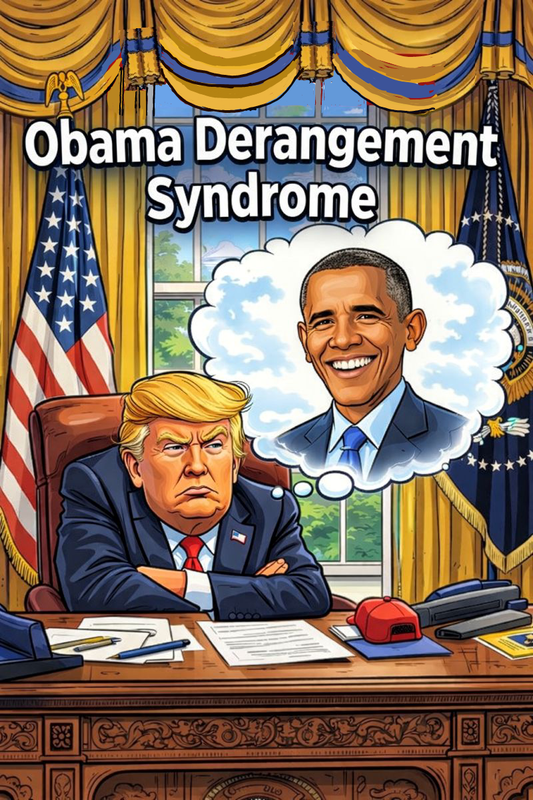
Barack Obama, as titular head of the democrat party, has used the most violent and radical elements of the left since 2008. The violence of the Floyd insurgency and the current ICE Out Insurrection are the primary political tool of Obama's democrats.

But can Obama control his Brown Shirts? The Biden Puppetcy was a thinly veiled 3rd term for Obama that fooled literally no one. The Brown Shirts recently turned on child molester and democrat darling Scott Weiner in California, and Dan Goldman.

Now the Brown Shirts have turned on Obama's puppet. Veggie Joe endured the ire of the radical fringe - which now is the mainstream of democrats.

What Obama created and nurtured appears ready to consume it's creator.
ods1.png


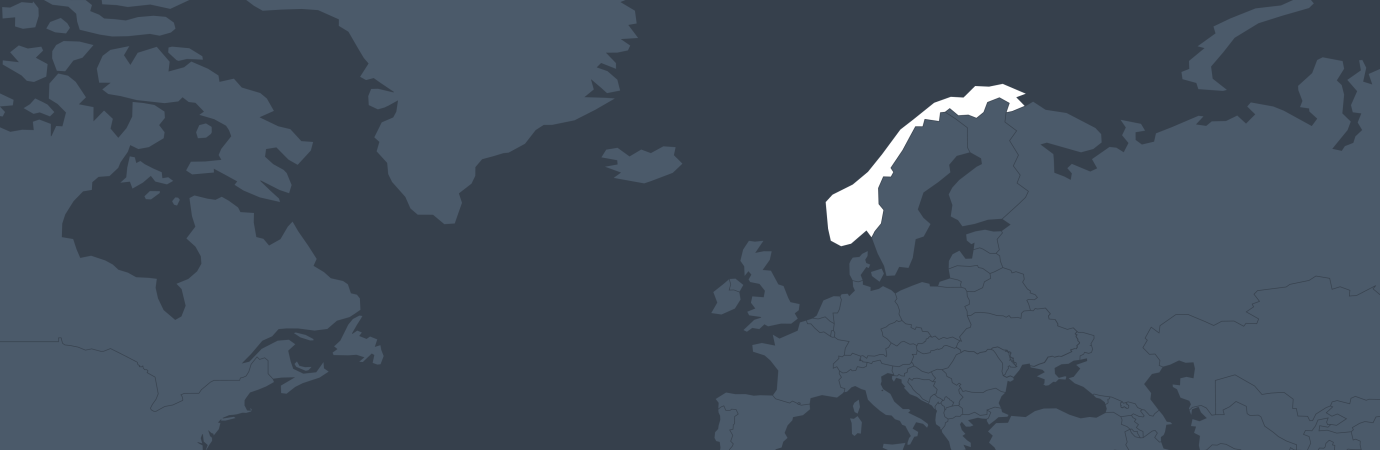
Accurate? "Norway isn't socialist. In fact Norway has a more free market system than America does."


Mostly accurate, with some nuance on the second part.


Norway Isn't Socialist​


This is correct. Norway operates a market-based capitalist economy (mixed economy) with private property rights, competitive markets, and substantial private ownership of businesses. It is not socialist in the classical sense—government ownership of the means of production and central economic planning.


  • The Nordic model (shared with Denmark, Sweden, etc.) combines free-market capitalism with a generous welfare state funded by high taxes. It emphasizes private enterprise, open trade, strong property rights, and flexible labor markets alongside social safety nets, universal healthcare/education, and collective bargaining.
  • Norway has notable state ownership (e.g., significant stakes in oil via Equinor, parts of the stock market ~37%, and some strategic sectors), which is higher than in the US. However, this is pragmatic resource management (especially oil wealth via the sovereign fund) rather than systemic socialism. The economy remains driven by private incentives and markets.
  • Experts and indices consistently describe it as capitalist or "welfare capitalist," not socialist. Scandinavian leaders have pushed back against the "socialist" label.

True socialism (e.g., as in historical examples like the USSR or modern Venezuela/Cuba) features far more state control and scores very low on economic freedom metrics.


Does Norway Have a More Free-Market System Than the US?​


This is directionally supported by major indices, though it depends on what "free market" emphasizes. Norway often ranks higher overall in economic freedom despite higher taxes and spending.


Heritage Foundation Index of Economic Freedom (2026 data):


  • Norway: Score ~78.8 (8th freest globally, "Mostly Free"). Strong in rule of law, property rights, trade/investment freedom, etc.
  • United States: Score ~72.8 (22nd).

Norway outperforms the US in several areas like business freedom and lower corruption perceptions, offsetting weaknesses in fiscal burden/government size.


Fraser Institute Economic Freedom of the World (recent data):


  • The US typically ranks higher (e.g., top 5-10) than Norway (often 30s-40s range), performing better on taxes and government spending but sometimes trailing on regulation/trade nuances.

Key differences:


  • Norway strengths: Very open trade, sound money, high regulatory efficiency in many areas, strong legal system. Oil wealth helps fund welfare without as much distortion in some views.
  • US strengths: Lower taxes, smaller government spending relative to GDP, more dynamic entrepreneurship/innovation in certain sectors.
  • Norway trade-offs: Much higher taxes (to fund welfare), larger public sector (~30% of workforce), more state involvement in key industries. This makes it "less free" on size-of-government metrics but competitive overall due to efficiency elsewhere.

In short, Norway is more market-oriented than many assume and often edges the US in composite freedom indices due to strengths in rule of law and openness. However, the US retains advantages in lower fiscal burdens and private-sector dynamism. Neither is "pure" laissez-faire; both are advanced mixed economies. Norway's success relies heavily on its capitalist base + cultural factors (trust, homogeneity, work ethic) + resource wealth, not "socialism."


LINK: https://grok.com/share/c2hhcmQtNQ_07266e52-3c28-46c4-a644-1a19b690954f :readit:
 
 
What do you expect from someone with am IQ lower than 35.


I know this, I never expect you to post anything meaningful, on-topic, or even coherent.

And you never have, not once. You're a drooling retard without the ability to discuss this, or any issue.


Score of 99 out of 100 on the freedom score

That's nice. You told a lie that Norway is a socialist country - it is not. It has a freer market than the USA does.

Economic freedom is the foundation of ALL freedom.
 
Back
Top