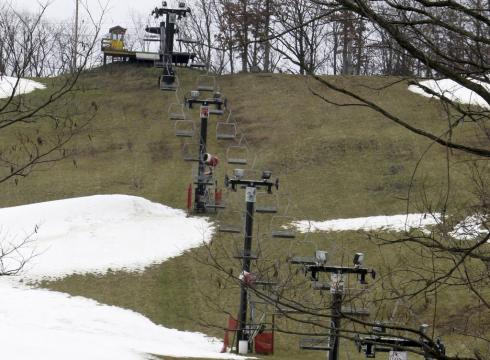
Wow, that global warming thang is a real bitch!

If you understand climate you know the impact is extremes, because of the scale that is the Earth's climate trying to balance things out. Hurricanes actually take part in that balancing act, and as it becomes more unbalanced we will get more. Havana lives in England, so I wonder how he enjoyed that rare storm that hit there. I live in Michigan, and more snow is to be expected anymore, and it's because of warmer temps. The water stays warmer, and then freezing air comes through, and create precipitation off the warm lakes. I wonder if Havana even knows what lake effect snow is. In addition, a year or two ago, it was Christmas time going down to Ohio, but we showed up to tornado sirens blaring.

Just how many of these "cyclical" Climate Changes has this earth gone through.....long before the advent of blaming Industrialization for the changes wrought by solar cyclical events? According to those who are proponents of man made global warming....i.e., CLIMATE CHANGE (the new buzz word used to include any extreme change in weather.....as an excuse to blame MAN for all weather events....as it became more and more oxymoronic to point to COLD WEATHER events as an indicator of GLOBAL WARMING).......the earth has under gone at least "7" cyclical major climate changes over the past 650K years....the latest one just 7000 years ago. And the objective evidence points to these extreme changes being due to SOLAR conditions in relation to earth's attitude and orbit to the energy omitted by the STAR known as our SUN.

What's changed? Nothing except today instead of accepting the reality of these cyclical events......some supposed very smart people have comprehended the fact that POLITCAL POWER can come due to the gullibility of those who have no capacity for critical independent thinking. These "smart people" have sold a major part of the earth's population SNAKE OIL as a form of a cure all natural remedy to all earth's weather problems.......that snake oil? Carbon Monoxide is poisonous to life on earth.....advancing an unproven theory that man's carbon footprint on earth is a far greater danger to nature than the Sun's energy or the orbit changes of the earth even though there has been many recorded geological/geographical events that have slightly altered the earths orbital attitude in relation to the way the earth captures the sun's energy....in recent history, major earthquakes near the equator, major volcanic eruptions, major solar flares.....yet the drum beat continues to sell the snake oil remedy. All it requires is a major investment into green energy....of course with the brokers of this new energy source being ALL THE SMART PEOPLE who warned you of the event........

I simply say......of course the CLIMATE IS CHANGING....always has, always will but I also say, "STOP PISSING DOWN MY BACK WHILE INSULTING MY INTELLEGENCE AND DECLARING.....RELAX, ITS ONLY RAIN."...now allow me to tell you how dangerous Carbon Dioxide is to the earth (never mentioning the fact that no life on earth could exist void of Co2...as all life forms are carbon based)....here invest in some CARBON CREDITS.....purchase some, stop using Co2.....while I have several mac mansions, fly around in private jets to green events, own over 50% of all types of green energy companies.....and drive around in limo's protected by armed guards ;)


Another truism that has always existed right beside CLIMATE CHANGE. CAVEAT EMPTOR Beware those selling "snake oil".....while pointing to a shill as evidence...that shill......some supposed consensus opinion instead of scientific evidence concluded as the result of using the SCIENTIFIC METHOD.

I will ask you the same question I ask everyone. Can you present just ONE supposed scientific report used by those selling this snake oil that does not use the terms, "looks like", "suggests", "points to", most likely, could have, might have....etc., JUST ONE REPORT that does not use any of these opinionated SUBJECTIVE terms....just one report? Then we can DEBATE......the FACTS.

The truth? Just like RACE BAITING......GLOBAL WARMING has become a very profit based event.
 
Last edited:
Just how many of these "cyclical" Climate Changes has this earth gone through.....long before the advent of blaming Industrialization for the changes wrought by solar cyclical events? According to those who are proponents of man made global warming....i.e., CLIMATE CHANGE (the new buzz word used to include any extreme change in weather.....as an excuse to blame MAN for all weather events....as it became more and more oxymoronic to point to COLD WEATHER events as an indicator of GLOBAL WARMING).......the earth has under gone at least "7" cyclical major climate changes over the past 650K years....the latest one just 7000 years ago. And evidence points to these extreme changes being due to SOLAR conditions in relation to earth's attitude and orbit to the energy omitted by the STAR known as our SUN.

What's changed? Nothing except today instead of accepting the reality of these cyclical events......some supposed very smart people have comprehended the fact that POLITCAL POWER can come due to the gullibility of those who have no capacity for critical independent thinking. These "smart people" have sold a major part of the earth's population SNAKE OIL as a form of a cure all natural remedy to all earth's weather problems.......that snake oil? Carbon Monoxide is poisonous to life on earth.....advancing an unproven theory that man's carbon footprint on earth is a far greater danger to nature than the Sun's energy, the earth orbit changes even though there has been many recorded geographical events that have slightly altered the earths orbital attitude in relation to the way the earth captures the sun's energy.

Yes agree with that, but please note carbon monoxide is extremely poisonous.

Sent from my Lenovo K8 using Tapatalk
 
Go to Holland. They use CO2 concentrations of 900-1000 ppm, in vast greenhouses, to accelerate growth.

Sent from my Lenovo K8 using Tapatalk

The point I'm making is that when anthropogenic apocalyptic alarmists say 'going green' because they're reducing their carbon footprint they are actually 'going brown'.
 
Yes agree with that, but please note carbon monoxide is extremely poisonous.

Sent from my Lenovo K8 using Tapatalk

Type -0-......that's what happens when your finger dexterity overrides your thought process. But......when the context is applied its clear that Carbon Dioxide was the correct qualifier. Thanks. ;)


Its like a fat person declaring they are on a new diet........and they are now considered a "dyslectic anorexic".
 
I was taking the piss, but Septics like you are too stupid to work that out.

Sent from my Lenovo K8 using Tapatalk

You were equating snowfall depth with average temperatures like an ignorant child.
You can see snow. Temperature is invisible.
You have done this several times before.
You are retarded.
 
Global warming is about as real as Sandy Hook.

Thank you Alex Jones.

alex_jones_googly_eyes_280.jpg
 
Winter isn’t coming: How ski resorts are responding to climate change

The impact of climate change is well-documented: temperatures are rising, droughts are becoming longer, and winter is getting shorter and shorter. For snow-sport enthusiasts, this begets the inevitable question: Is skiing a dying sport? Can Ski Mountains survive shorter winters? Vail Resorts is betting they can.

The threat posed by global warming on the ski industry can already be seen across North America, and continues to get worse. Winters are getting shorter, and the snow pack is getting thinner and thinner. As temperatures rise, Ski Mountains at lower elevations are seeing rain on more days when in the past they saw snow. Resorts have historically manufactured snow during bad winters, but can’t make the snow they need if temperatures are too high. And, to make conditions even worse, global warming has intensified droughts, making less water available for the creation of artificial snow. A climatologist recently predicted that by 2039, 50% of the ski resorts in New England would have to shut down. Should global warming continue at its current pace, only mountains reaching the highest elevations, such as those in the Rocky Mountains or the European Alps, will have access to viable skiing. [9]

Skiers, snowboarders, and resort owners aren’t the only ones that suffer in bad winters. A recent study argues that the snow-sports industry more broadly adds $12.2B to the U.S. economy every year. [3] Small mountain towns depend on winter tourism to keep locals employed and to contribute to their tax base. In California, the small town of Mammoth Lakes suffered such a downturn during successive droughts that it was forced to declare bankruptcy. [8]

While the planet has yet to turn things around, business leaders in the ski industry refuse to let shorter winters hurt their bottom line. The CEO of Vail Resorts, Robert A. Katz, has a simple strategy when it comes to threat of climate change: Make your business about much more than snowfall. [12]

Vail Resorts has invested aggressively in “weather proofing” to ensure they can attract visitors no matter the weather. Vail, and the 14 resorts it owns around the world, have built more golf courses, mountain bike trails, water slides and other warm weather activities to attract outdoor enthusiasts all year round. Some mountains have gone even further – developing approaches to skiing that don’t need any snow at all. The Midlothian Snowsports Center outside of Edinburgh, Scotland offers “dry skiing,” which uses carpet like surfaces to mimic the experience of skiing year round. [6]

Katz also cites a specific strategy to “own more of the mountain” [12]. Lift passes make up about half of a mountain’s revenue, but by owning more hotels, restaurants, and other attractions, a ski resorts can capture a larger share of wallet from each visitor. [12]

Vail has deployed other tactics to secure its financial position. Vail, and other mountains, have aggressively expanded their sale of season passes before the season starts. Although revenue per skier might be lower through season passes, it acts as a hedge against a bad season. Even if they experience a year of bad snowfall, season pass revenue, which is collected before the winter begins, can cover a lot of fixed expenses. Vail has also expanded aggressively to increase market share and diversify its risk: a good year in Canada may make up for a bad year in Utah. [10]

The Ski Industry has recognized its own contributions to climate change. Ski resorts across North America have taken proactive steps to lower their carbon footprint. Many mountains have created management positions to focus on sustainability, and resorts like Vail have curbed their energy use, installed solar panels and increased their recycling programs. Resorts are also working to raise awareness about climate change and to lobby for more environmental protection. Organizations like Protect Our Winters, The Mountain Pact and The National Resource Defense Council are all examples of organizations that have formed to create coalitions of mountain towns, resorts, winter athletes and climate scientists. [7]

If efforts to fight the effects of global warming don’t succeed, winter sports may become a thing of the past. Pessimists predict that skiing in the future will be limited to places like the Mall of the Emirates in Dubai, which boasts a 400 meter indoor ski slope in the middle of the desert, filled with artificial snow. The efforts of Vail resorts and Robert Katz may help mountains stay open in the short term, but, in the longer term, we must find ways to signific
antly reduce global greenhouse gas emissions so that winter doesn’t become a season of the past. [1]

https://rctom.hbs.org/submission/wi...ski-resorts-are-responding-to-climate-change/
 
Global warming worries ski resorts

No-snow-on-slopes.jpg


Count ski resort owners as among businesses who worry more than a little about global warming and climate change.

The reality is that shorter winters and warmer weather can be a real threat to resorts' bottom lines. For skiers, climate change means less snow and shorter seasons.

At the recent Ski Utah media roundtable, the trade organization released information that it plans to continue its partnership with Protect Our Winters or POW.

That groups working with the winter sports community throughout the world to reduce the effect of climate change.

In Utah, Alta, Snowbird, Sundance and Powder Mountain are partnering with Ski Utah. The big push this year will be promoting car pooling and use of public transportation to get skiers to the resorts.
http://archive.sltrib.com/article.php?id=4513846&itype=CMSID
 
How Ski Resorts Are Fighting Climate Change
The non-profit group Mountain Pact encourages mountain towns to unite politically. The goal: galvanize politicians to protect winter.

snow03_3539630b.jpg

s New England confronts sidewalk avalanches and digs itself out from underneath a blizzard, West Coast skiers are dealing with the opposite problem. Squaw Valley, which averaged 450 inches of snowfall per year between 2008 and 2014, has received less than a third of that amount this season, according to a February snow report. The snowpack situation is so dire there that the International Ski Federation canceled the skicross and snowboardcross World Cup two weeks before it was scheduled to launch, in early March.

Much has been made about the impact of global warming but nowhere is it felt deeper than at ski resort towns, whose economies are pegged almost entirely to snowfall. It sounds obvious, but if it doesn’t snow, no one comes to town to ski, which means no one buys après beer or dinner or groceries or gasoline, and the town loses a revenue stream it depends on.

This isn't just happening in California, a state in the grip of a 100-year “megadrought,” but across the entire western high country. A 2008 study from the University of Maryland estimated that Colorado (which has the largest ski-based economy in the country) would lose $375 million in revenue and 4,500 jobs by 2017 due to skier attrition from lack of snow.

“It’s a bigger issue than, ‘Oh, we can’t ski,’" says Diana Madson, executive director of the non-profit Mountain Pact, a new advocacy group focused on stemming the impacts of climate change on ski towns. “It’s loss of jobs and major environmental degradation.”

In Tahoe, where January snowpack levels are the lowest on record, Madson is drawing up ways to help mountain towns survive the increasingly warming winters. She studied the effect of climate change on mountain towns at the Yale School of Forestry, and found that drought, lack of snow, and more frequent fires were chipping away at the economic base of ski towns nationwide. She also noticed that towns were spending resources addressing the symptoms but not the larger cause of distress. The observation led her to the novel idea that ski towns, if they were to pool their resources and knowledge, might become a formidable political bloc. If only they had a common framework, Madson thought. Last summer, she started Mountain Pact, which galvanizes those communities to lobby for the kind environmental policies that will help the high country adapt to climate change.

“Climate conversation has been focused on urban areas and coastal areas,” Madson says. “Mountain towns are not being heard.”

And they should be. Dr. Elizabeth Burakowski, a researcher at the National Center for Atmospheric Research who co-authored a 2012 study about climate change’s impact to tourism, says that there’s already strong evidence that mountain towns are suffering from winter warmth. The country’s $12.2 billion winter tourism industry can’t survive on snow-gun slopes, the study says, and ski resorts account for 36 percent of winter tourism-related employment. “In order to protect winter—and the hundreds of thousands whose livelihoods depend upon a snow-filled season—we must act now to support policies that protect our climate, and in turn, our slopes,” the report says.

The notion that climate variability is melting away the viability of resort living isn’t new. Sustainable practices have been baked into ski resort operations for a while now. Aspen, for instance, is capturing methane from a nearby coal plant to power its snow guns, and Deer Valley runs its snowcats on bio-diesel. But a lot of those actions have occurred only at the resort level, and smaller towns without Aspen’s robust economy can be paralyzed by the scope of adapting their infrastructure to the changing climate.

Madson, who grew up on the west side of the Sierra Nevadas, spent last summer traveling across the West, talking to town managers and local business councils to see if they’d join Mountain Pact. By the fall, she had a handful of mountain towns, including Aspen, Tahoe, Vail, and Park City on board. The partners drew up a list of common problems, like drought mitigation and wildfire. “We didn’t have a focus on legislation before,” says Matt Abbott, Park City’s environmental project manager. “Together we’ve got a lot more leverage than alone.”

Park City has had a climate adaptation plan in place since 2009. It caps the community’s water and energy use, and outlines a concrete plan for smart growth and disaster relief. Park City is on the front end of the curve of climate planning, in part because it has a diversified economic base and good funding, but Abbot says he’d like to pave the way for smaller towns with less robust economies.

Madson says that’s why it’s important to band towns together, because a lot of the big picture things they’re facing are the same. They can leverage their collective voice to change state and federal policy and piggyback off of the good ideas of other towns, like Park City’s adaptation plan. “A lot of it is unsexy stuff, like water quality, forest health, and new business plans,” Madson says. “These towns tend to be progressive, they recognize [climate change] as an issue, but there are levels of investment that feel overwhelming. They say, ‘We know it’s happening but we don’t always know what to do and we don’t have any money to do it.’”

Mountain Pact and its partners are focusing on three objectives: adaptation, mitigation, and federal prioritization. For example, they’re working with the Obama administration to block expanded coal leasing on Department of Interior land, and to keep carbon emissions in check. They’ve outlined a plan for how the federal government can support more resilient water infrastructure. In January, they introduced the Wildfire Disaster Funding Act, which would allocate more funding to wildfire prevention and give mountain towns more ways to adapt before they’re in crisis mode.

The National Ski Industry Association, which has been trying to reduce the ski world’s climate footprint since 2002, says that Mountain Pact is an ally in the effort to buffer ski areas against climate change. “Out of the gates I can tell you that the ski industry is in total agreement on supporting the Wildfire Disaster Funding Act,” says Geraldine Link, the NSAA’s Director of Public Policy. The NSAA is also lining up with other industry groups that focus on climate change, like Protect Our Winters, a winter sports advocacy group launched in 2007 by big-mountain snowboarder Jeremy Jones.

Mountain Pact is also trying to make mountain towns aware of policy that will impact them. “Those can be hidden,” Madson says. For example, last year the U.S. Forest Service proposed a directive that would prevent a ski area owner from selling off private water rights while the ski area is operational. As it stands, a ski resort’s plumbing could be shut off in the event of a sale if the water rights weren’t included in the transaction. “It was a big deal,” Madson says, “but it was buried as agency policy.”

One of the biggest challenges in addressing climate change is that it’s intangible and wide-ranging. It also makes Madson’s job tougher: It’s hard to convince communities to finance projects that don’t pay immediate dividends or generate easily measurable returns on investment.

But she’s already gaining ground. The Wildfire Disaster Funding Act is on the floor in both the House and the Senate. It has bipartisan support (which is rare for an environmental bill), as well as backing from environmental groups and government agencies. “This bill is a welcome shift to long-term planning for fire that will greatly benefit our communities and our public lands,” says Ani Kame'enui, forest expert for Sierra Club’s Our Wild America campaign. Across the aisle, parties say they like its smart allocation of government funds and forward-thinking approach—exactly what Madson is pushing for.

https://www.outsideonline.com/1930841/how-ski-resorts-are-fighting-climate-change
 
^ Reminds me of Jimmy Carter's 'energy crisis' when we weren't supposed to have any petrol by now. lol

You don't know what you are talking about,

In November 1979, Iranian revolutionaries seized the American Embassy, and Carter imposed an embargo against Iranian oil.... and that was followed in 1980 by the Iran-Iraq war.
 
Pathetic, you can do better than that. Ask Billy if he has a Spiderman meme to cover it.

Sent from my Lenovo K8 using Tapatalk

you don't deserve any other response. you are on the level of arguing in favor of a flat earth. that's how far gone you are on this issue.
 
you don't deserve any other response. you are on the level of arguing in favor of a flat earth. that's how far gone you are on this issue.

My god and I thought Rana was a full-on retard on CAGW. I wish Damo would come on more often, he at least is informed on the issue.


1da71c09493d6aada5196b8094fe09f4.jpg
 
Last edited:
About time the scumbags were called to task!!
BBC Forced To Retract False Claim About Hurricanes


[url]http://www.bbc.co.uk/news/world-us-canada-42251921

[/URL]
You may recall the above report by the BBC, which described how bad last year’s Atlantic hurricane season was, before commenting at the end:

A warmer world is bringing us a greater number of hurricanes and a greater risk of a hurricane becoming the most powerful category 5.

As I promised, I fired off a complaint, which at first they did their best to dodge. After my refusal to accept their reply, they have now been forced to back down.
The above sentence now no longer appears, and instead they now say:
.
Scientists are still analysing what this data will mean, but a warmer world may bring us a greater number of more powerful category 4 and 5 hurricanes and could bring more extreme rainfall.

Correction 29 January 2018: This story has been updated to clarify that it is modelling rather than historical data that predicts stronger and wetter hurricanes.
.

Of course, we have the usual problem, that those who read the article originally and who would have been deeply misled, won’t see the correction now.
What is perhaps of most concern is that this report was written by Chris Fawkes, who is one of the BBC’s weather forecasters, and who should therefore know better.

www.notalotofpeopleknowthat.wordpre...rced-to-retract-false-claim-about-hurricanes/
 
Last edited:
Back
Top