A mortal blow to Young Earth creationism

Oh the delicious irony of a drunken stoner who can barely form an idea, saying someone else has problems. :laugh: :rofl2: :laugh:

Does your keeper know that you strayed away from KrazyKathysKuckooKlubhouse? Better get back there and post some more psychotalk! :laugh:

LOL. While it may very well be true I'm as fucked up as anyone else, I think you and I can agree most people aren't as fucked up as the KKK. Parasites are rarely appreciated.


5nvb58.jpg
 
You can't move a container ship with solar.

Not presently. But you can't say can't when it comes to the rate of technological advancement of humans.
Think of all the can'ts that are cans since 1850, including container ships.

Carbon fuel is going to die out. It's death assured by global climate change and the fact that the production
of refined fuel from oil is itself highly consumptive of energy.
 
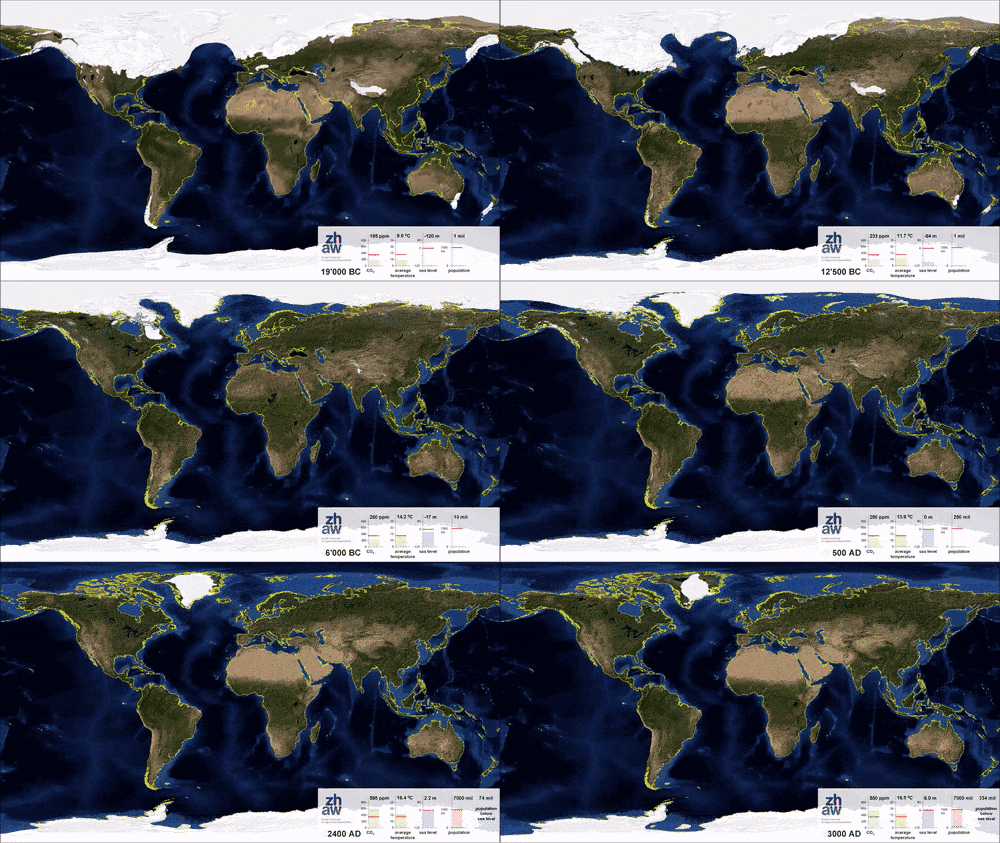
That's what it appears that they did. The problem we have now is most of the sites where they stayed are under the sea.

Too right you are.

Supposedly, there was an ice-free corridor down the spine of western Canada, which facilitated overland migration. But that is just a hypotheses.

The strange thing to me is that the majority of the oldest confirmed human remains in the Americas have been found in south and central America. Supposedly the last places migrants from Siberia would have made it to. Even in North America some of the oldest, definitive sites of human habitation are in the eastern United States.

You would hope there would be far more evidence of human remains in the western united states, which Siberian migrants presumably would have reached long before getting to central and south America.
 
Better, IMO, to let them feed off each other. It leaves fewer remaining to employ the old "stake method of parasite removal". LOL

You know they get rid of garden slugs? Leave some shallow dishes out with beer. Works for the KKK Klub, too. They seem to have the forum's best collection of middle-of-the-night-and-5am drunk posters. :laugh:
 
Too right you are.

Supposedly, there was an ice-free corridor down the spine of western Canada, which facilitated overland migration. But that is just a hypotheses.

The strange thing to me is that the majority of the oldest confirmed human remains in the Americas have been found in south and central America. Supposedly the last places migrants from Siberia would have made it to. Even in North America some of the oldest, definitive sites of human habitation are in the eastern United States.

You would hope there would be far more evidence of human remains in the western united states, which Siberian migrants presumably would have reached long before getting to central and south America.

It is possible that they have yet to be discovered. Just like now, the coastal areas had a milder climate than the interior. It's quite likely that most settlement was on what was then the coasts, but is now under water.
 
Not presently. But you can't say can't when it comes to the rate of technological advancement of humans.
Think of all the can'ts that are cans since 1850, including container ships.

Carbon fuel is going to die out. It's death assured by global climate change and the fact that the production
of refined fuel from oil is itself highly consumptive of energy.

Why is it, do you think, that the Trumpanzees and other Qpers are so afraid of the future w/o oil and coal?
 
It is possible that they have yet to be discovered. Just like now, the coastal areas had a milder climate than the interior. It's quite likely that most settlement was on what was then the coasts, but is now under water.

For sure that makes sense. But those 14,000 year old rock shelters in Pennsylvania and Virgina had to be reached by traversing the western united states. It is a little disconcerting that a substantial amount of confirmed evidence of Paleolithic human remains have rarely been found outside the eastern United States.

But I agree that we just have not looked hard enough. Paleoanthropology as a scientific discipline does not exactly get a lot of funding.
 
It is possible that they have yet to be discovered. Just like now, the coastal areas had a milder climate than the interior. It's quite likely that most settlement was on what was then the coasts, but is now under water.

Agreed. That fits since any culture with boats would be using them for hunting/fishing and stay coastal near their food sources.
 
For sure that makes sense. But those 14,000 year old rock shelters in Pennsylvania and Virgina had to be reached by traversing the western united states. It is a little disconcerting that a substantial amount of confirmed evidence of Paleolithic human remains have rarely been found outside the eastern United States.

But I agree that we just have not looked hard enough. Paleoanthropology as a scientific discipline does not exactly get a lot of funding.

Which would be easier in 16,000 BCE: Traversing the entire continent or floating/walking over from northern Europe?

I'm inclined to think there were multiple migrations of humans arriving in the Americas over times even if it was only one tribe at a time.

https://www.researchgate.net/figure...aciers-and-sea-ice-at-the-last_fig1_268428444

Coverage-in-the-Northern-Hemisphere-by-ice-sheets-glaciers-and-sea-ice-at-the-last.png

I think there are a few paleoanthropologists who try to explain the ancient Paleolithic rock shelters in eastern United States by invoking some crazy migration route from Europe, or something.

I think it is more plausible there are human remains older than the central American and eastern United States Paleolithic sites in western US, but we just haven't found them yet.

I think a few years ago, there was a report of 15,000 year old human remains in Montana, but I do not know if this is confirmed or widely accepted.
 
For sure that makes sense. But those 14,000 year old rock shelters in Pennsylvania and Virgina had to be reached by traversing the western united states. It is a little disconcerting that a substantial amount of confirmed evidence of Paleolithic human remains have rarely been found outside the eastern United States.

But I agree that we just have not looked hard enough. Paleoanthropology as a scientific discipline does not exactly get a lot of funding.

Which is a shame because it is our story.

I wonder if eastern sites have been more readily discovered because the modern population density there is higher than in the west. Maybe it's simply because there are more ppl out wandering and coming across sites, and/or more building and construction uncovering them.
 
Which would be easier in 16,000 BCE: Traversing the entire continent or floating/walking over from northern Europe?

I'm inclined to think there were multiple migrations of humans arriving in the Americas over times even if it was only one tribe at a time.

Yes, it wasn't just one big push but multiple small waves. I haven't seen any DNA evidence though of any relationships between indigenous Americans and modern or ancient Europeans; their DNA is more similar to eastern Asians than to Europeans.

https://www.nature.com/articles/nature25173
 
I think there are a few paleoanthropologists who try to explain the ancient Paleolithic rock shelters in eastern United States by invoking some crazy migration route from Europe, or something.

I think it is more plausible there are human remains older than the central American and eastern United States Paleolithic sites in western US, but we just haven't found them yet.

I think a few years ago, there was a report of 15,000 year old human remains in Montana, but I do not know if this is confirmed or widely accepted.

Was it this one?

https://today.tamu.edu/2018/06/18/montana-burial-site-answers-questions-about-early-humans/
 
Yes, it wasn't just one big push but multiple small waves. I haven't seen any DNA evidence though of any relationships between indigenous Americans and modern or ancient Europeans; their DNA is more similar to eastern Asians than to Europeans.

https://www.nature.com/articles/nature25173

Agreed on smaller waves. Let's not forget we're talking a time span of 10,000 years: The difference between the common belief that Native Americans come over about 10,000 years ago and the facts proving human beings existed in the Americas up to 20,000 years ago. 10,000 years covers all of human written history. Even if we stuck with the 15,000 year figure, that's a helluva lot of time for human migrations.

Doubling the time span is mind-boggling and opens the door for all kinds of human waves, big and little, moving around looking for a better life.
 
Back
Top