Dozens drown, schools close, heat records set to be annihilated: Europe has a major heat problem and it’s only getting worse

San Francisco isn't really comparable here, but many of our buildings don't have AC and on those days when it does get hot people don't like being inside because it's not comfortable.

I know retrofitting some of those historic buildings in Europe can be extremely expensive. I suppose it will come down to whether it reaches a point where people feel so uncomfortable they decide something needs to be done.

Or worse, when people start dying from heat stroke.
 
Install more air conditioning, build new electricity generating plants to feed the increased demand, build rooftop gardens or paint roofs white. Some cities are already doing this. It's only going to get worse. :(
Not a rhetorical question, but this is my real estate mind at work.

How scalable do you think that is for the millions of units that need it in terms of cost and dealing with the strong desire from some at least for architectural preservation?
 
Install more air conditioning, build new electricity generating plants to feed the increased demand, build rooftop gardens or paint roofs white. Some cities are already doing this. It's only going to get worse. :(
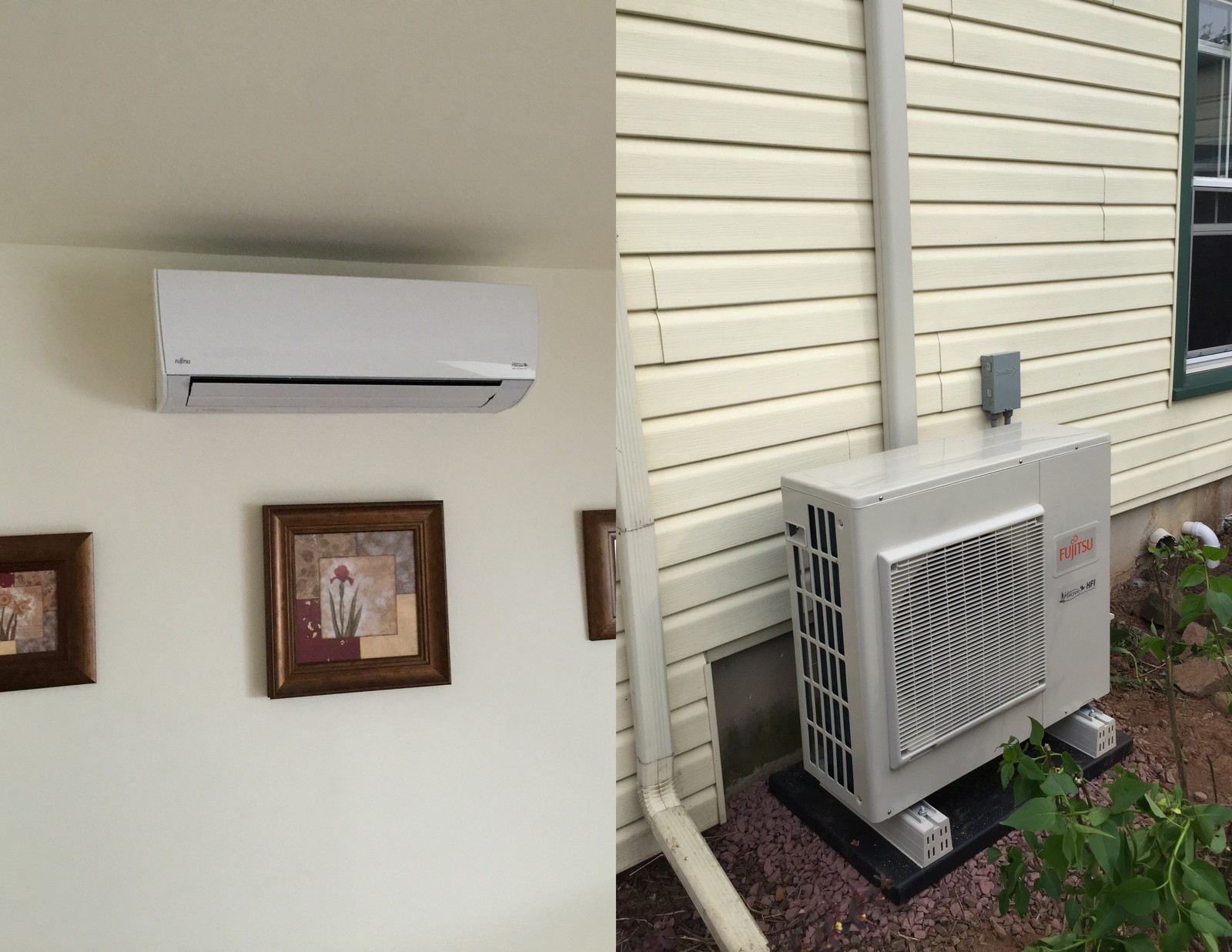
Air conditioning is easy to install. You use split units. These are popular around the world. I'm considering one for my garage using a two-zone unit.

R.7b4f3c28a7b29218bf988bb824d44eb7


This is typical for a two zone. The fan unit goes on a pad or mounting outside. The two cooling units are wall mounted where convenient. You need drill just holes for the hook up lines to tie the two together and provide power--usually about a 30 amp 120 VAC or 240 VAC circuit to the unit with the fan. The inside units are powered from it. They are typically 30 SEER + in efficiency.

This is what one looks like installed.

Remodeling-with-Ductless-Mini-Split-Heat-Pumps.jpg


Super simple. Anyone with a bit of handyman skill can install one in many cases, you just need the electrical circuit run. Costs are about $800 to $1500 with the install if you DIY.

Rooftop gardens are generally impractical. No available water, the roof has to be flat, it has to support the weight of the garden and persons on it, etc. Total PITA.

Insulating does 10 times or more what painting your roof white will. Just sealing anywhere air is leaking in will help immensely. Old homes in Europe are pretty drafty. Getting rid of that alone will massively improve energy efficiency. Shading windows and other surfaces with awnings helps too.

71yJO3xumZL._AC_SL1500_.jpg


These can be DIY and are very helpful in keeping direct light out and cooling your home.
 
Air conditioning is easy to install. You use split units. These are popular around the world. I'm considering one for my garage using a two-zone unit.

R.7b4f3c28a7b29218bf988bb824d44eb7


This is typical for a two zone. The fan unit goes on a pad or mounting outside. The two cooling units are wall mounted where convenient. You need drill just holes for the hook up lines to tie the two together and provide power--usually about a 30 amp 120 VAC or 240 VAC circuit to the unit with the fan. The inside units are powered from it. They are typically 30 SEER + in efficiency.

This is what one looks like installed.

Remodeling-with-Ductless-Mini-Split-Heat-Pumps.jpg


Super simple. Anyone with a bit of handyman skill can install one in many cases, you just need the electrical circuit run. Costs are about $800 to $1500 with the install if you DIY.

Rooftop gardens are generally impractical. No available water, the roof has to be flat, it has to support the weight of the garden and persons on it, etc. Total PITA.

Insulating does 10 times or more what painting your roof white will. Just sealing anywhere air is leaking in will help immensely. Old homes in Europe are pretty drafty. Getting rid of that alone will massively improve energy efficiency. Shading windows and other surfaces with awnings helps too.

71yJO3xumZL._AC_SL1500_.jpg


These can be DIY and are very helpful in keeping direct light out and cooling your home.
How would that work for 200 year old buildings in Europe in terms of cost and feasibility (preserving architecture etc) for a large number of units? Would there be issues?
 
How would that work for 200 year old buildings in Europe in terms of cost and feasibility (preserving architecture etc) for a large number of units? Would there be issues?
The ONLY issue would be getting power to the unit. Once you do that, everything else is simple.

You go almost anywhere else in the world, other than the US, and those split units are everywhere.

facade-building-split-numerous-air-conditioners-air-conditioners-split-s-building-413912445.jpg


If you want to preserve architecture, you simply put them where they aren't an eyesore or visible. It's a matter of running the lines from the outside unit to the inside unit and that can be done where they are totally hidden. The usual problem is these are installed as cheaply as possible. That means the runs are short, the unit mounted in a convenient position without concern for the look, that's that. They are easily 10 times better than installing a "window shaker" type AC unit.
 
The ONLY issue would be getting power to the unit. Once you do that, everything else is simple.

You go almost anywhere else in the world, other than the US, and those split units are everywhere.

facade-building-split-numerous-air-conditioners-air-conditioners-split-s-building-413912445.jpg


If you want to preserve architecture, you simply put them where they aren't an eyesore or visible. It's a matter of running the lines from the outside unit to the inside unit and that can be done where they are totally hidden. The usual problem is these are installed as cheaply as possible. That means the runs are short, the unit mounted in a convenient position without concern for the look, that's that. They are easily 10 times better than installing a "window shaker" type AC unit.
Europeans who come here for the Soccer matches are extolling our air conditioning. They wish they had it. That includes people from the British Isles.
 
Not a rhetorical question, but this is my real estate mind at work.

How scalable do you think that is for the millions of units that need it in terms of cost and dealing with the strong desire from some at least for architectural preservation?

Don't have a clue. So if it's hard, don't do it?
 
Air conditioning is easy to install. You use split units. These are popular around the world. I'm considering one for my garage using a two-zone unit.

R.7b4f3c28a7b29218bf988bb824d44eb7


This is typical for a two zone. The fan unit goes on a pad or mounting outside. The two cooling units are wall mounted where convenient. You need drill just holes for the hook up lines to tie the two together and provide power--usually about a 30 amp 120 VAC or 240 VAC circuit to the unit with the fan. The inside units are powered from it. They are typically 30 SEER + in efficiency.

This is what one looks like installed.

Remodeling-with-Ductless-Mini-Split-Heat-Pumps.jpg


Super simple. Anyone with a bit of handyman skill can install one in many cases, you just need the electrical circuit run. Costs are about $800 to $1500 with the install if you DIY.

Rooftop gardens are generally impractical. No available water, the roof has to be flat, it has to support the weight of the garden and persons on it, etc. Total PITA.

Insulating does 10 times or more what painting your roof white will. Just sealing anywhere air is leaking in will help immensely. Old homes in Europe are pretty drafty. Getting rid of that alone will massively improve energy efficiency. Shading windows and other surfaces with awnings helps too.

71yJO3xumZL._AC_SL1500_.jpg


These can be DIY and are very helpful in keeping direct light out and cooling your home.

Good information, thanks.
 
The ONLY issue would be getting power to the unit. Once you do that, everything else is simple.

You go almost anywhere else in the world, other than the US, and those split units are everywhere.

facade-building-split-numerous-air-conditioners-air-conditioners-split-s-building-413912445.jpg


If you want to preserve architecture, you simply put them where they aren't an eyesore or visible. It's a matter of running the lines from the outside unit to the inside unit and that can be done where they are totally hidden. The usual problem is these are installed as cheaply as possible. That means the runs are short, the unit mounted in a convenient position without concern for the look, that's that. They are easily 10 times better than installing a "window shaker" type AC unit.
Exactly. Most public buildings now (schools, courthouses, museums etc, etc) are ductless split heat pump systems or ducted heat pump systems. Dedicated outside air systems provide the ventilation part. Even in colder northern climates.
 
Relentless, deadly heat is tightening its grip on Europe, with temperature records expected to not just fall but be obliterated this week. Scientists warn this extreme heat is a huge problem for Europe and a wake up call to a new reality.

Europe is the planet’s fastest-warming continent, heating at around two to three times the global average, yet it’s woefully underprepared. Its infrastructure was not built for extreme heat; when temperatures spike, rail tracks buckle, power cables break, homes turn into heat traps, and thousands die.

This week is yet another brutal reminder that European heat is becoming both more severe and more frequent. It marks the second record-breaking heat wave in two straight months, with the potential for national all-time temperature records to be broken before Europe even reaches July, typically its hottest month.

“This isn’t the new norm at all; this is the foothills of absolute catastrophe,” said Hugh Montgomery, professor of intensive care medicine at University College London.

The heat has quickly turned deadly. France’s Prime Minister Sébastien Lecornu announced Tuesday that 40 people had drowned since June 18, linking the drownings to soaring temperatures and calling them a “grim scourge.” Three elderly people also lost their lives in the heat near Bordeaux, and two children aged two and four were found dead in a hot car in southern France Tuesday.


Europe rejects air conditioning because it is not climate friendly.
 
Back
Top